desk
desk Share
Share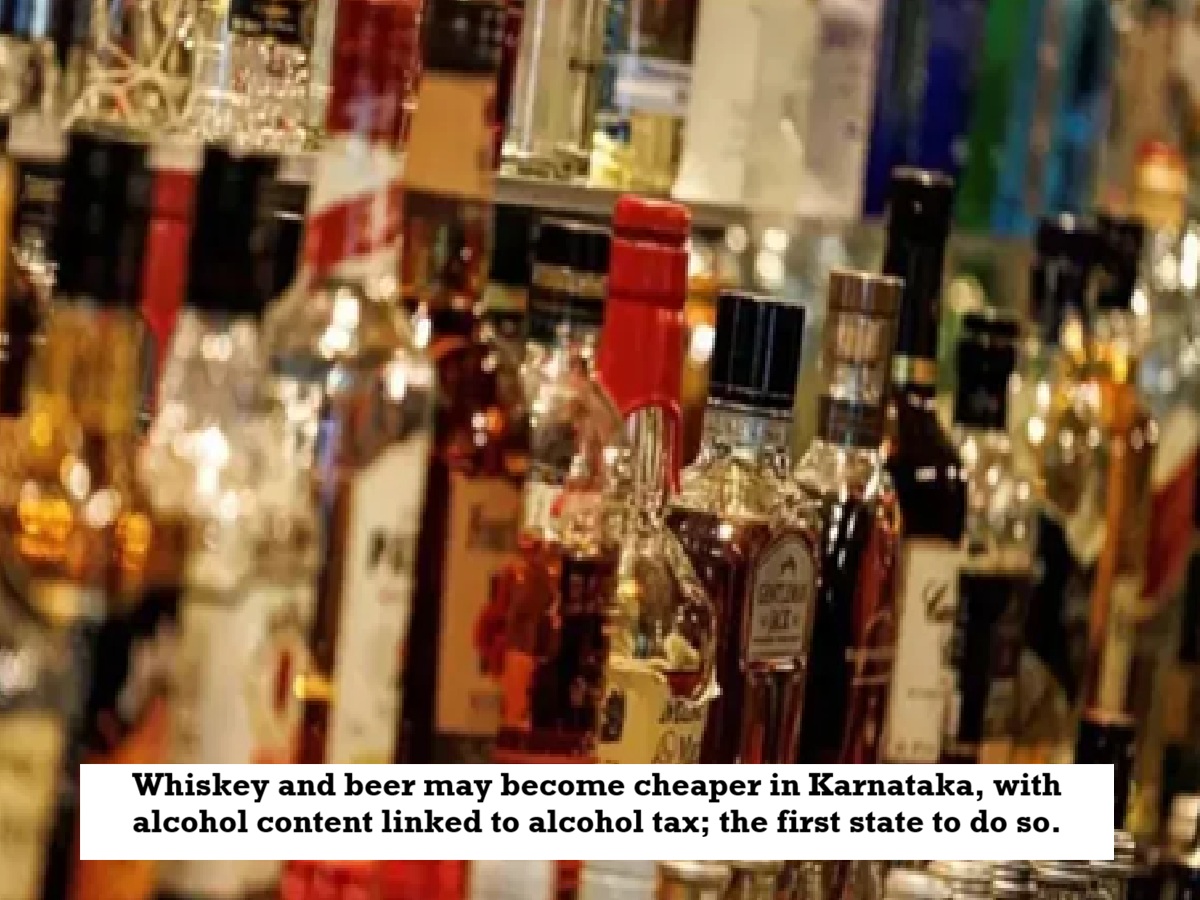
News Topical, Digital Desk : Karnataka Chief Minister Siddaramaiah announced sweeping reforms to the liquor excise and regulatory framework while presenting the state budget for 2026-27 in the Assembly on Friday. These reforms include the introduction of a new alcohol-based duty structure, complete deregulation of pricing, and a technology-based monitoring system.
Revenue target of the Excise Department
The Chief Minister has set a revenue target of ₹45,000 crore from the excise sector for the 2026-27 fiscal year. He said this target is aimed at modernizing the state's decades-old excise system, increasing transparency, ensuring compliance, and improving ease of doing business.
The Chief Minister explained that under the new policy, there will be a uniform base level of excise duty. Additionally, additional excise duty will be levied within a fixed range based on the ex-factory price slab.
The system of imposing uniform excise duty based on the alcohol content per liter will be implemented in phases over the next three to four years. Price changes will also be gradual to avoid market volatility.
Regulation of the pricing system
The government will completely deregulate the current state-managed price fixation system. The Chief Minister said that under the new policy, producers themselves will decide the price slabs for their products based on market trends.
To simplify the excise structure, the number of pricing slabs for liquor will be reduced. The current 16 slabs will be reduced to eight, making the pricing system more practical and transparent.
Monitoring and transparency through technology
The government is implementing a technology-based system to prevent leakage and better monitor the movement of liquor across the state. Physical escorts for dispatch will be replaced by a geo-fenced e-lock system, ensuring real-time monitoring and greater transparency. The Chief Minister stated that manufacturing licenses will be automatically renewed.
Label approvals, occasional licenses, and RVB licenses will be auto-generated based on online self-declaration and fee payment. Deemed approval will apply in these cases, eliminating any manual intervention.
Promotion of tourism in the wine region
Alcohol factories will be allowed to operate 24x7. The requirement to display malt and sugar content on beer labels will also be removed. In a significant move, distilleries and breweries will be permitted to conduct tasting sessions and sell products produced in their facilities to visiting tourists. This is aimed at promoting tourism in the alcohol sector.
Siddaramaiah stressed administrative reforms to enhance transparency in the excise department. A resource mobilization committee formed by the state government will soon submit a draft report outlining a modern excise taxation and alcohol regulatory framework.
The Chief Minister stated that the draft report would be made public for public consultation before further legislative action is taken. The reforms that require legal approval will be presented as part of a new and comprehensive excise bill.
What is the goal?
Underscoring the crucial role of the excise sector in the state's finances, the Chief Minister said that revenue has increased significantly in the current fiscal year. Excise revenue in the 2025–26 fiscal year through February stood at ₹36,492 crore, a 12.7% increase compared to the same period last year. For the 2026–27 fiscal year, the state has set a revenue target of ₹45,000 crore from excise.
The Chief Minister clarified that while the Excise Department will focus on taxation and regulatory compliance, the Health Department will address the social impacts of alcohol consumption, including public health interventions, de-addiction, and rehabilitation initiatives.
The state government has also set revenue targets from other sectors for the 2026–27 fiscal year. These include ₹29,000 crore from stamps and registration, ₹15,500 crore from motor vehicles, and ₹11,000 crore from mining royalties.
Read More: Marital dispute like 'Mahabharata war', Supreme Court annuls 10-year-old marriage
--Advertisement--