







Mainpuri DM's 'Sneh Ka Diya' Lights Diwali for 15,000 Families
The festival of lights witnessed a transformative demonstration of compassionate governance in western Uttar Pradesh as the Mainpuri district administration launched an expansive humanitarian outreach program titled "Sneh Ka Diya" (Lamp of Affection). Spearheaded by Mainpuri District Magistrate Dr. Indramani Tripathi alongside Superintendent of Police Ganesh Prasad Saha, the initiative was specifically designed to ensure that the joy of Deepavali penetrated beyond affluent urban enclaves and reached the doorsteps of the most vulnerable, nomadic, and destitute populations living on the fringes of society. Mobilizing the entire administrative and police machinery across tehsils and rural blocks, the district administration delivered festive kits, food grains, warm winter clothing, and essential civil amenities to more than 15,000 families classified under the zero-poverty bracket. Widely lauded across administrative corridors in Lucknow as the pioneering "Mainpuri Model," this holistic campaign has set a new benchmark for grassroots welfare by seamlessly combining festive generosity with structural socio-economic rehabilitation.
Reaching the Margins: DM and SP at Nagla Nath in Karpiya
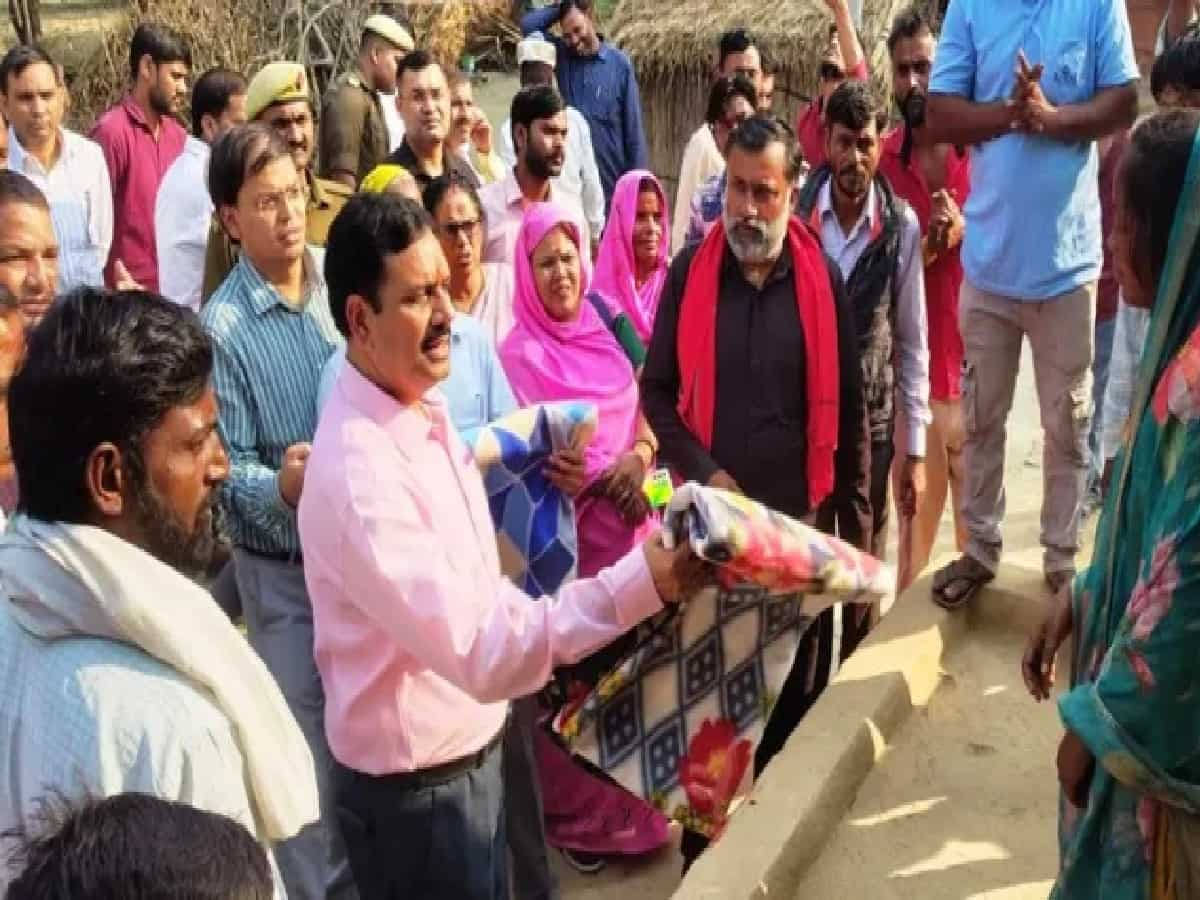
The heart of the campaign was brought into vivid focus when District Magistrate Dr. Indramani Tripathi and Superintendent of Police Ganesh Prasad Saha personally traveled to Nagla Nath, a remote settlement situated within Karpiya village under Bhogaon tehsil. Nagla Nath is home to approximately 50 families belonging to the traditionally marginalized and nomadic snake-charmer (Nath) community, whose members have long weathered severe social exclusion, economic precarity, and a lack of formal land ownership. Arriving without bureaucratic fanfare, the top administrative officers sat directly among the village residents, distributing customized Diwali hampers designed to support traditional festive rituals.
Each family was provided with earthen clay diyas, pure mustard oil, handcrafted idols of Goddess Lakshmi and Lord Ganesha, traditional festive puffed rice (kheel-batashe), sweet confectionery boxes, and thick woolen blankets to shield them from the impending winter chill. For the children of the settlement, the visit brought festive delight as the DM and SP distributed school bags, geometry boxes, pencil kits, fresh seasonal fruits, chocolates, and sweets. Rather than conducting a transactional donation drive, the district leadership utilized the occasion to conduct an on-the-spot audit of the community's living conditions, engaging elders in candid dialogues regarding their daily struggles, healthcare access, and administrative hurdles.
Restoring Dignity: Land Rights and Cremation Grounds for the Nath Community
Moving beyond temporary festive relief, Dr. Indramani Tripathi took immediate on-the-ground executive decisions aimed at permanently resolving deep-seated grievances that have plagued the nomadic settlement for decades. Learning that the Nath community possessed no formal land titles and suffered the indignity of lacking a recognized space for the final rites of their deceased, the District Magistrate issued on-the-spot directives to revenue and tehsil authorities to immediately prepare a proposal allocating three bighas of government land in the village for the community. Dr. Tripathi ordered that this designated tract be legally reserved as an official cremation ground (shamshan ghat), thereby ensuring that the community's departed kin are accorded dignity in death.
Furthermore, observing that the settlement remained physically cut off from mainstream connectivity by treacherous, unpaved dirt tracks, the District Magistrate directed the rural development department to expedite the construction of a concrete, all-weather road linking Nagla Nath to the primary regional link road. This infrastructural intervention will guarantee unhindered vehicular and emergency medical access throughout the monsoon months, effectively ending the geographical isolation that has hindered the village’s economic mobility for generations.
Social Security: Solar Lighting, Identity Cards, and Bal Seva Yojana
To establish lasting social safety nets for the vulnerable hamlet, Dr. Tripathi ordered a comprehensive saturation drive across all flagship state and central welfare schemes. Recognizing that darkness and unpaved alleys contributed to acute safety concerns and reptile hazards, the DM instructed the immediate installation of six high-lumen solar streetlights at strategic intersections throughout the settlement to permanently illuminate community pathways.
Addressing severe child distress within the village, the District Magistrate took immediate custody of the welfare files of three destitute and orphaned village children—identified as Rohit, Mohit, and Chandni. Dr. Tripathi instructed the District Social Welfare Officer and child protection authorities to immediately enroll all three children under the Uttar Pradesh Mukhyamantri Bal Seva Yojana, securing monthly financial stipends, healthcare coverage, and government-sponsored living assistance. Simultaneously, administrative teams were deployed to set up specialized on-site enrolment camps to process official national identity documentation, including Aadhaar enrolment, ensuring that every eligible villager is integrated into the Public Distribution System (PDS) for food grain rations, pension rolls, and health insurance umbrellas without bureaucratic friction.
Education as Empowerment: SP Ganesh Prasad Saha's Mission for Youth
Interacting with the youth and parents of the village, Superintendent of Police Ganesh Prasad Saha underscored that educational empowerment remains the single most formidable instrument for breaking generational cycles of poverty and marginalization. Addressing the gathering, the police chief remarked that true empowerment occurs when children from nomadic backgrounds transition into modern schoolrooms, equipping themselves with the skills necessary to participate in the formal economic fabric of the nation.
Marking a major breakthrough during the visit, administrative and police officers facilitated the immediate on-the-spot school admissions of three young village children into the formal schooling framework. SP Saha expressed deep personal gratification at witnessing the children enroll, announcing that the district administration and police department will maintain personal oversight of their educational progress, guaranteeing comprehensive support for their uniforms, books, tutoring, and nutritional well-being. The presence of key district officials—including Chief Medical Officer (CMO) Dr. R.C. Gupta, Sub-Divisional Magistrate (SDM) Bhogaon Piyush Kumar Jaiswal, District Inspector of Schools (DIOS) Satish Kumar, Basic Shiksha Adhikari (BSA) Surya Pratap Singh, District Supply Officer (DSO) Raman Mishra, and District Social Welfare Officer Ashok Kumar—ensured that educational, health, nutritional, and welfare clearances were coordinated simultaneously without inter-departmental delays.
The Mainpuri Model: Transforming Bureaucracy into Citizen-Centric Service
The sweeping reach of "Sneh Ka Diya" to more than 15,000 households reflects the broader administrative philosophy championed by Dr. Indramani Tripathi since assuming office as District Magistrate. Anchored in the governing principle of "Nagrik Devo Bhava" (The Citizen is God), the 2014-batch IAS officer has systematically prioritized responsive, field-oriented public administration across Mainpuri. From personally wading into muddy paddy fields with a sickle to conduct transparent crop-cutting assessments alongside local farmers, to inaugurating the subsidized Annada Prerna Canteen providing nutritious meals for ₹10 to rural visitors at the collectorate, Dr. Tripathi’s tenure has consistently focused on dismantling bureaucratic aloofness.
By converting the festival of Diwali into a collaborative administrative campaign spanning every revenue block, the Mainpuri administration has brought the ethos of Antyodaya—uplifting the very last individual in the socioeconomic hierarchy—to life. The systematic saturation of food grains, festive gifts, land allotments, civil infrastructure, and education at Nagla Nath demonstrates how progressive civil servants can transform an annual holiday into a lasting vehicle for social equity. As praises for the initiative reverberate across administrative circles in Uttar Pradesh, the "Mainpuri Model" stands as a shining template of empathetic governance, proving that when the state steps forward with genuine affection and decisive political will, the light of prosperity reaches even the darkest corners of society.




