







Chhath Puja 2026: Lucknow Gomti Ghats Ready; CM Yogi to Attend
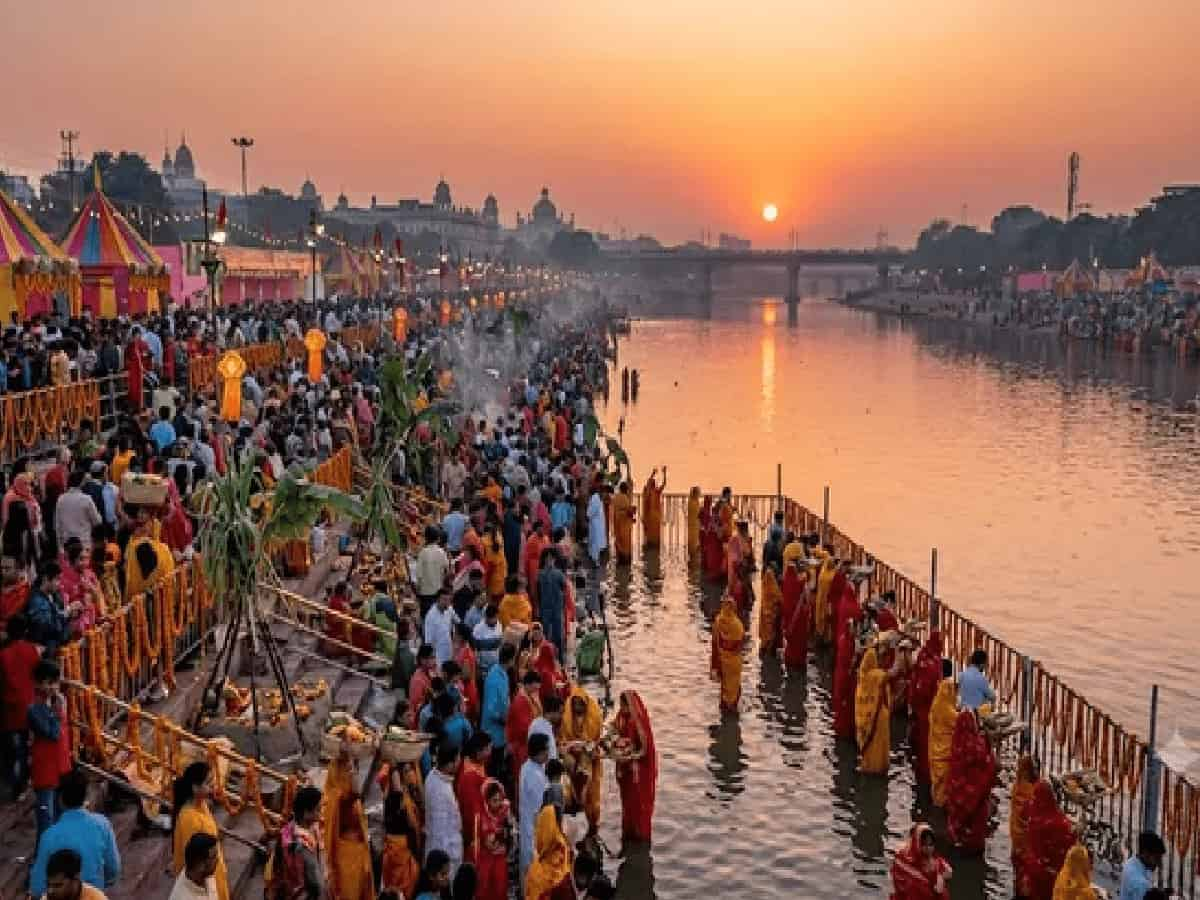
The riverfront of the historic Gomti River in Lucknow is undergoing a vibrant transformation as the capital city of Uttar Pradesh prepares to host Chhath Mahaparva, the revered four-day festival dedicated to the Sun God and Chhathi Maiya. Beginning on Friday, November 13, 2026, with the traditional ritual of Nahay-Khay, the grand festival will draw tens of thousands of devotees, vratis (fasting women), and cultural enthusiasts to designated riverbanks across the city. The focal point of the celebrations will be the expansive Laxman Mela ground, where Uttar Pradesh Chief Minister Yogi Adityanath will join devotees on Sunday evening, November 15, to offer ceremonial Sandhya Arghya to the setting sun.
Organized under the aegis of the All India Bhojpuri Samaj, this year marks the 43rd annual Chhath Mahaparva festival held at the historic Laxman Mela site. The Lucknow Municipal Corporation (LMC), alongside the Lucknow Development Authority (LDA) and district police authorities, has deployed specialized teams to clean, paint, and beautify the riverbanks. Laborers and municipal staff are working to sculpt sacred earthen altars (sirsohta or vedi) where fasting women will sit, perform rituals, and arrange traditional offerings. Colorful tents, decorative entry gates, fairy-light illuminations, and sound systems are being erected along the river promenade to accommodate the anticipated influx of families from across the Awadh and Purvanchal diaspora.
Chief Minister Yogi Adityanath to Join Sandhya Arghya at Laxman Mela Site
Confirming the schedule of state dignitaries, Prabhunath Rai, National President of the All India Bhojpuri Samaj, announced that Chief Minister Yogi Adityanath will arrive at the Laxman Mela grounds at 4:00 PM on Sunday, November 15, to inaugurate the primary festival proceedings and offer water oblations to the setting sun. The Chief Minister’s annual presence at the Gomti riverfront highlights the state administration's support for preserving and celebrating folk traditions that unite communities across cultural and regional lines.
The spiritual atmosphere will be enriched by a cultural showcase featuring over 100 acclaimed folk performers. Renowned folk vocalist and Padma Shri awardee Malini Awasthi will headline the cultural evening on November 15, presenting traditional Chhath devotional melodies, Bhojpuri geet, and regional hymns that capture the devotion of rural and urban families. The cultural program will continue through the night, keeping vigil alongside the vratis until the final rituals conclude at dawn on Monday, November 16, with Usha Arghya to the rising sun.
Four Days of Devotion: Understanding the Sacred Rites from Nahay-Khay to Paran
The rigorous four-day festival follows strict Vedic purification protocols, self-restraint, and community cooperation. Devotees and cultural coordinators have outlined the precise ritual itinerary for the 2026 celebration:
-
Day 1: Nahay-Khay (Friday, November 13): The festival begins with a holy bath in the river or consecrated water at home. Devotees clean their kitchens, prepare traditional satvik meals consisting of bottle gourd curry (lauki ki sabzi), chana dal, and rice cooked in pure ghee, and consume food only once after offering prayers.
-
Day 2: Kharna (Saturday, November 14): Devotees observe a strict, day-long fast without a single drop of water. In the evening, after the worship of Chhathi Maiya, they prepare fresh prasad consisting of jaggery rice pudding (gur ki kheer) and whole-wheat rotis cooked over an earthen stove using mango wood fuel. This sacred meal marks the beginning of an unbroken 36-hour waterless fast (nirjala vrat).
-
Day 3: Sandhya Arghya (Sunday, November 15): The primary community celebration unfolds as families carry woven bamboo baskets (daura and soop) laden with seasonal offerings to the riverbanks. As the sun descends toward the horizon, fasting women step knee-deep into the Gomti’s waters to offer milk and water oblations to the setting sun, praying for family prosperity and health.
-
Day 4: Usha Arghya and Paran (Monday, November 16): Devotees return to the riverbank before daybreak to offer the concluding oblation to the rising sun. Following the morning arghya, the long 36-hour waterless fast is formally broken by consuming ginger, raw gram, and the sacred prasad of thekua, marking the successful completion of the mahaparva.
Sacred Prasad and Cultural Preparations Along the Riverbank
At the heart of Chhath Puja are the sacred offerings presented in handcrafted bamboo baskets. Key among these is Thekua, a traditional delicacy prepared from whole wheat flour, pure desi ghee, and jaggery, flavored with crushed cardamom and dry fruits. Other essential seasonal offerings include whole green sugarcane stalks complete with leaves, tender water chestnuts (singhara), coconuts, citrus fruits like pomelo (chattra), turmeric roots, and Kasar made from nutritious sathi red rice powder.
At the Laxman Mela ground, master ritual artisans and idol craftsmen from Vrindavan and eastern Uttar Pradesh—including artisans Santosh and teams stationed at Balu Adda—are working directly on the river steps to finish sacred ritual platforms and floral altars. The attention to detail ensures that the riverfront mirrors the authentic cultural essence of Purvanchal, creating an inviting space where multi-generational families can gather in shared faith.
Multi-Tier Administrative Vigilance: Security, NDRF, and Riverfront Kiosks
To manage the massive congregation safely, the All India Bhojpuri Samaj and district authorities have put in place multi-tier logistical arrangements across the Gomti river basin. The Lucknow Municipal Corporation is conducting regular anti-larval fogging, pest control, and mechanical road-sweeping drives along all connecting roads. Lucknow Police, in coordination with the State Disaster Response Force (SDRF), National Disaster Response Force (NDRF), and trained Water Police personnel, will deploy motorboats and rescue steamers along the river corridor to monitor water levels and ensure safety near the deep-water channels.
Barricades, dedicated changing enclosures for female devotees, public drinking water stations, mobile medical camps with stationed ambulances, and emergency lighting units are being installed across the venue. Lucknow Traffic Police will enforce phased traffic diversions around the riverfront bridges, including the Hanuman Setu and Nishatganj corridors, while establishing dedicated parking lots near KD Singh Babu Stadium and adjacent university grounds to prevent vehicular gridlock.
Beyond Laxman Mela: Citywide Preparations Across Major Gomti Ghats
While the Laxman Mela ground hosts the largest official gathering, festival preparations are proceeding at several other prominent ghats across Lucknow. Coordinator Dhananjay Dwivedi confirmed that civil facilities, sanitation teams, and lighting grids are being deployed at:
-
Jhulelal Vatika Ghat: Welcoming large crowds from central and northern Lucknow, featuring spacious concrete steps and shaded seating zones.
-
Khatu Shyam Temple Ghat: Situated near the university campus, offering clean river embankments, illuminated walking promenades, and civic amenities.
-
Mankameshwar Temple Ghat: A historic spiritual hub along the river steps, known for early-morning devotional crowds.
-
Shiv Mandir Ghat at Khatra: Catering to residential colonies across old Lucknow with localized community support.




