







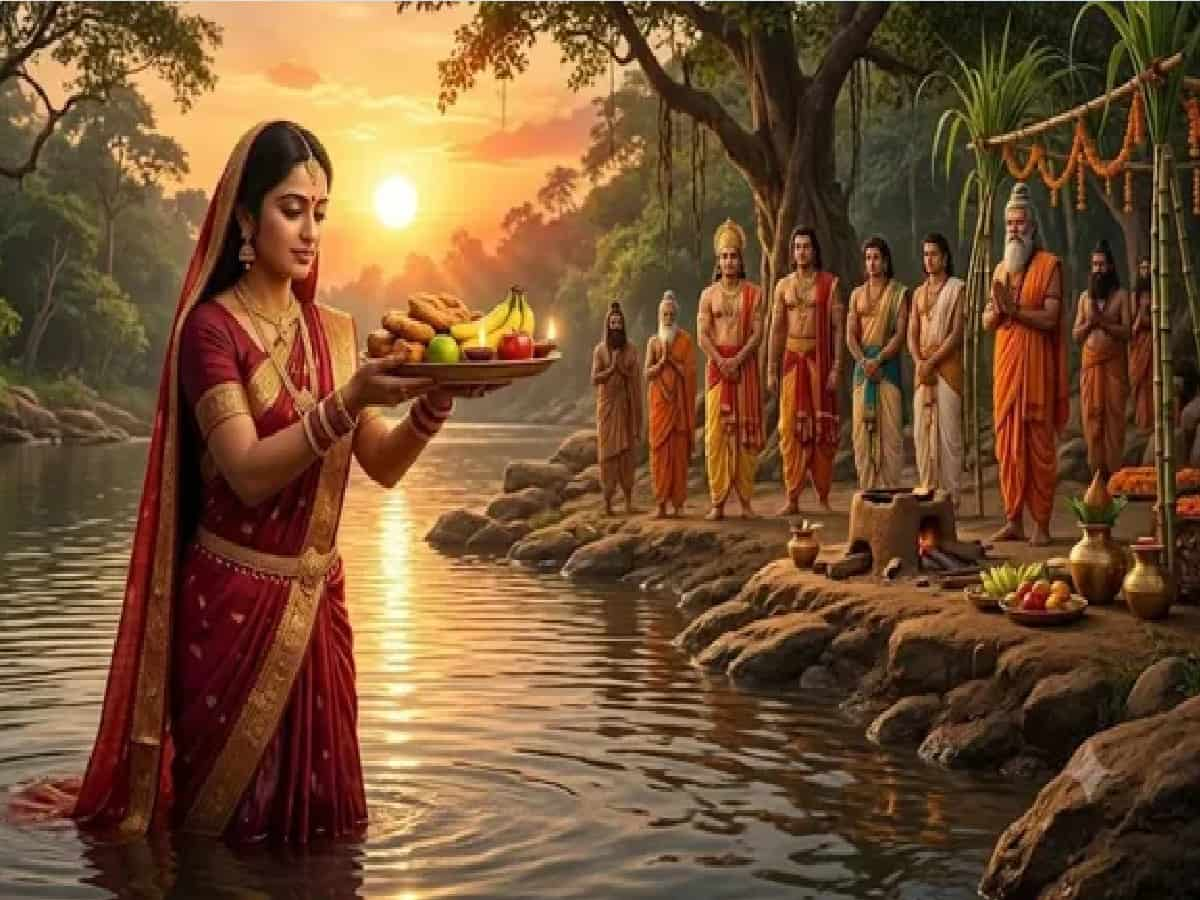
Why Draupadi Observed Chhath Puja in Exile: Mahabharata Sun God Story
Chhath Puja stands as one of the most sacred and spiritually rigorous festivals in Hindu tradition—unique in that devotees offer sacred arghya not only to the rising sun at dawn (Usha Arghya), but also to the setting sun at dusk (Sandhya Arghya), imparting a timeless philosophical lesson on embracing life's highs and lows with equal grace and gratitude. Spanning four days from the purifying ritual of Nahay-Khay and Kharna to the concluding morning prayers, the festival centers on devotion to Surya Dev (the Sun God) and Chhathi Maiya, with millions observing a 36-hour waterless (nirjala) fast for the health, longevity, and prosperity of their children and families. While Chhath Puja is celebrated with unmatched fervor along riverbanks and ponds across Bihar, Jharkhand, and eastern Uttar Pradesh, its scriptural roots stretch all the way back to the Mahabharata era. According to ancient epic lore preserved in the Vana Parva (Chapters 292 to 294) of the Mahabharata, Draupadi observed the sacred Chhath fast during the Pandavas' arduous twelve-year forest exile (Vanavasa) after they lost their kingdom in the game of dice—a devotion that pleased Lord Surya, resolved an acute food crisis at their forest hermitage, and ultimately set the Pandavas on the path toward reclaiming their lost throne. For devotees, spiritual readers, and cultural enthusiasts across Patna, Gaya, Muzaffarpur, Darbhanga, Varanasi, Prayagraj, Gorakhpur, Lucknow, Kanpur, Ranchi, New Delhi, and Mumbai, revisiting Draupadi's Chhath Vrat reveals the deep epic heritage behind every ritual performed at the ghats today.
Why Did Draupadi Observe the Chhath Fast During Forest Exile
Following their defeat in the fateful game of dice at Hastinapura, Yudhishthira, Bhima, Arjuna, Nakula, Sahadeva, and Draupadi were stripped of their royal wealth and forced into twelve years of forest exile. Living modestly in the wilderness alongside accompanied Brahmins, sages, and loyal attendants, the Pandavas soon confronted a severe practical and spiritual dilemma: how to feed the large number of wandering ascetics and guests who regularly visited their forest ashram.
When a large group of revered sages arrived at their hermitage, eldest brother Yudhishthira grew deeply distressed at the prospect of failing the sacred duty of hospitality (Atithi Devo Bhava) due to the scarcity of provisions in the forest. Seeing her husband's anguish and the growing hardship facing the family, Draupadi turned for counsel to their wise royal preceptor, Maharshi Dhaumya, seeking a spiritual path that could deliver them from adversity.
Maharshi Dhaumya's Guidance and Lord Surya's Divine Boon
Recognizing the transformative power of solar worship, Maharshi Dhaumya instructed Draupadi to undertake the rigorous Shashthi Vrat (Chhath fast) and worship Lord Surya, the eternal source of energy, sustenance, and cosmic order. Following the sage's exact scriptural injunctions, Draupadi observed strict purity, fasted with unwavering resolve, and offered heartfelt prayers and arghya to the Sun God.
| Epic & Ritual Element | Scriptural Reference & Narrative Detail | Spiritual Significance in Chhath Puja |
| Scriptural Source | Mahabharata — Vana Parva (Chapters 292–294) | Establishes the ancient epic precedent of solar Shashthi fasting during times of severe crisis |
| Reason for the Fast | Pandavas lost their kingdom in dice and faced an acute food shortage while hosting visiting sages in exile | Demonstrates turning to disciplined devotion and self-purification (tapasya) to overcome worldly obstacles |
| Spiritual Guide | Royal preceptor Maharshi Dhaumya | Prescribed the exact rules of Surya Upasana and the Chhath Vrat to Draupadi |
| Lord Surya's Boon | Pleased by Draupadi's penance, Surya Dev blessed her with inexhaustible sustenance (Akshaya Patra tradition) | Ended the Pandavas' hunger crisis in exile and paved the way for regaining their lost kingdom |
| Four-Day Festival Arc | Nahay-Khay → Kharna → Sandhya Arghya → Usha Arghya | Honors both setting and rising sun while praying to Chhathi Maiya for children's well-being and family prosperity |
Moved by Draupadi's sincere penance and selfless devotion, Lord Surya appeared and blessed her—bestowing divine sustenance (associated in epic tradition with the miraculous Akshaya Patra, which provided limitless food each day until Draupadi herself had eaten) and assuring her that the Pandavas' trials would end and their rightful kingdom would be restored.
Enduring Religious and Cultural Significance of Chhath Puja
Just as Draupadi's Chhath Vrat transformed despair into abundance and eventual triumph for the Pandavas, believers hold that observing the four-day Chhath Puja with clean hands, a pure heart, and ecological reverence removes deep-seated afflictions and fulfills virtuous wishes. From the banks of the Ganga in Patna and Varanasi to the Gomti ghats in Lucknow and community ponds across Delhi-NCR and Mumbai, traditional folk Chhath geet keep Draupadi's story alive every year as families gather at dawn and dusk to thank the Sun God for sustaining all life on Earth.




