







Kartik Purnima Significance: 4 Sacred Events From Tripurasura to Matsya
Falling exactly 15 days after Diwali on the auspicious full moon of the Hindu lunar month of Kartik, Kartik Purnima—widely celebrated as Dev Diwali and Tripurari Purnima—stands among the most spiritually revered dates across Indian traditions. According to ancient scriptures and folk lore, it is on this radiant full moon night that celestial deities descend upon the sacred ghats of Kashi (Varanasi) to celebrate the Festival of Lights, inspiring millions of devotees to illuminate riverbanks, temples, and homes with thousands of earthen diyas. Yet beyond its visual grandeur along the Ganga, Kartik Purnima carries deep theological resonance because four monumental events in Hindu and Sikh heritage are linked to this single sacred day—ranging from Lord Shiva's vanquishing of the demon Tripurasura and Lord Vishnu's first incarnation as the Matsya Avatar, to the birth anniversary (Prakash Parv) of Sri Guru Nanak Dev Ji and the Pandavas' ancestral salvation ritual along the Ganges at Garhmukteshwar. For devotees, spiritual seekers, pilgrims, and cultural readers across Varanasi, Prayagraj, Ayodhya, Lucknow, Kanpur, Garhmukteshwar, Haridwar, Amritsar, Patna, New Delhi, and Mumbai, exploring these four timeless narratives reveals why Kartik Purnima unites Shaiva, Vaishnava, Mahabharata, and Sikh traditions in a shared celebration of light over darkness.
1. Lord Shiva's Victory Over Tripurasura and the Birth of Dev Diwali
The foremost mythological event associated with Kartik Purnima is Lord Shiva's triumph over Tripurasura, which earned the festival the sacred title Tripurari Purnima. According to Puranic lore, the three demon sons of Tarakasura—Tarakaksha, Kamalaksha, and Vidyunmali—constructed three impregnable flying fortresses made of gold, silver, and iron (Tripura) that only aligned once every thousand years, wreaking havoc across heaven and earth.
During the sacred Pradosh Kaal on Kartik Purnima, Lord Shiva mounted a cosmic chariot fashioned from the Earth and the Vedas—and in popular regional traditions, manifested in his Ardhanarishvara form—to pierce and destroy all three fortresses with a single arrow. Overjoyed at the restoration of cosmic order, Lord Vishnu bestowed upon Shiva the title "Tripurari" (Slayer of Tripura), and the gods gathered in Kashi to celebrate with countless lamps—establishing the timeless tradition of Dev Diwali.
2. Lord Vishnu's First Incarnation: The Matsya Avatar
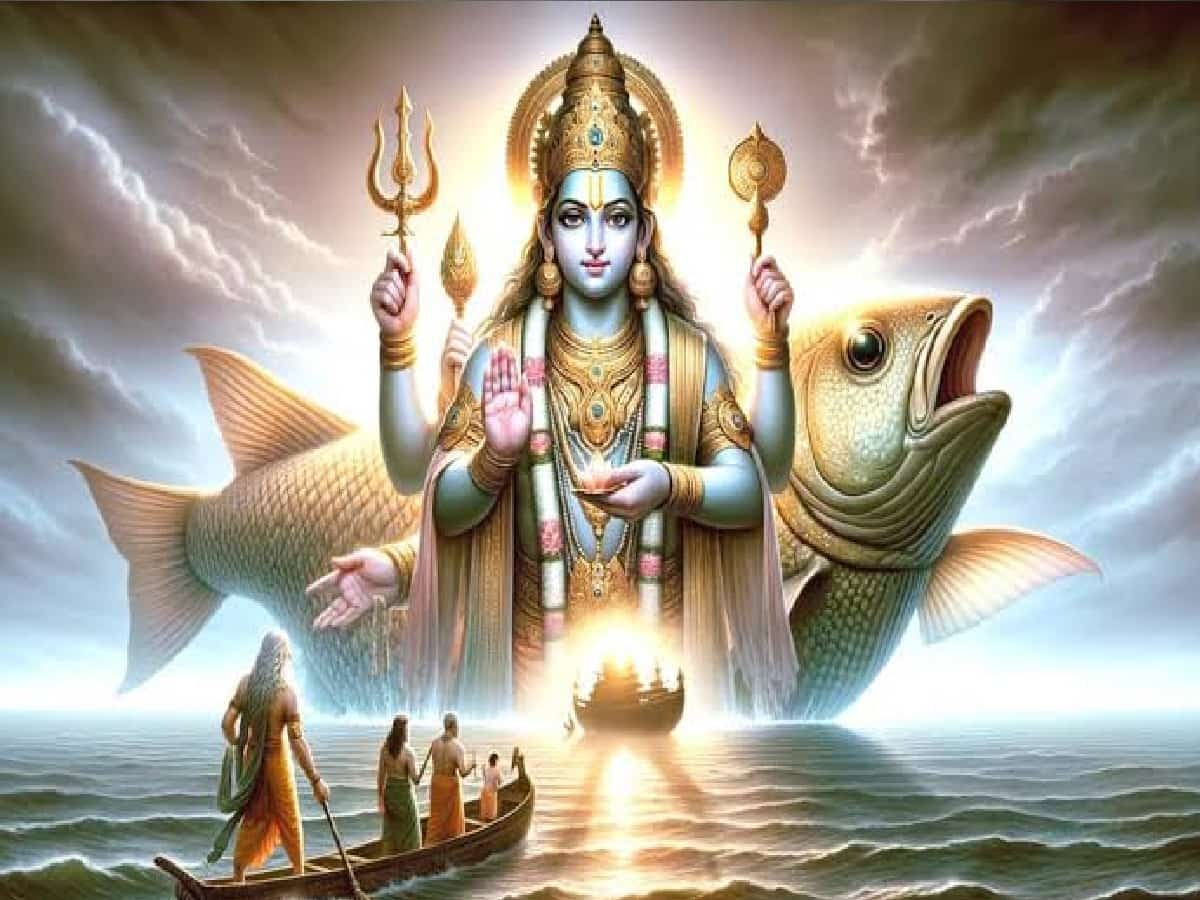
Kartik Purnima holds equally profound significance for Vaishnava devotees, as classical scriptures—specifically the Uttara Khanda of the Padma Purana—record that Lord Vishnu assumed his very first Dashavatara incarnation, the Matsya (Divine Fish) Avatar, on this full moon day.
| Sacred Event on Kartik Purnima | Primary Tradition / Scripture | Core Spiritual & Cultural Significance |
| Slaying of Tripurasura | Shaiva Tradition / Shiva Purana | Lord Shiva destroys the three demon fortresses during Pradosh Kaal, earns the name Tripurari, and inspires Dev Diwali in Kashi |
| Manifestation of Matsya Avatar | Vaishnava Tradition / Padma Purana (Uttara Khanda) | Lord Vishnu incarnates as the cosmic fish to save Manu, the seven sages (Saptarishis), and the Vedas from the great deluge (Pralaya) |
| Guru Nanak Dev Ji's Prakash Parv | Sikh Tradition | Marks the auspicious birth anniversary of Sri Guru Nanak Dev Ji, founder of Sikhism; celebrated worldwide with kirtan, akhand path, and langar |
| Pandavas' Tarpan at Garhmukteshwar | Mahabharata / Folk Tradition | Following the Kurukshetra war, the Pandavas bathe in the Ganga and light lamps at Garhmukteshwar for the salvation of departed kin |
When the universe faced submersion beneath the great cosmic deluge (Pralaya), Lord Vishnu appeared in the form of a giant horned fish to rescue King Manu, the Saptarishis (seven great sages), medicinal herbs, and the sacred Vedas—ensuring the continuity of creation. Devotees believe that throughout the holy month of Kartik, Lord Vishnu's divine presence resides within sacred rivers and water bodies in his Matsya form, making dawn river baths (Kartik Snan) exceptionally meritorious.
3. Prakash Parv: Birth Anniversary of Sri Guru Nanak Dev Ji
Beyond Hindu scriptures, Kartik Purnima is one of the holiest dates in Sikhism, celebrated across India and around the world as Guru Nanak Gurpurab (Prakash Parv)—the birth anniversary of Sri Guru Nanak Dev Ji, the founder of Sikhism and the first of the ten Sikh Gurus. Born on the full moon day of Kartik in 1469, Guru Nanak Dev Ji preached universal brotherhood, truthful living, selfless service (seva), and devotion to one Supreme Creator. On this day, Gurudwaras glow with lamps, host continuous scripture readings (Akhand Path), organize vibrant Nagar Kirtan processions, and serve community meals (Langar) to all visitors regardless of caste or creed.
4. The Pandavas' Ganga Snan and Lamp Ritual at Garhmukteshwar
A fourth poignant legend links Kartik Purnima directly to the aftermath of the Mahabharata war. Deeply grieved by the loss of countless relatives, teachers, and warriors on the battlefield of Kurukshetra, the Pandavas sought counsel from Lord Krishna on how to bring peace and liberation (moksha) to the departed souls.
Following Lord Krishna's guidance, the Pandavas traveled to the sacred banks of the Ganga at Garhmukteshwar (in present-day Hapur district of western Uttar Pradesh) on Kartik Purnima, where they took a holy dip, performed ancestral tarpan rites, and floated illuminated earthen lamps upon the river currents. Even today, millions of pilgrims gather at the historic Garhmukteshwar Ganga Mela every Kartik Purnima to light lamps in memory of their ancestors.




