







Govardhan Puja 2026: Why 7 Parikramas Bring Char Dham Blessings
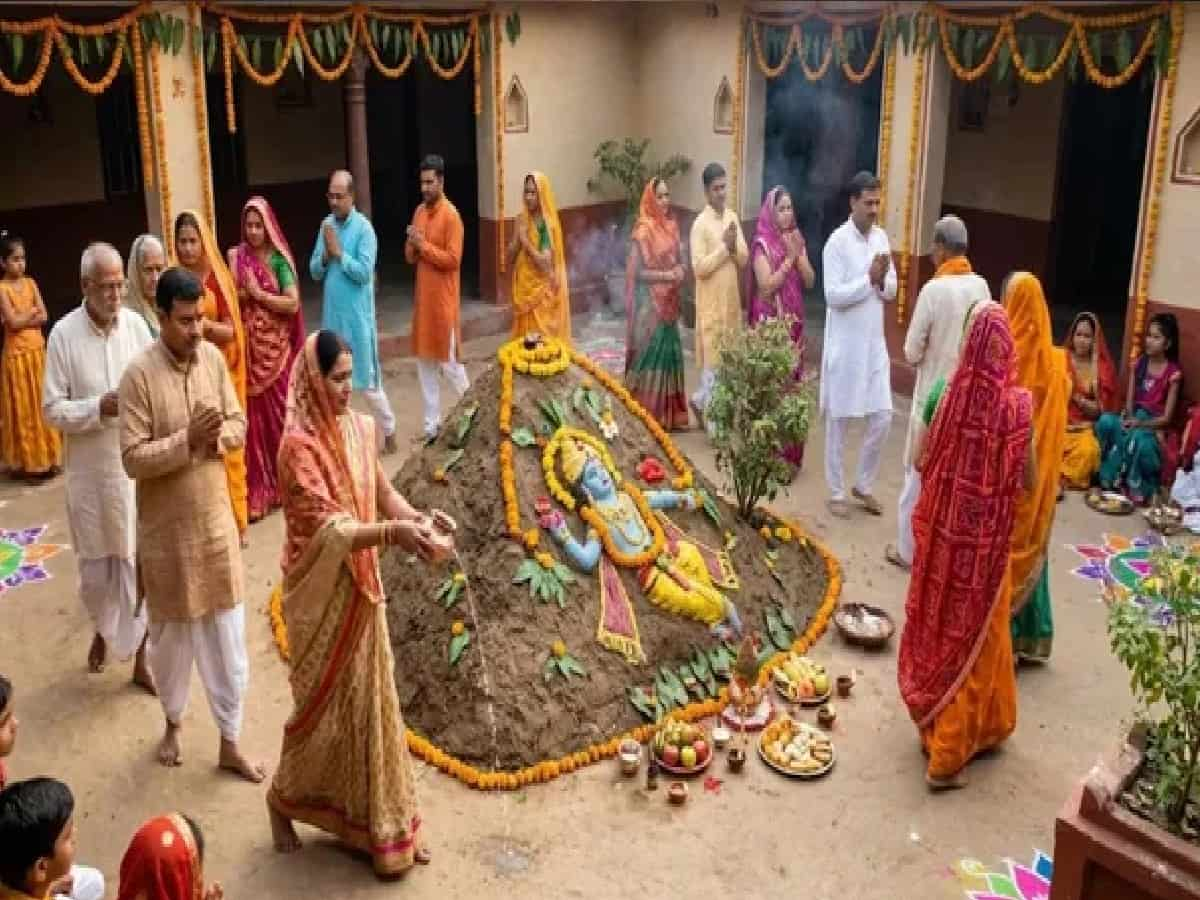
Following the luminous night of Diwali, households across the country turn their spiritual focus toward the sacred festival of Govardhan Puja, also known as Annakut Mahaparv. Falling on Tuesday, November 10, 2026, on the auspicious Pratipada tithi of the Kartik month, this vibrant festival marks one of the most beloved and agrarian-rooted observances in Sanatan Dharma. From the historic temples of Mathura, Vrindavan, and Govardhan in the Braj region to millions of residential courtyards across Uttar Pradesh, Bihar, Rajasthan, and Delhi-NCR, devotees celebrate the day by crafting an intricate representation of Mount Govardhan using sacred cow dung (gobar). Adorned with marigold blossoms, fresh sugarcane reeds, earthen lamps, and offerings of seasonal harvest grains, this handmade hillock becomes an altar for Lord Krishna. Among the most vital and ancient customs associated with this day is the circumambulation (parikrama) around the idol. Scriptural tradition and Vedic scholars emphasize that to receive the complete spiritual fruit of the puja—a merit traditionally believed to equal the divine blessings of visiting the four holy pilgrimage sites, the Char Dham—worshippers must complete exactly seven sacred rounds.
The Legend of Giriraj: Why Seven Rounds Symbolize Seven Days
The theological mystery behind performing seven circumambulations is rooted in one of the most famous episodes in Shrimad Bhagavatam and Vishnu Purana: the uplifting of Mount Govardhan by young Krishna. According to Puranic accounts, the pastoral inhabitants of Braj were preparing their annual elaborate sacrifice to appease Lord Indra, the king of devas and lord of rain and storms. Young Krishna questioned the practice, pointing out that their true benefactors were the fertile soil, the lush grazing pastures, the cattle that sustained their livelihoods, and Mount Govardhan, which gathered monsoon clouds and sheltered their cows. Persuaded by Krishna's words, the cowherds redirected their reverence and food offerings directly to the sacred mountain.
Enraged by this defiance, Indra unleashed torrential rains, thunderbolts, and devastating hail to flood the valley of Braj and humble its residents. In response, seven-year-old Krishna lifted the entirety of Mount Govardhan on the little finger (kanishta) of his left hand, holding it aloft like a colossal umbrella. For seven consecutive days and nights—totaling 168 uninterrupted hours—Krishna stood unmoving, sheltering every cowherd, gopi, animal, and bird beneath the mountain until Indra’s ego shattered and the rain ceased. Performing seven circumambulations around Mount Govardhan honors each of those seven miraculous days of continuous protection, serving as an expression of gratitude for divine refuge in the face of life's destructive storms.
Equivalent to Char Dham: Attaining the Fruit of Sacred Pilgrimage
In Sanatan theology, Mount Govardhan is considered a living manifestation of divinity. When Krishna commanded the residents of Braj to worship the hill, the scriptures note that Krishna manifested an identical divine form within the mountain itself, declaring, "I am Govardhan." Consequently, Vaishnava traditions revere Giriraj Ji not as inert rock and earth, but as non-different from Krishna's divine body (swaroop).
Because of this sanctified status, ancient sages proclaimed that performing a circumambulation of Govardhan Hill with pure devotion confers the spiritual merit (punya) equivalent to undertaking the arduous journey across India's Char Dham—Badrinath in the Himalayas, Dwarka on the western coast, Puri on the eastern shore, and Rameshwaram in the south. For millions of householders who cannot travel to the 21-kilometer pilgrimage path in Govardhan town, crafting the sacred image at home with natural cow dung and completing seven mindful rounds is believed to bestow the exact same spiritual grace. The ritual is said to cleanse generational karmic burdens, bring domestic tranquility, dissolve financial stagnation, and guide the devotee toward spiritual liberation (Moksha).
Essential Parikrama Rules: Clockwise Motion and Continuous Water Offering
To derive the full spiritual benefits of the Govardhan circumambulation, scriptures outline specific procedural principles that must be followed during the rite. Foremost among these is the strict requirement that the parikrama must always proceed in a clockwise direction, known as Pradakshina. Devotees must ensure that the cow dung mound representing Mount Govardhan remains consistently on their right-hand side throughout each round. In Vedic science, keeping the consecrated altar to the right harmonizes the worshipper's subtle energy channels with the clockwise electromagnetic spin of the earth, fostering mental clarity and receptive devotion.
Furthermore, tradition dictates that the circumambulation should be accompanied by the offering of sacred fluids (dhar). Devotees carry a copper or brass water pitcher (lota) containing pure water, Ganga jal, or unboiled raw cow's milk (kacha doodh), allowing a thin, continuous trickle to pour onto the ground as they walk. Simultaneously, grains of puffed rice (kheel), batasha, sugar drops, and yellow flower petals are scattered along the perimeter. Most importantly, scriptures issue a firm caution regarding continuity: the circumambulation must conclude at the exact starting point where it began. Stopping midway, abandoning a circle halfway through, or stepping backward breaks the flow of the parikrama and renders the rite incomplete.
Sacred Dos and Don'ts: Barefoot Discipline and Banned Colors
Purity of attire and physical discipline play a critical role during the parikrama ceremony. Worshippers are mandated to walk the seven rounds completely barefoot. Treading barefoot across the ground not only signifies absolute humility before the divine presence, but also allows the individual to absorb the natural, purifying vibrations emitted by cow dung, sacred water, and fresh earth, which Ayurveda regards as therapeutic and grounding for the nervous system.
Clothing choices also hold energetic significance. Devotees are strictly advised to avoid wearing black garments during the circumambulation and accompanying puja rituals. In Sanatan tradition, black is considered an absorber of heavy, inauspicious, and negative vibrations, making it unsuitable for joyful celebrations of divine grace. Instead, participants are encouraged to wear satvik festive colors such as bright yellow, saffron, turmeric orange, auspicious red, or pure white. While walking each circle, the mind should avoid idle conversation or worldly chatter; instead, family members should recite sacred chants such as "Hare Krishna Maha-Mantra", "Shri Krishna Sharanam Mama", or sing traditional Braj folk bhajans to elevate the collective environment.
Annakut and Gau Seva: The Deeper Philosophy of Nature Worship
The broader celebration of Govardhan Puja extends beyond circumambulation into the practice of Annakut, which translates directly to a "mountain of food." Commemorating the feast prepared by the cowherds for Giriraj Ji, families and community temples prepare the Chhappan Bhog—a lavish feast comprising fifty-six distinct preparations of seasonal vegetables, curries, freshly milled grain rotis, pooris, sweet rice, and milk desserts. Because the festival celebrates the autumn harvest, traditional mixed vegetable dishes made from seasonal produce such as radish, spinach, fenugreek, and gourds are offered first to the deity before being shared among the community as consecrated prasad.
Simultaneously, the day serves as a grand festival of cattle veneration (Gau Puja). Cows, calves, and working bulls—the agricultural backbone of rural India—are washed, groomed, and decorated with turmeric paste, vermilion markings, and floral garlands. Families feed the animals fresh green grass, jaggery, and wheat flour cakes, acknowledging the debt humanity owes to nature's gentle sustainers. Through the combination of cattle care, food distribution, and the seven rounds around the sacred hill, Govardhan Puja delivers an enduring ecological and spiritual message: genuine devotion is not found in mechanical religious rituals, but in respecting the living earth, caring for livestock, protecting ecosystems, and surrendering individual ego to the benevolent will of the Divine.




