desk
desk Share
Share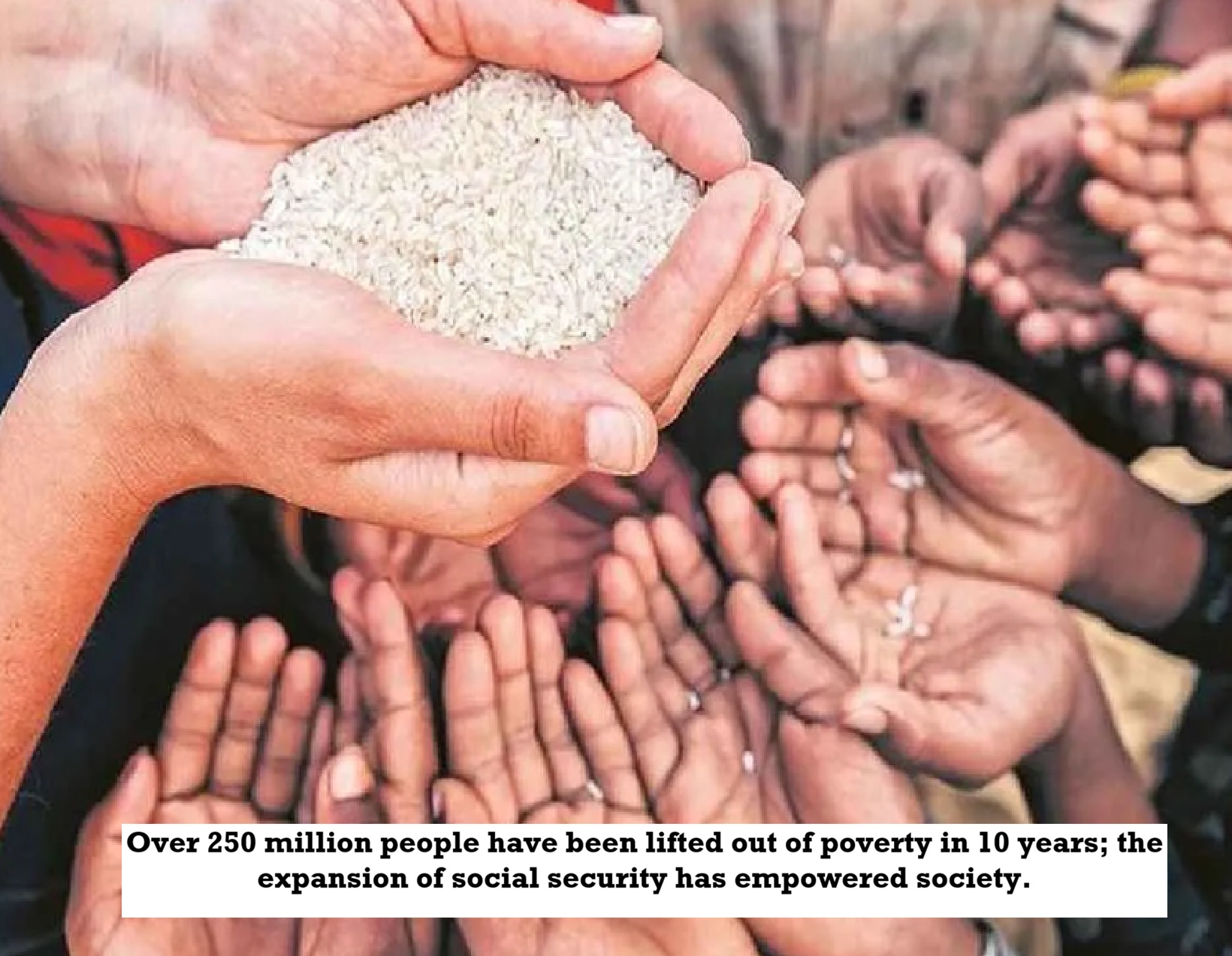
News Topical, Digital Desk : The NDA government, led by Prime Minister Narendra Modi, has lifted more than 250 million people out of multidimensional poverty over the past ten years, thanks to its public welfare policies and emphasis on social security. The quality of life of a significant population has improved. Initiatives like Direct Benefit Transfer (DBT) have played a significant role in this.
Over the past nine years, approximately ₹28 lakh crore has been disbursed to beneficiaries under DBT. The central government is expected to expand social security coverage in 2026.
Reduction of rural and urban poverty
The World Bank report found that the sharp reduction in extreme poverty occurred across a broad spectrum, encompassing both rural and urban areas. This achievement is a testament to the Indian government's commitment to inclusive growth.
The situation of lower middle income people
India has made significant progress in reducing poverty at the lower middle-income level ($3.65 per day). This widespread progress has benefited millions of people in both rural and urban areas.
States contributing to poverty reduction
Uttar Pradesh, Maharashtra, Bihar, West Bengal, and Madhya Pradesh accounted for 65 percent of India's extreme poverty in 2011-12. By 2022-23, these states contributed two-thirds of the overall decline in extreme poverty.
employment growth
Employment growth in the country has improved in both rural and urban areas since 2021-22. Since 2021-22, employment growth has been higher than the growth of the working-age population. Urban unemployment declined to 6.6 percent in fiscal year 2024-25, the lowest since 2017-18.
Read More: Kerala bomb blast case: 10 CPI(M) members get 25 years' jail for attacking RSS-BJP workers
--Advertisement--