Will Russia's Su-57 Felon Become India's Stealth Shield Against China-Pakistan J-35 Threat
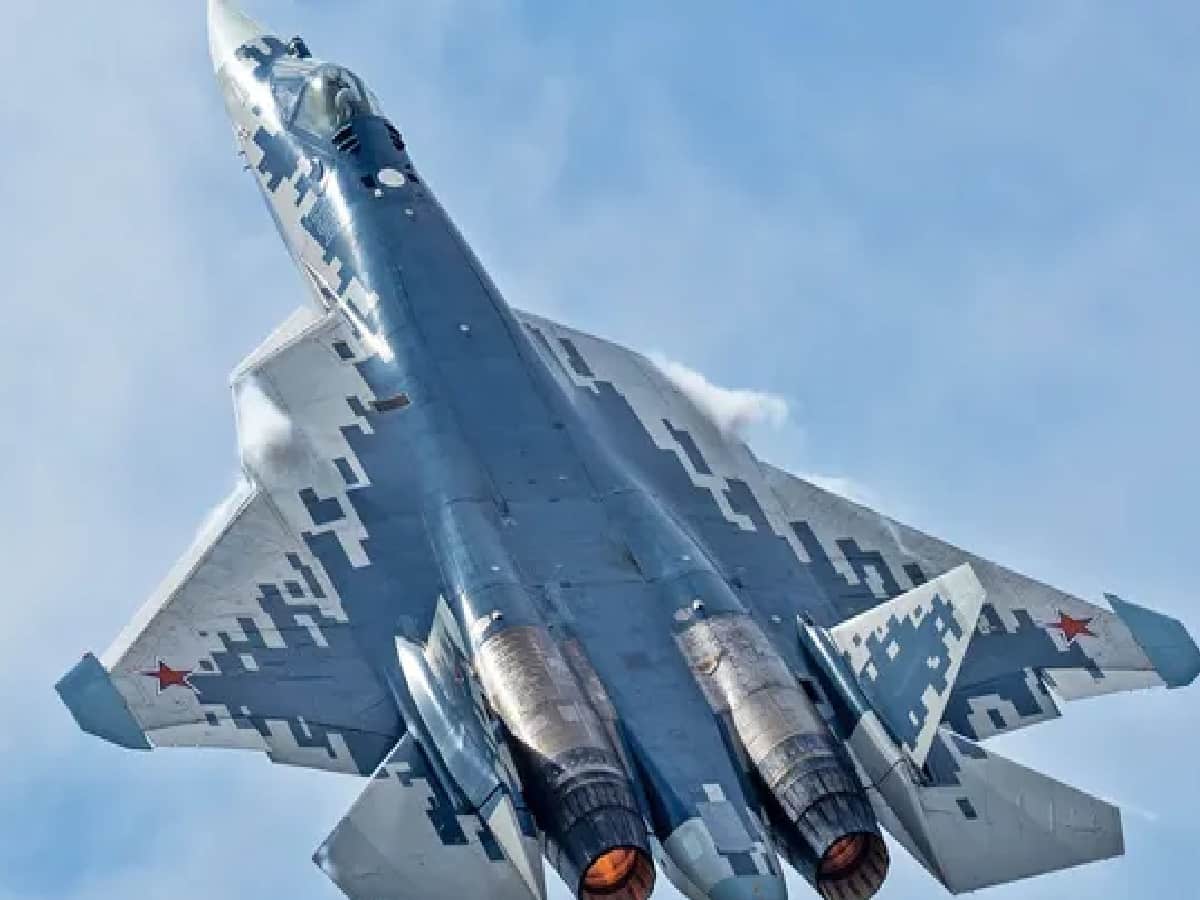
Following Russian President Vladimir Putin's high-profile bilateral engagements in India and the conclusion of the BRICS summit, a pivotal strategic debate has erupted across the South Asian security landscape regarding air dominance and rapid squadron modernization. In a bold bid to deepen bilateral defense ties, Moscow has formally extended an offer to supply its premier fifth-generation stealth fighter jet, the Sukhoi Su-57 "Felon", to the Indian Air Force (IAF). Kremlin Press Secretary Dmitry Peskov confirmed that proposing the Su-57 to India—complete with local manufacturing licenses under the "Make in India" initiative and complete transfer of technology (ToT)—remains an active, high-priority talking point between New Delhi and Moscow. This critical proposal surfaces precisely when the IAF faces an acute imperative to field stealth platforms capable of countering mounting aerial asymmetric threats along its northern and western frontiers.
Twin-Front Stealth Challenge: Pakistan Eyes Chinese J-35 as Beijing Bolsters J-20 Fleets
The urgency surrounding India's aerial deterrence is underscored by Pakistan’s aggressive pursuit of fifth-generation capabilities, marked by Islamabad’s preliminary acquisition framework with Beijing to purchase the newly developed Chinese Shenyang J-35 stealth fighter. While specific delivery schedules and financial benchmarks for the Pakistani procurement remain undisclosed, any prospective induction of the J-35 by the Pakistan Air Force (PAF) would mark a historic leap in radar-evasion technology across India's western border. Concurrently, the People's Liberation Army Air Force (PLAAF) has expanded the operational deployment of its heavy Chengdu J-20 "Mighty Dragon" stealth fighters across Tibetan high-altitude air bases, while ramping up mass production lines for the naval and air variants of the J-35. The potential simultaneous fielding of low-observable fighters across both the Line of Actual Control (LAC) and the Line of Control (LoC) threatens to severely disrupt the regional air power equilibrium.
IAF Squadron Deficit and AMCA Timeline Pressures: The Need for an Intermediate Shield
The strategic dilemma for the Indian Air Force centers on a dwindling combat fleet that hovers significantly below its government-sanctioned operational strength of 42 fighter squadrons. While interim acquisitions of 4.5-generation multirole platforms like the Dassault Rafale bolster frontline readiness, non-stealth airframes lack the radar cross-section (RCS) reduction required to survive in deeply contested, fifth-generation air-defense environments. On the domestic front, the Aeronautical Development Agency (ADA) and DRDO have made noteworthy progress on India's indigenous Advanced Medium Combat Aircraft (AMCA) program; however, prototype validation, serial production, and ultimate squadron-level operationalization remain years away from realization. This protracted developmental timeline leaves a vulnerable capability gap throughout the late 2020s and early 2030s, forcing defense planners to consider interim off-the-shelf or co-production avenues.
Su-57 Performance Edge: Mach 2 Speed, Deep Strike Range, and Industrial Synergy
From a purely technical vantage point, the Su-57 presents a formidable combat package tailored for long-range interdiction and high-altitude dogfights. Boasting a top speed of Mach 2, an operational combat radius of approximately 1,500 kilometers, internal weapons bays, and super-maneuverability powered by 3D thrust-vectoring nozzles, the Russian heavy fighter compares favorably in kinematic benchmarks against the lighter, twin-engine Chinese J-35 (rated at Mach 1.8 with an estimated 1,200-kilometer combat radius). Crucially, Russia’s willingness to grant full assembly lines and industrial absorption on Indian soil stands in stark contrast to stringent Western export controls, where platforms like the US-built F-35 offer limited domestic co-production. Furthermore, because Hindustan Aeronautics Limited (HAL) already maintains deep institutional expertise, tooling, and supply chains for the Russian-origin Sukhoi Su-30MKI fleet, integrating the Su-57 platform would leverage pre-existing maintenance, repair, and overhaul (MRO) infrastructure across Indian defense facilities.
Strategic Dilemmas: Remembering the FGFA Stumbling Blocks and Western Diplomatic Ties
Despite its operational appeal, any multi-billion-dollar acquisition of the Su-57 carries notable financial, diplomatic, and domestic risks. Indian defense analysts point to the previous Fifth Generation Fighter Aircraft (FGFA) joint venture between New Delhi and Moscow, which was formally shelved in 2007 following prolonged disagreements over work-share distribution, developmental costs, and engine performance metrics. Re-engaging in a capital-intensive foreign fighter program risks diverting critical budgetary resources and specialized engineering talent away from the indigenous AMCA endeavor. Furthermore, concluding a landmark defense contract with Moscow could create geopolitical friction with Washington and European partners, potentially complicating India's expanding access to Western critical technologies and defense cooperation mechanisms. Defense strategists emphasize that the Su-57 cannot serve as a replacement for the indigenous AMCA project, but it remains a viable short-term stopgap to preserve the IAF's tactical deterrence against the combined air challenges posed by Beijing and Islamabad.