







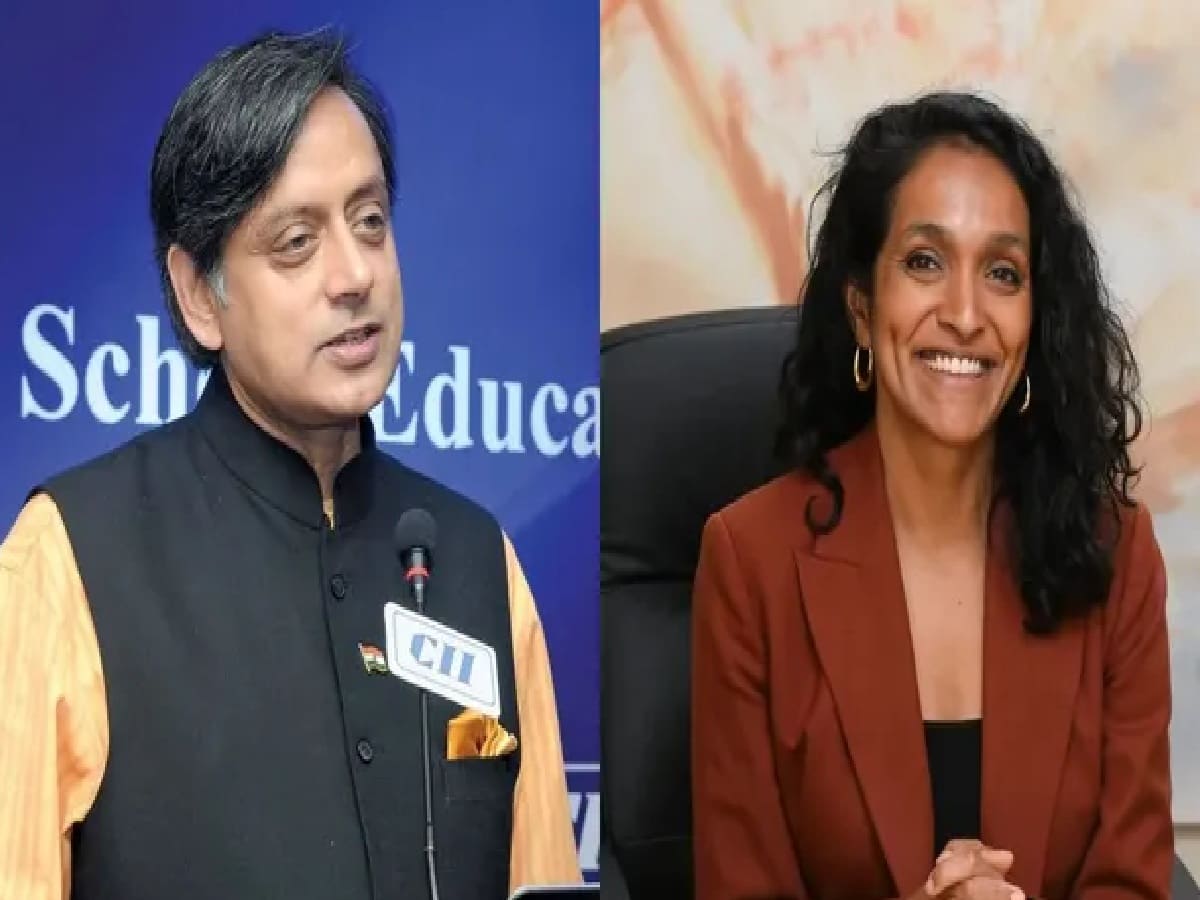
Shashi Tharoor Hails Nithya Raman's LA Win, Hits at Indian Mayors
In a political triumph echoing from Southern California to the coastal shores of southern India, Indian-American urban planner and progressive leader Nithya Raman has been elected mayor of Los Angeles, becoming the first person of Indian origin and the first South Asian to lead America's second-largest metropolis. Born in Thiruvananthapuram, Kerala, before moving to the United States with her family at the age of six, Raman’s ascendancy to the helm of City Hall marks a watershed chapter for the Indian diaspora. Her landmark victory in the November 2026 mayoral election, in which she unseated incumbent Mayor Karen Bass, was built on a grassroots campaign addressing chronic municipal crises, including homelessness, skyrocketing rental inflation, street safety, and basic civic delivery. As international congratulations poured in, senior Congress leader and Member of Parliament from Thiruvananthapuram, Dr. Shashi Tharoor, publicly celebrated Raman as a "daughter of Thiruvananthapuram," while simultaneously seizing the global moment to spotlight a glaring structural flaw back home: the systemic powerlessness of mayors governing India's rapidly growing megacities.
Taking to social media platform X, Tharoor expressed deep pride in the expanding political footprint of Indian-origin leaders steering premier global capitals, drawing attention to Raman’s historic win alongside New York City’s municipal leadership under Indian-American Zohran Mamdani. "Nithya Raman, daughter of Thiruvananthapuram, is the new mayor of Los Angeles," Tharoor wrote, emphasizing the extraordinary reality that the executive leadership of America’s two largest urban centers now rests with individuals tracing their roots directly to India. Yet, in characteristic fashion, the former United Nations under-secretary-general turned the spotlight inward, delivering a sharp critique of the archaic administrative frameworks that continue to paralyze local governance across Indian cities from Mumbai and Bengaluru to Delhi and Chennai.
The Colonial Hangover: Why Indian Mayors Lack Real Executive Clout
Tharoor observed that while Raman and her American contemporaries wield decisive executive authority over city departments, multi-billion-dollar civic budgets, and public policy, their counterparts in India remain virtually toothless figureheads. He noted that Indian mayors are hamstrung by a century-old colonial system inherited from the British Raj, which was originally engineered not to empower local citizens, but to suppress urban dissent and maintain centralized control through district magistrates and imperial administrators. "I am confident they will do a far better job than their counterparts in India," Tharoor remarked, pointing out that in Indian cities, authority and budgets are hopelessly fragmented across competing state-level departments and specialized parastatals, leaving elected municipal heads incapable of executing cohesive city planning or managing basic services.
In virtually every major Indian municipal corporation, the mayor functions as a ceremonial dignitary whose duties rarely extend beyond cutting ribbons, hosting civic receptions, and presiding over contentious council debates. Real administrative command, executive decision-making, and financial authorization remain firmly concentrated in the hands of the Municipal Commissioner—a career Indian Administrative Service (IAS) bureaucrat appointed directly by the state government. This structural imbalance produces an accountability vacuum: while local voters hold municipal councillors and mayors responsible for potholed streets, waterlogging, contaminated tap water, and uncollected waste, the actual power to tender contracts, release funds, and reprimand sanitation staff lies with a state-appointed official who answers to state-level political masters rather than local city residents.
Fragmented Governance and the Unfinished Promise of the 74th Amendment
The institutional weakness highlighted by Tharoor reflects the ongoing failure across Indian states to fully implement the spirit of the 74th Constitutional Amendment Act, passed in 1992 to decentralize democracy and empower urban local bodies. While Western metropolises like London, Paris, New York, and Los Angeles operate under strong-mayor systems where the city executive exercises unified control over policing, transportation, zoning, fire safety, and public health, Indian urban centers remain fractured. Essential civic components—such as urban transport, metro rail networks, power distribution, water supply boards, and master-plan development authorities like DDA in Delhi, BDA in Bengaluru, or MMRDA in Mumbai—operate independently of the municipal corporation, insulated from the control of the city’s elected mayor.
Urban policy analysts have long argued that this hyper-fragmentation prevents Indian cities from formulating coherent responses to climate shocks, urban sprawl, and infrastructure bottlenecks. Mayors in cities like Thiruvananthapuram, Kochi, or Hyderabad frequently find themselves pleading with state-level ministers simply to allocate routine repair funds for storm-water drains. By contrasting Nithya Raman’s executive authority in Los Angeles with the constrained reality of Indian civic leaders, Tharoor’s remarks have reignited debate on whether Indian cities, which contribute more than 60 percent of the national gross domestic product, can ever achieve sustainable modernization without directly elected, empowered mayors wielding comprehensive fiscal and executive autonomy.
An Urban Planner’s Ascent: Harvard, MIT, and Grassroots Tenacity
Nithya Raman’s journey to City Hall represents an unconventional blend of Ivy League academic scholarship, grassroots advocacy, and targeted electoral organizing. After leaving Kerala as a child, she pursued her undergraduate degree in social studies at Harvard University, graduating in 2003, before completing a Master’s in Urban Planning from the Massachusetts Institute of Technology (MIT) in 2008. Significantly, Raman’s commitment to urban welfare was refined through extensive frontline work in India during her early twenties. Moving to Chennai, Tamil Nadu, she founded Transparent Chennai, an open-data research organization dedicated to mapping urban poverty, improving informal settlements, and giving sanitation workers and slum dwellers actionable tools to demand accountability from municipal authorities.
Returning to the United States, Raman settled in the Silver Lake neighborhood of Los Angeles, working initially for the city administrative officer before immersing herself in direct grassroots organizing. In 2017, appalled by the exploding humanitarian crisis on the city's sidewalks, she co-founded the SELAH Neighborhood Homeless Coalition, coordinating volunteer food distribution, mobile hygiene stations, and case management services for unhoused Angelenos. In 2020, backed by progressive groups such as the Democratic Socialists of America, Raman staged a historic upset by defeating incumbent Councilmember David Ryu, becoming the first South Asian elected to the Los Angeles City Council and the first Asian-American woman to hold a council seat.
Tackling the Megacity: Housing, Infrastructure, and the 2028 Olympics
Having secured re-election to the City Council in 2024, Raman launched her ambitious bid for mayor in 2026, pitching a progressive blueprint focused on the fundamental necessities of daily urban survival: expanding affordable housing, preventing unlawful evictions, revitalizing dilapidated municipal streets, modernizing mass transit, and replacing punitive sweeps of homeless encampments with permanent supportive housing models. Her campaign tapped into widespread voter frustration with entrenched bureaucratic stagnation and sluggish emergency management, ultimately carrying her into the mayor’s office.
Taking office on December 14, 2026, Raman inherits formidable challenges in a city of nearly four million residents, including an escalating homelessness crisis, acute housing unaffordability, transit safety deficits, and rigorous infrastructural preparations for the upcoming 2028 Summer Olympic Games. Yet, as Tharoor noted, the critical distinction remains structural: unlike an Indian mayor, Mayor Raman will enter office armed with the direct executive authority, legislative veto powers, and fiscal tools required to enact meaningful urban transformation. For Thiruvananthapuram, Kerala, and the wider global diaspora, her election stands as a moment of historic pride; for India's policy architects, it offers an urgent reminder that world-class cities cannot be run on borrowed colonial scripts and powerless mayors.




