







Kochi Mini Cooper Crash: HC Grants Bail, Stays Driver's Release
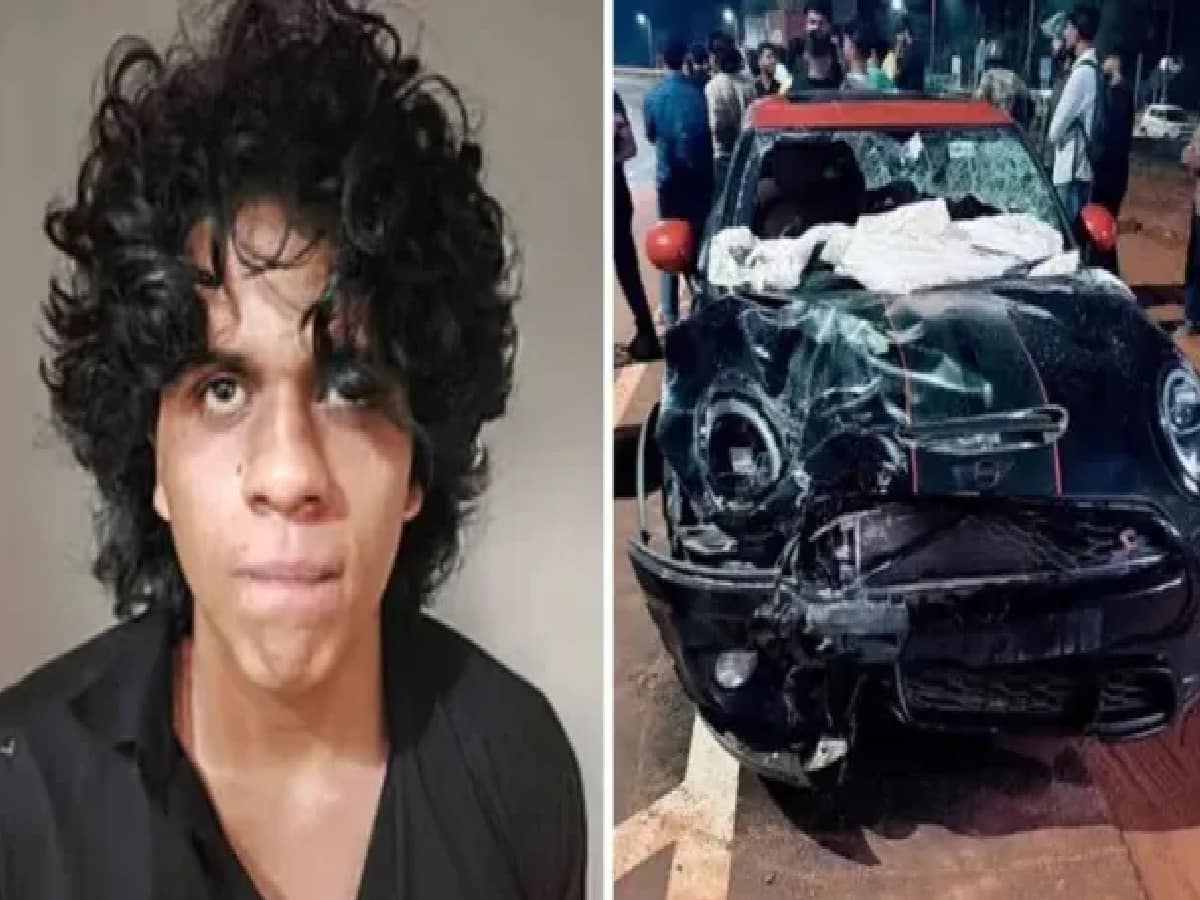
Ruling that judicial discretion and constitutional bail jurisprudence cannot be swayed by public indignation, the Kerala High Court on Friday, November 6, 2026, granted bail to three accused in the high-profile Nedumbassery Mini Cooper crash that claimed the lives of three young college students last month. A single-judge bench, while adjudicating the bail petitions moved by the accused, delivered an essential reminder on the independence of the judiciary, stating firmly that courts are bound to adjudicate matters strictly in accordance with statutory procedures and legal precedents rather than shifting tides of public opinion. However, taking into account the grave allegations of extreme drunken driving and potential evidence tampering, the High Court directed that the release of 19-year-old prime accused Suhail Sajeevan be deferred by 10 days, while permitting immediate conditional bail for his three companions who were arraigned for abetment.
High Court Rebuffs Public Clamour: Law Must Prevail Over Emotion
The High Court's observations directly addressed the intense media scrutiny and statewide fury that has gripped Kerala since the early morning hours of October 11, when the speeding luxury vehicle obliterated a two-wheeler near Kochi International Airport. Addressing the prosecution’s strenuous objections and the clamour for continued detention, the bench underscored that pre-trial incarceration cannot be converted into punitive retribution merely because a tragedy has incited public anger. The court emphasized that while the loss of three young lives was undeniably heartbreaking and catastrophic for their families, the primary purpose of bail is to secure the presence of the accused at trial and prevent interference with the administration of justice. The bench questioned the state prosecution on whether vital forensic, digital, and mechanical evidence had already been secured, prompting the state counsel to submit that investigative agencies are in the final stages of wrapping up documentation and would file the formal chargesheet within two weeks.
To balance individual liberty with the integrity of the pending investigation, the court sculpted a differentiated relief framework for the four youths in custody. The bench held that the three co-accused—Ninav, Ameer, and Joel—who were passengers in the vehicle and subsequently booked for abetting the rash act, were entitled to immediate enlargement on bail subject to stringent sureties, passport surrenders, and regular attendance before the investigating officer. Conversely, recognizing that 19-year-old Suhail Sajeevan was the individual behind the steering wheel during the lethal collision, the court imposed a mandatory 10-day buffer period before his bail order can be operationalized. This temporary hold ensures that the Nedumbassery police and state forensic experts can conclude critical recovery procedures, finalize blood toxicology reports, and record protected magistrate statements without the risk of outside interference.
The Midnight Horror at Nedumbassery: 144 Km/h Impact on Airport Road
The tragic event unfolded around 1:45 AM on Sunday, October 11, 2026, along the arterial Nedumbassery Airport-Athani corridor near Kochi. The victims—identified as 21-year-old Devika from Wayanad, her close friend Gopika from Palakkad, and their male companion Ijaz from Karnataka—were traveling together on a scooter after concluding a late-night study and work schedule. As their two-wheeler negotiated a curve near the airport road intersection, a black Mini Cooper driven by Suhail bore down upon them from behind at breakneck velocity. The impact was catastrophic: the luxury hatchback struck the rear of the scooter with such kinetic force that the three youngsters were thrown violently across the carriageway, while the two-wheeler was dragged nearly 100 meters along the asphalt before the car finally ground to a halt. All three riders suffered multiple traumatic injuries, skull fractures, and fatal internal hemorrhaging, dying almost instantaneously before emergency medical personnel could arrive on the scene.
The investigation received crucial empirical backing following a technical inspection report submitted by vehicle manufacturer BMW. Decoding data retrieved from the car's Advanced Crash Safety Module (ACSM) and electronic engine control unit, automotive engineers confirmed that just five seconds prior to the collision, the vehicle was hurtling forward at an astonishing 162 kilometers per hour. Despite desperate last-second braking, the Mini Cooper crashed into the victims' two-wheeler at a velocity of 144 km/h—nearly three times the permissible speed limit on the suburban airport connector road. The mechanical telemetry fully corroborated traffic surveillance camera footage recovered by the Ernakulam Rural Police, disproving defense claims of sudden mechanical failure and proving beyond doubt that the vehicle was being driven in a reckless, life-threatening manner.
'My Father Will Handle It': The Callous Remark That Sparked Statewide Outrage
Beyond the shocking speed figures, the case ignited severe public condemnation due to the alleged conduct of the accused immediately following the crash. Local residents, auto-rickshaw drivers, and airport travelers who rushed to the crash site to assist the dying victims reported that Suhail emerged from the wrecked vehicle without displaying any remorse, shock, or empathy. Instead, eyewitnesses reported that he engaged in aggressive arguments with the assembling crowd and boastfully declared that his affluent father, a prominent businessman, would "take care of everything" and handle the police with money. Subsequent medical evaluations and forensic blood analysis revealed that Suhail was severely intoxicated, with blood alcohol concentrations measuring nearly five times the legally permissible limit, indicating complete disregard for basic public road safety.
The tragedy resonated deeply across Kerala, drawing attention to the stark economic contrast between the reckless driver and the victims. In Wayanad, the family of deceased student Devika revealed that her parents had sold their ancestral agricultural land simply to fund her education and hostel expenses, viewing her promising career as the sole financial anchor for their impoverished household. Heartbroken relatives questioned how privileged youths could treat public roads as personal racetracks, demanding that state prosecutors press non-bailable culpable homicide charges under Section 105 of the Bharatiya Nyaya Sanhita (BNS) rather than treating the crash as a case of routine vehicular negligence. The public anger prompted senior administrative officials, human rights activists, and youth associations to monitor the police probe closely to prevent any political or financial interference.
Finalizing the Chargesheet: Strict Two-Week Timeline for Kerala Police
With the High Court fixing a definitive two-week window for the prosecution to wrap up investigation protocols, the Ernakulam Rural Police team, led by senior supervisory officers, has intensified round-the-clock efforts to complete the final report. Police investigators are synchronizing the BMW electronic telemetry data with physical skid-mark measurements, toxicology test findings, and the statements of fifteen independent eyewitnesses who witnessed the crash and its immediate aftermath. Investigators have also secured billing records and digital surveillance footage from an upscale lounge in Kochi where the four accused had reportedly attended a late-night party before embarking on their drive toward the international airport.
Legal experts observe that while the High Court’s ruling grants procedural bail to the accused, it sets up an uncompromising framework ensuring that trial proceedings can commence without delay. The 10-day delay in Suhail’s physical release provides investigating officers with an undisturbed runway to lock in forensic evidence, seal witness testimonies, and file formal charges before the jurisdictional magistrate. By balancing the constitutional rights of the accused against the rigorous demands of criminal justice, the Kerala High Court has demonstrated that the rule of law remains steady and impartial, even in the face of profound human tragedy and overwhelming public emotion.




