







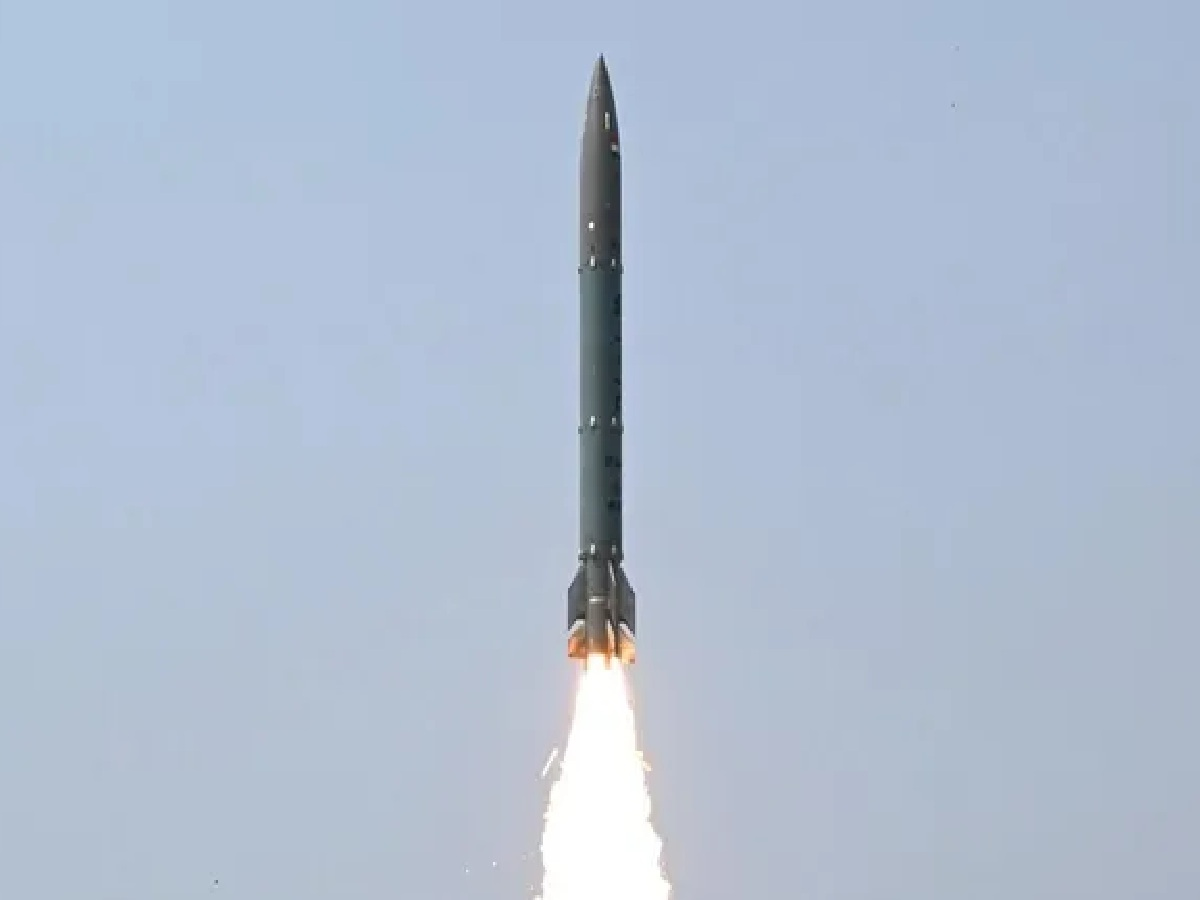
India Tests Pralay Missile: 500-Km Strike Weapon Ready for Army
In a major boost to national defense and indigenous tactical strike capabilities, India on Thursday, November 5, 2026, successfully conducted a crucial flight test of its indigenously developed short-range quasi-ballistic missile 'Pralay' from the launch complex at Dr APJ Abdul Kalam Island off the coast of Odisha. Fired at approximately 11:10 AM as part of intensive user evaluation trials, the missile completed its entire mission profile with pinpoint accuracy, fulfilling every operational benchmark laid down by the armed forces. Comprehensive trajectory data captured by advanced radars, electro-optical telemetry networks, and downrange tracking stations positioned by the Integrated Test Range (ITR), Chandipur, validated that the missile’s propulsion, guidance systems, and terminal maneuver algorithms operated with flawless precision.
The successful evaluation marks the final validation phase before the weapon system is formally inducted into the operational inventory of the Indian Army and the Indian Air Force. Following the launch, Union Defence Minister Rajnath Singh publicly commended the Defence Research and Development Organisation (DRDO), the armed forces, and industrial manufacturing partners, affirming that the achievement represents a monumental milestone in safeguarding the nation's sovereign borders. Designed specifically to bridge a long-standing tactical capability gap in non-nuclear battlefields, the missile offers military commanders a rapid-reaction, highly responsive conventional strike option capable of neutralizing hardened enemy installations without crossing strategic nuclear thresholds.
Precision at 500 Kilometers: Inside Pralay's Lethal Strike Capabilities
Engineered spearheaded by the Research Centre Imarat (RCI) in Hyderabad in collaboration with multiple specialized DRDO laboratories, Pralay is a state-of-the-art, canister-launched, surface-to-surface tactical weapon system. Powered by a two-stage solid-propellant rocket motor, the missile is capable of engaging targets across variable operational distances ranging between 150 and 500 kilometers. This broad operational envelope enables battery commanders to strike targets located deep across frontline friction points, from enemy logistics nodes and communication hubs to forward airfields and mechanized staging areas.
What elevates Pralay into the elite category of modern battlefield weaponry is its versatile payload capacity, capable of carrying specialized conventional warheads weighing between 500 and 1,000 kilograms. The missile can be configured with multiple lethal warhead configurations, including High Explosive Pre-Fragmented (HEPF) charges to decimate infantry concentrations and air defense batteries, Penetration-cum-Blast (PCB) warheads engineered to destroy reinforced underground bunkers and subterranean command posts, and Runway Denial Penetration Submunitions (RDPS) to shut down military airstrips. Coupled with a state-of-the-art navigation suite incorporating an indigenous Ring Laser Gyro-based Inertial Navigation System (INS) augmented by satellite navigation and an active terminal radar seeker, Pralay achieves a Circular Error Probable (CEP) of less than ten meters, ensuring clinical destruction of designated high-value targets.
Quasi-Ballistic Flight: Defeating Modern Air and Missile Defence Shields
The tactical brilliance of Pralay lies in its quasi-ballistic flight profile, a sophisticated aerodynamic design that fundamentally distinguishes it from traditional ballistic projectiles. While conventional ballistic missiles travel along predictable parabolic flight paths that can be readily computed and intercepted by surface-to-air tracking radars, Pralay stays largely within the Earth's atmosphere throughout its trajectory. It maintains a low-altitude profile that minimizes radar exposure time, depriving adversarial early-warning radars of crucial tracking opportunities.
During the terminal phase of its flight, when the weapon descends at hypersonic velocities reaching Mach 6, Pralay utilizes dynamic aerodynamic control surfaces and thrust-vector actuators to execute sudden evasive maneuvers. This ability to drastically alter course while plunging toward its objective renders existing anti-ballistic missile (ABM) interceptors, such as long-range air defense shields deployed across hostile borders, virtually ineffective against it. By mimicking the maneuverability of an advanced cruise missile while retaining the sheer destructive speed and kinetic punch of a ballistic missile, Pralay establishes an uninterceptable strike vector capable of penetrating heavily fortified air defense umbrellas.
Strategic Edge on the Frontiers: Powering India's Rocket Force
The impending deployment of Pralay directly addresses contemporary security realities along India's northern and western borders, particularly along the high-altitude terrain of the Line of Actual Control (LAC) and the Line of Control (LoC). For years, military planners recognized an operational void between the BrahMos supersonic cruise missile system—which possesses surgical precision but carries lighter warheads—and strategic long-range ballistic missile platforms like the Agni series, which are strictly designated for nuclear deterrence. Pralay plugs this critical void, giving India a potent, non-nuclear conventional punch that can be deployed decisively in regional military standoffs without violating the country's strict 'No First Use' nuclear doctrine.
Mounted on heavy-duty, all-terrain Ashok Leyland 12×12 High Mobility Transporter-Erector-Launcher (TEL) vehicles, the missile system boasts exceptional tactical agility. The canisterized configuration allows missiles to be stored hermetically sealed for years, enabling rapid road movement across rugged mountainous roads and immediate launch sequences with minimal preparation time. The induction of Pralay is set to form the core operational foundation of India's planned Integrated Rocket Force (IRF), a specialized joint service structure designed to coordinate non-nuclear missile strikes, suppress enemy defenses, and dominate the operational depth in multi-domain conflicts.
Indigenous Breakthrough: DRDO, Bharat Dynamics, and Make in India
The operational readiness of Pralay represents a triumph for the national vision of Aatmanirbhar Bharat (self-reliance) in cutting-edge defense technology. Production partner Bharat Dynamics Limited (BDL) has played an instrumental role in scaling manufacturing capabilities, ensuring that initial procurement orders from the armed forces—including an estimated 250 units for the Indian Army and 120 units for the Indian Air Force—can be delivered rapidly through domestic assembly lines. Defence Secretary and Chairman of DRDO Rajesh Kumar Singh congratulated the scientists, technicians, and military personnel involved in the flight test, noting that the weapon’s indigenous intellectual property guarantees operational sovereignty without reliance on foreign supply chains.
As geopolitical dynamics in the Indo-Pacific accelerate the demand for advanced military deterrents, Pralay also presents significant export potential for friendly partner nations seeking affordable, high-precision tactical defense solutions. With user evaluation trials now successfully concluded off the Odisha coastline, the induction of Pralay ensures that India enters the next decade possessing an indomitable, lightning-fast conventional deterrence shield capable of decisive action across any contested frontier.




