







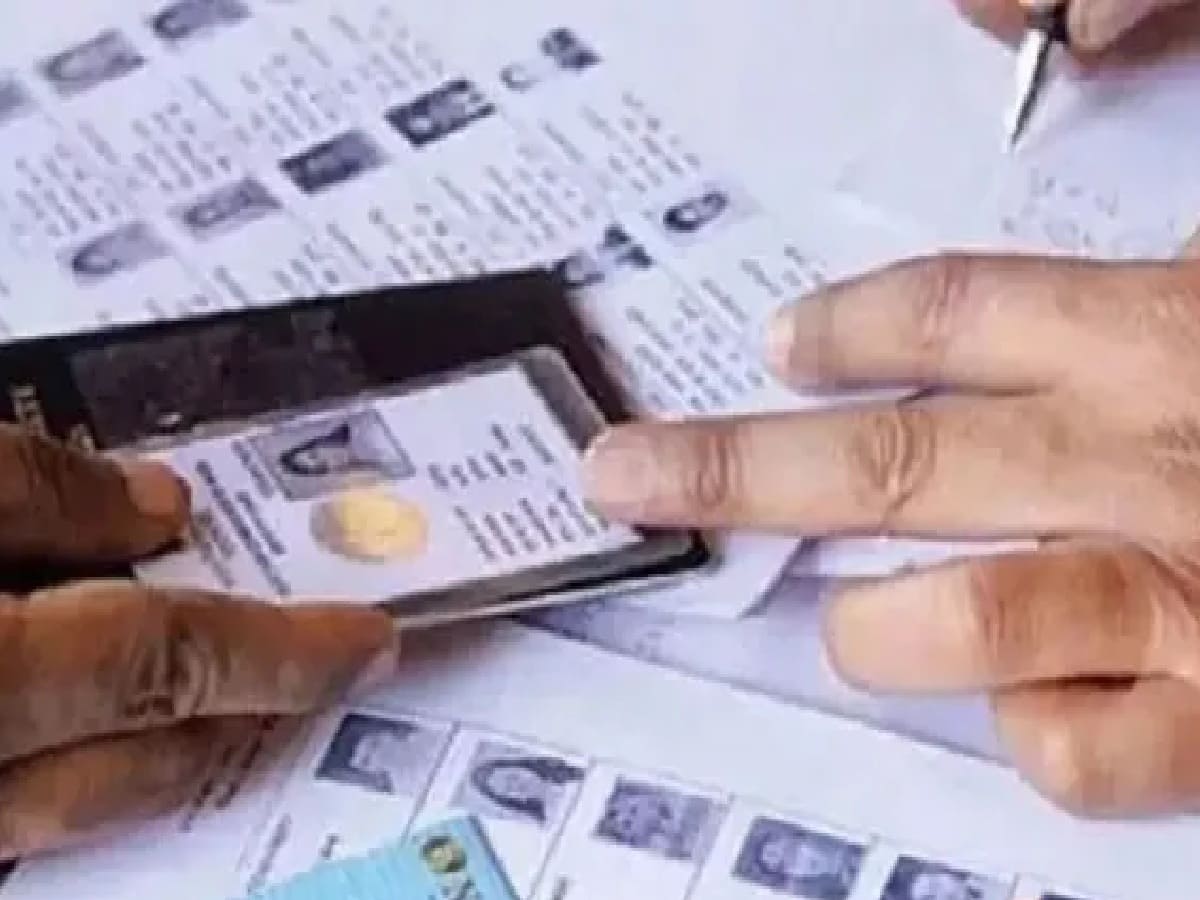
Bombay HC Orders EC: Restore 6 Goa Family Members to Voter List
Delivering a decisive legal blow against administrative disenfranchisement, the Goa bench of the Bombay High Court on Thursday ordered the Election Commission of India (ECI) to immediately reinstate the names of North Goa resident Paresh Salgaonkar and five of his family members into the state’s electoral rolls. A division bench comprising Justice Valmiki Menezes and Justice Amit S. Jamsandekar issued a formal writ of mandamus directing the Electoral Registration Officer (ERO) of the Santa Cruz assembly constituency to verify the family’s residence and re-enter their names into Part 25 of the voter list within a strict ten-day deadline. The judgment resolves a contentious legal battle triggered by the summary deletion of genuine, long-standing voters during the Election Commission's controversial Special Intensive Revision (SIR) process. By rejecting the poll body's arguments of procedural finality, the High Court established an essential constitutional precedent: bureaucratic guidelines and automated software systems can never override an eligible Indian citizen’s fundamental franchise guaranteed under the Representation of the People Act.
The ruling carries immense significance for electoral governance, voter rights, and civil liberties across India, particularly in regions undergoing massive door-to-door voter list revisions. The legal confrontation emerged after the Salgaonkar family discovered their voting rights had been erased despite following every statutory requirement mandated by election law. The bench underscored that the right of an eligible citizen to cast a ballot lies at the very foundation of parliamentary democracy, noting that electoral registration officers cannot use administrative convenience or revision exercises as an excuse to purge legitimate voters from active rolls without proper notice or inquiry.
The Salgaonkar Ordeal: How a Routine Address Change Led to Total Erasure
The legal dispute traces its origins to a simple intra-constituency residential relocation within North Goa’s Santa Cruz assembly segment. Paresh Salgaonkar and his family had been registered, active voters exercising their democratic franchise in Santa Cruz continuously since 1995. Having relocated their primary residence from Part 29 to Part 25 of the exact same assembly constituency, the family complied with election protocols by formally submitting Form 8 on November 12, 2025—the designated statutory application for shifting of residence and updating particulars within a constituency. The application was officially uploaded onto the Election Commission's national ERO portal in early December 2025, well within the administrative deadlines stipulated for the enumeration process.
However, rather than updating their address smoothly, the bureaucratic machinery initiated a chain of administrative failures. While the electoral authorities promptly struck off the family’s names from the Part 29 registry where they had voted for over three decades, they completely failed to enroll them in the draft roll for Part 25. To the family's shock, the Electoral Registration Officer summarily rejected their Form 8 applications on January 21, 2026. Subsequent appeals filed before the District Election Officer (DEO) and the Chief Electoral Officer (CEO) of Goa were dismissed in routine fashion, leaving the entire family completely stripped of their voter status. Left with no alternative remedy against bureaucratic apathy, Salgaonkar approached the High Court to challenge the arbitrary deletion and enforce their constitutional right to vote.
Statutory Law Trumps Guidelines: Why the High Court Rebuked the Election Commission
Arguing before the division bench, Advocate Vivek Rodrigues, representing the Salgaonkar family, demonstrated that his clients had complied fully with statutory procedures and had been unlawfully disenfranchised without an opportunity to be heard. In response, the Election Commission of India, represented by Senior Advocate Ashutosh Kumbhakoni and counsel Gaurish Agni, defended the deletions by arguing that the Special Intensive Revision operates as a completely fresh (de novo) preparation of electoral rolls. The ECI maintained that because previous entries are not automatically carried over during an intensive revision, any individual un-enumerated during field drives must register as a brand-new voter by submitting Form 6 rather than modifying records via Form 8.
The High Court decisively dismantled this stance, delivering a firm judicial rebuke to the Election Commission. Justices Menezes and Jamsandekar ruled unequivocally that the statutory provisions of the Representation of the People Act, 1950, and the Registration of Electors Rules, 1960, remain fully operational throughout any Special Intensive Revision. The bench observed that an administrative revision cannot freeze statutory rights or grant registration officers arbitrary discretion to disregard Form 8 applications. "We reject any contention of the ECI that during the process of a Special Intensive Revision, the ERO is within the law to refuse giving effect to Form 8," the court stated. The judges highlighted that stripping citizens of their voting status without a fair hearing represents an unacceptable denial of democratic participation.
The ERONET Trap: Exposing the Flawed 'Catch-22' of Voter Deletions
A critical highlight of the High Court’s ruling was its sharp scrutiny of the automated workflows embedded within the Election Commission's digital portal, ERONET. The judges identified a glaring institutional "catch-22" created by automated system parameters that routinely trap relocated citizens. When genuine electors move residences, the automated system mechanically rejects their Form 8 updates while officials instruct them to submit Form 6. However, Form 6 is statutorily reserved exclusively for first-time electors or voters moving from an entirely different constituency, requiring an applicant to declare under penalty of law that they are not enrolled elsewhere.
The bench noted that compelling existing voters to sign Form 6—or forcing them to endorse pre-filled enumeration forms for residences they have already vacated—effectively coerces citizens into making false legal declarations. The High Court observed that instead of rejecting Form 8 submissions on technical pretexts, registration officers must hold applications in active verification rather than purging citizens into legal limbo. The bench warned that allowing software automation to override due inquiry constitutes an impermissible suspension of Section 22 of the Representation of the People Act read with Rule 13 of the Registration of Electors Rules, turning an exercise meant for electoral integrity into an instrument of voter suppression.
Uncompromising Judicial Mandate: 10-Day Restoration and Refusal of Stay
Affirming the non-negotiable nature of electoral inclusion, the High Court allowed the writ petition in its entirety and mandated the ERO of Santa Cruz to restore all six Salgaonkar family members to the Part 25 electoral roll within ten days following straightforward verification of their current address. Following the pronouncement, counsel representing the Election Commission urgently pleaded for a two-week stay on the operation of the judgment to enable the poll body to mount an appeal before the Supreme Court of India.
The bench rejected the Commission's request for a stay on the spot. "No stay. How can we grant a stay on including names of voters in the list? You get a stay from the Supreme Court," the judges remarked, emphasizing that judicial discretion cannot be exercised to keep eligible citizens disenfranchised for even a single day. The decisive ruling serves as a vital safeguard for civil society, offering a powerful legal defense for millions of Indian electors and reminding election administrators that administrative convenience must always yield to the constitutional supremacy of the citizen's vote.




