







SC Ends 60-Yr Power Row: HP to Get 11,973 MU from Punjab, Haryana
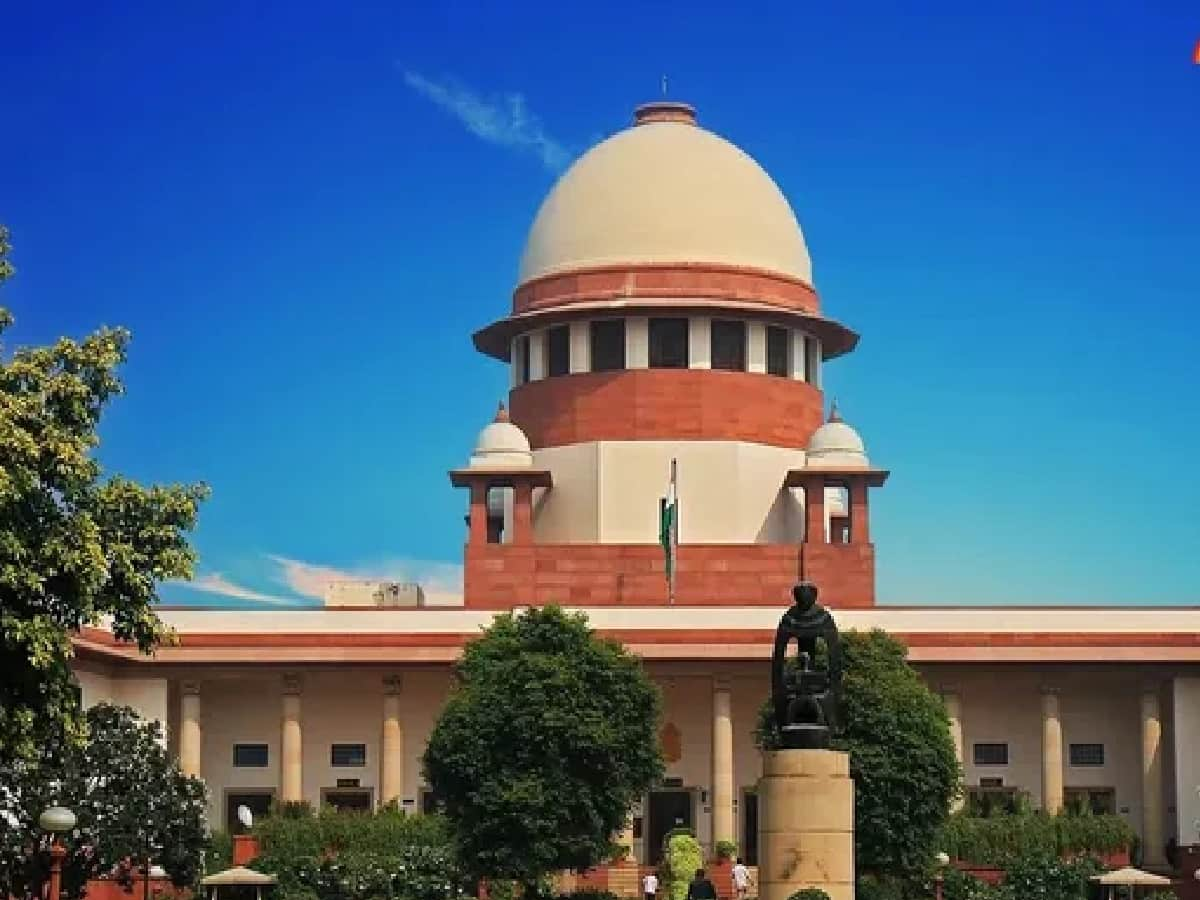
Bringing finality to one of India's longest-running inter-state federal disputes, the Supreme Court of India on Friday delivered a historic verdict resolving a six-decade-old energy standoff between Himachal Pradesh, Punjab, and Haryana. A three-judge bench presided over by Chief Justice of India Surya Kant, alongside Justice Joymalya Bagchi and Justice V. Mohana, formally approved and ratified a structured resolution framework formulated by the Central Government. Under the judicially sanctioned mechanism, the neighboring agrarian states of Punjab and Haryana will collectively supply 11,973 million units (MU) of electrical power to the hill state of Himachal Pradesh spread across a phased timeline of 20 years. The landmark judgment brings closure to contentious fiscal and resource claims stemming from the Bhakra Nangal and Beas hydroelectric projects under the Bhakra Beas Management Board (BBMB), a bitter legacy originating from the state reorganization of northern India in 1966.
The bench’s intervention effectively operationalizes a long-pending 2011 Supreme Court verdict that had authoritatively affirmed Himachal Pradesh’s legal entitlement to a 7.19 percent share in the mega hydroelectric undertakings located within its territory, with retrospective effect from the date of the reorganization. For decades, successive political administrations in Shimla had contended that despite bearing the environmental displacement, catchment submergence, and geographical burdens of giant storage dams like Bhakra, Pong, and Dehar, the state was systematically denied its rightful power dividend. By accepting the Centre’s pragmatic compromise of converting historical monetary arrears into a sustained physical supply of clean power, the apex court has neutralized an intractable legal friction, delivering a generational windfall to Himachal Pradesh while shielding Punjab and Haryana from an immediate, destabilizing cash outflow.
The 1966 Genesis: How the Reorganization of Punjab Triggered a Hydel Tug-of-War
The roots of the protracted dispute date back to the historic passage of the Punjab Reorganisation Act of 1966, which carved out the state of Haryana and transferred several hilly Punjabi-speaking and Pahari enclaves into the newly unified territory of Himachal Pradesh. Amid this sweeping redrawing of internal boundaries, monumental multi-purpose river valley projects constructed across the Sutlej and Beas river basins—notably the Bhakra Nangal Dam, the Dehar Power House, and the Pong Dam reservoir—remained under centralized, inter-state management frameworks that heavily favored the downstream riparian states of Punjab and Haryana. While the roaring waters generated billions of kilowatt-hours of cheap hydroelectricity to power the Green Revolution across the fertile plains, Himachal Pradesh found itself relegated to receiving a negligible sliver of power, prompting the hill state to initiate protracted constitutional litigation demanding equitable compensation as the host territory.
The legal turning point arrived in September 2011, when the Supreme Court formally ruled that Himachal Pradesh possessed an inherent statutory right to a 7.19 percent power share in the Bhakra project starting retrospectively from November 1, 1966. The top court further decreed that the state was entitled to identical 7.19 percent shares in the Dehar Project from November 1977 and the Pong Dam Project from January 1978 onwards. In that benchmark ruling, the apex judicial panel codified the regional distribution matrix by allocating 51.80 percent of the hydel output to Punjab, 37.51 percent to Haryana, and 3.50 percent to the Union Territory of Chandigarh, while preserving Rajasthan’s designated downstream rights. However, because billions of electrical units had already been generated, distributed, and consumed across northern power grids over the preceding four decades without paying Himachal its adjudicated cut, computing and recovering the massive cumulative arrears became an explosive political and financial flashpoint that languished in bureaucratic deadlock for another fifteen years.
Inside the Compromise Formula: Units, Arrears, and the 20-Year Power Transfer
To break the administrative paralysis, the Central Electricity Authority (CEA) stepped in to conduct exhaustive actuarial calculations, determining that Himachal Pradesh’s gross historical entitlement stood at an astronomical 13,066 million units of electricity. However, calculating the final net settlement required accounting for the original construction and capital overhead costs borne by the partner states decades ago. Under the comprehensive formula accepted by the bench, a one-time adjustment of ₹420 crore was executed against Himachal Pradesh’s historic capital liabilities incurred during the initial building of the dam complexes. This major financial set-off absolves Himachal Pradesh of any future monetary counter-claims from Punjab or Haryana, adjusting the gross balance downward to a definitive net volume of 11,973 million units to be delivered directly into the state’s regional grid.
The timeline for transferring this vast quantum of electrical energy triggered intense debate during court hearings. The Union Power Ministry initially advocated for a 15-year staggered payout framework to prevent sudden shocks to regional power distribution corporations. The Punjab government strongly opposed any rapid payout schedule, arguing that its state-run power utilities (PSPCL) were already reeling under heavy agricultural subsidies and grid stresses, and formally petitioned the court for an extended 30-year delivery horizon. Conversely, the Himachal Pradesh government pushed aggressively for an accelerated 10-year repayment schedule to monetize the power rapidly for its stressed hill treasury. Exercising its equitable jurisdiction under Article 142, the Supreme Court struck a delicate federal balance, fixing a firm 20-year repayment window that ensures Himachal receives a steady, predictable stream of clean power annually without crippling the operational stability of power grids across Punjab and Haryana.
Economic Dividend for Himachal Pradesh and a Blueprint for Cooperative Federalism
The resolution delivers transformative fiscal and environmental benefits for Himachal Pradesh, a state currently navigating acute budgetary constraints and seasonal energy imbalances. Receiving nearly 12,000 million units of zero-emission hydel power over two decades will enable the state to significantly reduce its reliance on costly spot-market energy purchases during peak winter months, when frigid temperatures freeze mountain rivers and drastically suppress local hydro generation. Furthermore, the state can strategically trade surplus green energy during summer and monsoon months across the national power exchanges, unlocking hundreds of crores in recurring non-tax revenue to finance critical mountain infrastructure, health systems, and ecological restoration across disaster-vulnerable valleys.
Beyond its substantial economic implications, the Supreme Court's decisive verdict establishes a vital judicial blueprint for cooperative federalism and interstate water-energy dispute resolution across India. By rejecting zero-sum financial penalties in favor of phased, in-kind energy transfers, the apex court has protected regional peace among northern neighbors while firmly upholding the principle of natural justice for resource-bearing states. The closure of this 60-year saga reinforces the sanctity of institutional dispute resolution, ensuring that the legacy of India’s pioneering hydel projects now serves as an engine of regional collaboration rather than prolonged inter-state discord.




