







Post-Diwali Smog Chokes NCR as AQI Crosses 400 and Scientists Explain Why
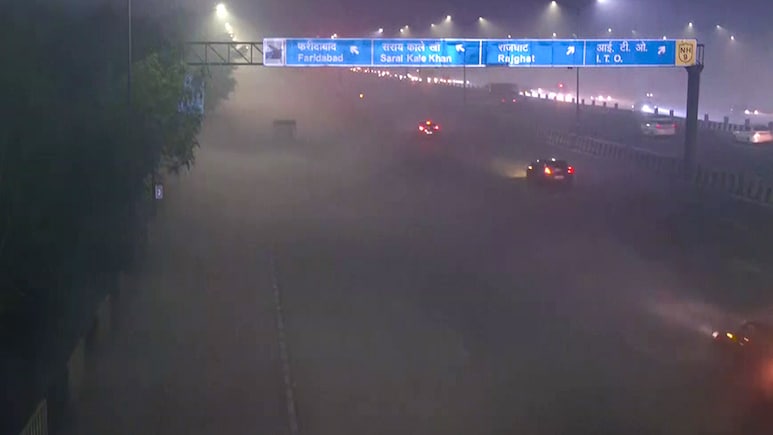
The morning after the grand festival of lights brought a stark and alarming reality across northern India, as a thick, toxic blanket of smog engulfed the National Capital Region (NCR). With widespread firecracker celebrations combined with unfavorable meteorological conditions, the Air Quality Index (AQI) in multiple pockets breached the 400-mark, plunging straight into the 'severe' zone. Residents across Delhi, Noida, Gurugram, and neighboring urban centers woke up to stinging eyes, restricted visibility, and heavy breathing difficulties. Environmental scientists and atmospheric researchers note that while festive bursting contributed significantly to the sudden pollutant spike, a combination of regional weather patterns and stagnant wind movements created a dangerous atmospheric trap.
Surge in Pollution Levels Across Delhi-NCR
Data compiled by the Central Pollution Control Board (CPCB) and automated monitoring networks revealed a dramatic escalation in air toxicity following festival celebrations. The city-wide average AQI hovered near the 'very poor' threshold at 376, but individual monitoring stations painted a much grimmer picture. Multiple locations—including Sonia Vihar, Burari Crossing, Vivek Vihar, and pockets of Noida and Faridabad—recorded AQI levels surging past the 400 mark, entering the hazardous 'severe' category. Hourly readings for fine particulate matter such as PM2.5 and PM10 spiked exponentially during the night, with several stations registering concentration peaks approaching 1,000 micrograms per cubic meter, far exceeding safe national and international standards.
The Science Behind the Spike: Why Post-Diwali Smog Intensifies
Atmospheric scientists and meteorologists explain that the post-Diwali air quality crisis is rarely caused by a single factor, but rather by a compounding mix of chemical emissions and seasonal weather shifts. When high-intensity firecrackers are ignited, they release massive quantities of metallic aerosols, sulphur dioxide, carbon monoxide, and unburnt carbon particulates into the atmosphere.
Compounding these localized emissions is the onset of winter meteorological conditions across northern India. As surface temperatures drop, a phenomenon known as inversion occurs, trapping heavy pollutants close to the ground. According to inputs from the Air Quality Early Warning System (EWS), low ventilation coefficients and sluggish wind speeds below 10 kilometers per hour prevent harmful particulate matter from dispersing, causing a dense shroud of smog to stagnate over the plains for days.
Health Implications and Advisory for Vulnerable Populations
Public health experts and medical practitioners have issued stern advisories, urging citizens—especially children, the elderly, and individuals with pre-existing respiratory or cardiovascular conditions—to minimize outdoor exposure. High concentrations of PM2.5 particles are small enough to penetrate deep into lung tissues and enter the bloodstream, triggering acute asthma attacks, chronic bronchitis, and eye irritation. Doctors recommend keeping windows shut during peak morning hours, utilizing indoor air purifiers where available, and wearing N95 masks outdoors to filter out toxic micro-particles.
Looking Ahead: Administrative Measures and Long-Term Solutions
As pollution levels persist in the severe bracket, municipal bodies and anti-pollution task forces are ramping up enforcement under graded response action frameworks. Measures such as intensive mechanical sweeping, water sprinkling on major arterial roads, and strict monitoring of construction sites are being deployed to mitigate secondary dust suspension. Environmental scientists continue to emphasize that sustainable improvements in regional air quality require year-round coordinated action across neighboring states, focusing on stubble management alternatives, industrial emission curbs, and a gradual transition toward green-certified community celebrations.




