







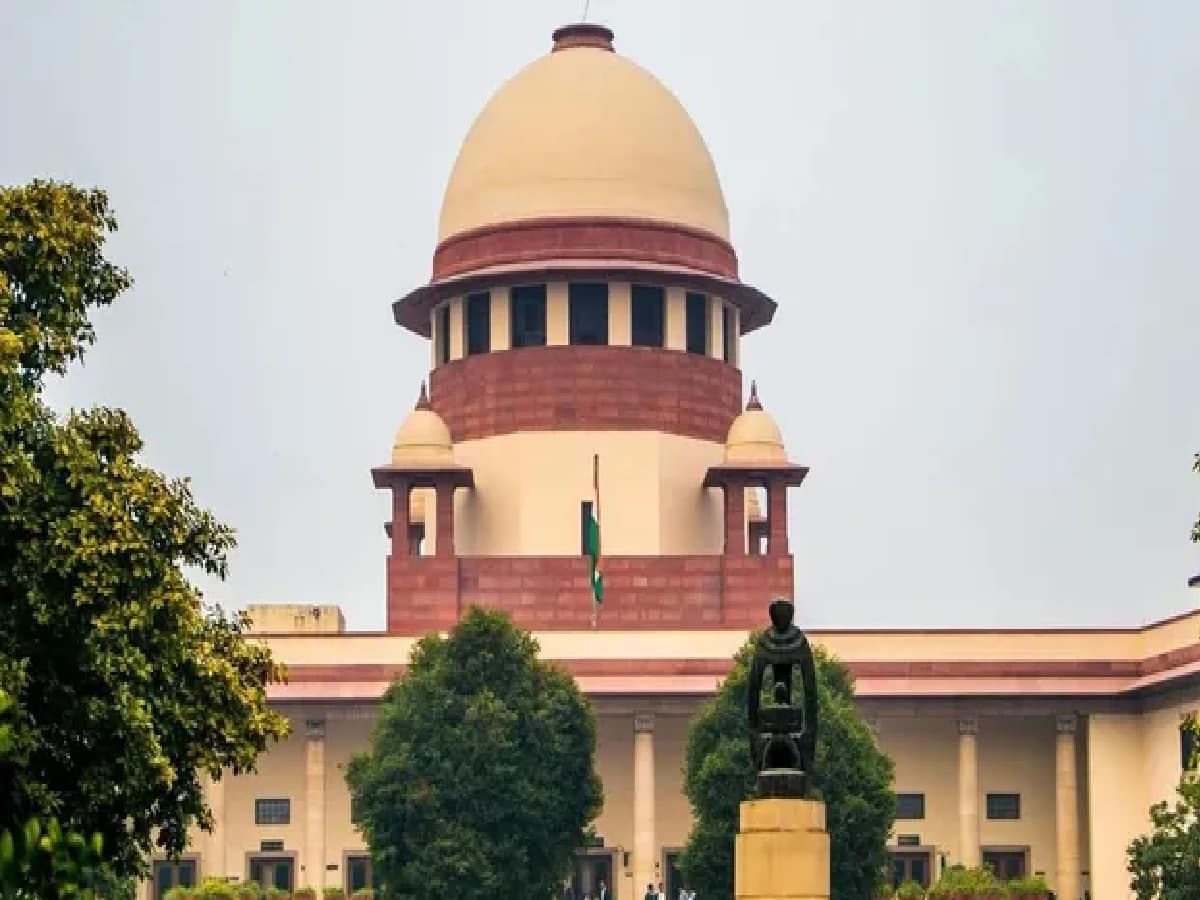
'No Candidate Has Right to Reserve Seat': Supreme Court on SC/ST Quota
In a significant ruling clarifying the constitutional contours of electoral reservations in grassroots democratic institutions, the Supreme Court of India has held that no voter or prospective candidate possesses a vested legal right to demand that a particular constituency be reserved for the Scheduled Caste (SC) or Scheduled Tribe (ST) community. Delivering the observation on Monday, November 16, 2026, a bench of Justices Joymalya Bagchi and V. Mohana dismissed a Special Leave Petition (Sau. Rupali Indrabhushan Sonde @ Ku. Rupali Sharadrao Badhiye v. State of Maharashtra & Ors.) challenging Rule 12 of the Maharashtra Zilla Parishads and Panchayat Samitis (Manner and Rotation of Reservation of Seats) Rules, 2025, framed pursuant to amendments to the Maharashtra Zilla Parishads and Panchayat Samitis Act, 1961. Under the challenged 2025 provision, the first general local body election held after the amended rules came into force is treated as the fresh starting point for rotating SC/ST-reserved seats—effectively resetting the earlier rotation cycle following a fresh delimitation of electoral divisions. Appearing for the petitioner, senior advocate Vipin Sanghi argued that resetting the rotation cycle wiped out the historical sequence of previous elections, unfairly depriving constituencies that had never been reserved—and were finally due for SC/ST reservation under the old cycle—of their turn. Rejecting that contention, the Supreme Court bench underscored that while the Constitution and statutory rules mandate that the total number of seats reserved for SC/ST communities must be proportionate to their population within the state or local democratic unit, the manner, cut-off date, and timing of rotating individual constituencies rest squarely within the policy discretion of the government. Even as it declined to interfere with the amended rules, the bench granted the petitioner liberty to submit a formal representation to the competent state authority seeking reconsideration of the rotation scheme in accordance with law. For voters, panchayat leaders, legal practitioners, and civic observers across New Delhi, Mumbai, Nagpur, Pune, Lucknow, Patna, Bhopal, Jaipur, Bengaluru, and Chennai, the judgment settles a recurring legal dispute ahead of local body and municipal elections nationwide.
Why the Supreme Court Rejected the Plea on SC/ST Seat Rotation
During Monday's hearing, senior advocate Vipin Sanghi—appearing through Advocate-on-Record Anagha S. Desai—submitted that merely introducing amended rules after a boundary revision cannot justify erasing decades of prior rotation history, particularly when most electoral divisions remain substantially identifiable despite changes in geographical boundaries, area, or serial numbering. Sanghi contended that starting the rotation clock afresh meant a constituency with a lower SC/ST population percentage that had waited years for its turn might never receive reservation.
| Legal & Constitutional Issue | Petitioner's Argument (Senior Adv. Vipin Sanghi) | Supreme Court Bench Ruling (Justices Joymalya Bagchi & V. Mohana) |
| Right to Specific Seat Reservation | Constituencies overlooked in past cycles had a legitimate expectation of being reserved next under the old rotation order | No voter or candidate has a vested right to have a specific constituency reserved for SC/ST communities |
| Constitutional Mandate on Quota | Resetting the cycle distorts fair representation across rural electoral divisions | Constitution and rules require proportionate reservation of total seats based on SC/ST population—which was undisputedly met |
| Rule 12 of Maharashtra 2025 Rules | Treating the next general election as the first cycle wipes out historical rotation and violates Article 14 | Manner, cut-off date, and timeframe of seat rotation lie within government discretion following fresh delimitation; Rule 12 upheld |
| Relief / Liberty Granted | Sought quashing of the fresh rotation starting point | Petition dismissed, but petitioner granted liberty to submit a representation to the appropriate authority for reconsideration |
Responding directly to the plea, the bench of Justices Joymalya Bagchi and V. Mohana posed a pointed question: "Do voters or candidates have the right to get their constituency reserved for the SC/ST community?" Answering in the negative, Justice Bagchi observed that shifting a cut-off date falls within governmental authority and that no individual elector or aspirant can claim an enforceable right over a particular seat's reservation status.
Proportionate Representation vs. Constituency-Specific Entitlement
In its dictated order dismissing the appeal against the Bombay High Court's Nagpur bench judgment of September 19, 2025, the apex court drew a clear legal distinction between collective proportionate representation and individual constituency entitlement. The bench noted that neither side disputed that the mandatory percentage of Zilla Parishad and Panchayat Samiti seats proportional to the SC/ST population had been duly reserved. While statutory rules prescribe rotating reserved seats in descending order of SC/ST population, the Court held that choosing the prospective election after the 2025 Amendment as the baseline cycle—especially after fresh delimitation altered constituency boundaries and demographic distributions—neither violates constitutional reservation principles nor subverts the concept of rotation.
Liberty to Approach State Authorities and Broader Precedent
Although the Supreme Court refused to invalidate Rule 12 of the 2025 Rules, it clarified that dismissal of the Special Leave Petition will not prevent the petitioner from submitting a representation to the appropriate state authority requesting reconsideration of the rotation scheme under the law. Legal observers note that Monday's ruling aligns closely with the apex court's November 4, 2026 order dismissing a separate petition seeking mandatory rotation of SC/ST-reserved Assembly and Parliamentary constituencies—reaffirming that while proportionate reservation is a binding constitutional guarantee, the mechanics of constituency rotation remain a matter of legislative and executive policy.




