







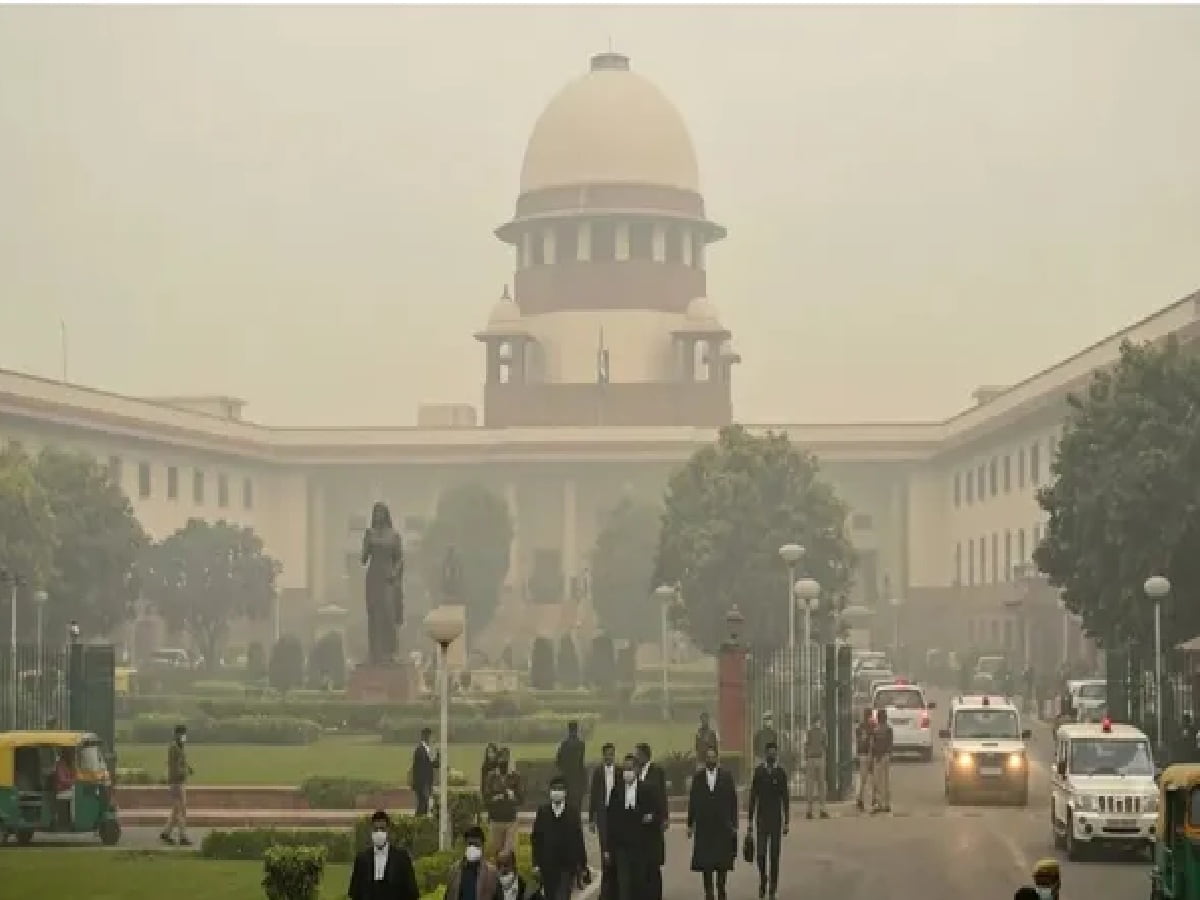
Delhi Air Crisis: 'Enjoying Weather' CJI Quips as AQI Crosses 450
Taking suo motu cognizance of the hazardous smog blanketing the National Capital Region, a Supreme Court bench headed by Chief Justice of India Surya Kant, alongside Justice Joymalya Bagchi and Justice V. Mohana, convened a critical hearing on Friday, November 6, 2026, to scrutinize the worsening environmental and public health catastrophe gripping Delhi-NCR. Setting a caustic tone right from the outset, the Chief Justice aimed a sharp, sarcastic barb at the prevailing atmospheric conditions, dryly asking the assembled attorneys and government representatives whether they were "enjoying the weather in Delhi-NCR." The biting remark laid bare the apex court's mounting exasperation over the annual cycle of hazardous air, which has once again settled over north India, turning the capital's airshed into an unbreathable gas chamber and exposing millions of residents across Delhi, Noida, Ghaziabad, Faridabad, and Gurugram to debilitating concentrations of toxic particulate matter.
The courtroom atmosphere grew increasingly somber as senior advocate and court-appointed amicus curiae Aparajita Singh painted a stark picture of the lived reality on the ground. She submitted before the bench that air quality monitors across multiple regional hotspots—including Anand Vihar, Jahangirpuri, Wazirpur, and Bawana—had consistently breached the catastrophic 450 mark on the Air Quality Index (AQI), placing large parts of the metropolitan belt firmly in the "Severe" and "Severe Plus" emergency categories. Stressing that the toxic air spares no one, she highlighted the rapid physical toll the haze is taking on common citizens, legal practitioners, and court staff alike, noting that people’s vocal cords are giving out and throats are turning hoarse simply from routine daily exposure. Drawing a vivid biomedical comparison, the amicus informed the judges that inhaling the ambient atmosphere in Delhi-NCR at present is physiologically equivalent to smoking roughly 30 commercial cigarettes a day, with micro-fine PM2.5 and PM10 particles bypassing natural respiratory filtration to enter directly into the bloodstream.
Stubble Burning and Vehicular Emissions: The Twin Engines of the Toxic Spiral
Delving into the empirical data collected over the preceding twenty-four hours, the amicus curiae drew the court’s focus to the primary source contributors choking the capital’s troposphere. According to official meteorological assessments, agricultural stubble burning (parali) in agrarian heartlands across Punjab, Haryana, and western Uttar Pradesh accounted for a staggering 14 percent of Delhi’s overall particulate pollution load on November 5 alone. Singh argued that while farm fires dramatically exacerbate regional spikes during early November, Delhi’s baseline air is already chronically compromised by severe internal sources, creating a volatile cocktail where even a modest influx of seasonal biomass smoke pushes the region beyond survivable limits.
The submissions underscored that urban transportation remains the perennial, structural elephant in the room that state administrations routinely fail to tackle with long-term seriousness. Pointing out that tailpipe exhaust from heavy commercial diesel vehicles, private automobiles, and unregulated two-wheelers continues unchecked across arterial corridors, the amicus urged the court to look beyond seasonal farm fires and confront local pollution drivers with equal administrative aggression. The National Capital Region faces an intertwined matrix of ecological threats, including unpaved road dust, unchecked construction activities, open solid waste incineration in peri-urban slums, and continuous fossil-fuel emissions from regional thermal power and manufacturing plants. Without a sweeping, cross-sectoral containment plan that addresses both rural agricultural cycles and urban municipal negligence, piecemeal emergency actions will continue to fail every winter.
CJI Surya Kant Urges Decisive Curbs on Farm Fires as Winter Sowing Begins
Intervening during the technical deliberations, Chief Justice Surya Kant observed that while isolated western disturbances and unseasonal rain showers had brought fleeting, temporary reprieves in previous weeks, the capital cannot rely on volatile weather phenomena to preserve basic public health. The CJI highlighted that the agricultural calendar is currently transitioning into a critical phase where farmers across northern plains are rushing to clear paddy residues to sow the winter wheat crop (Rabi season). This tight window creates extreme incentives for rapid, uncontrolled stubble burning in open fields unless mechanized alternatives and financial incentives are executed on a war footing. The bench noted that the practice must be checked through proactive governance rather than reactive litigation, stressing that farmers require viable, operational machinery and economic support on the ground before the fires are lit, rather than administrative penal actions after the air has already turned lethal.
The Supreme Court’s sharp remarks come at a juncture when emergency pollution mitigation frameworks under the Graded Response Action Plan (GRAP)—overseen by the Commission for Air Quality Management (CAQM)—are facing severe credibility tests. Despite the invoking of Stage-III and Stage-IV restrictions, including curbs on older commercial diesel trucks, restrictions on polluting industrial fuels, and advisories for work-from-home shifts and school closures, air monitoring towers across the capital continue to record off-the-chart toxin readings. The bench indicated that administrative inertia and the routine passing of buck between neighboring states—with Delhi blaming border farm states and northern states pointing fingers at Delhi’s internal vehicular and civic emissions—can no longer be tolerated when constitutional guarantees to clean air and life under Article 21 are being openly compromised.
The Road Ahead: Constitutional Accountability for India's National Capital
The hearing concluded with the top court demanding demonstrable accountability, actionable enforcement timelines, and verified compliance reports from municipal and environmental authorities. By refusing to accept standard bureaucratic excuses and cutting through procedural delays with sharp judicial scrutiny, the Supreme Court has signaled that emergency measures must translate into quantifiable improvements on the ground. As meteorologists forecast continued calm winds and atmospheric temperature inversions that trap surface-level pollutants over the coming days, the judiciary’s intervention stands as a decisive reminder to state actors that breathing clean air is an undeniable fundamental right, and the toxic smog holding the capital hostage demands immediate, synchronized, and fearless governance.




