







Centre Nets ₹970 Cr From Scrap Sale: Railways Leads Clean Drive
In an extraordinary demonstration of turning bureaucratic clutter into fiscal value, the Central Government has shattered previous records by generating ₹970.33 crore through the disposal of office scrap, obsolete machinery, and condemned electronic hardware during a month-long cleanliness drive. Spearheaded by the Department of Administrative Reforms and Public Grievances (DARPG) under the Ministry of Personnel, Public Grievances and Pensions, the initiative—titled Special Campaign 6.0—was rolled out from October 2 to October 31, 2026, across every central ministry, subordinate department, autonomous body, and public sector undertaking nationwide. Surpassing initial projections, the revenue collected marked an increase of approximately 16 percent over the earnings of Special Campaign 5.0, reflecting a decisive structural shift in how public sector offices handle administrative waste, institutional pendency, and asset lifecycle management. While the disposal of redundant physical records and metal junk provided direct financial dividends, the drive also reclaimed vast tracts of valuable real estate and resolved close to a million public grievances, establishing new operational benchmarks for modern Indian administrative efficiency.
Railways Leads the Way: How Scrap Yielded Over ₹618 Crore
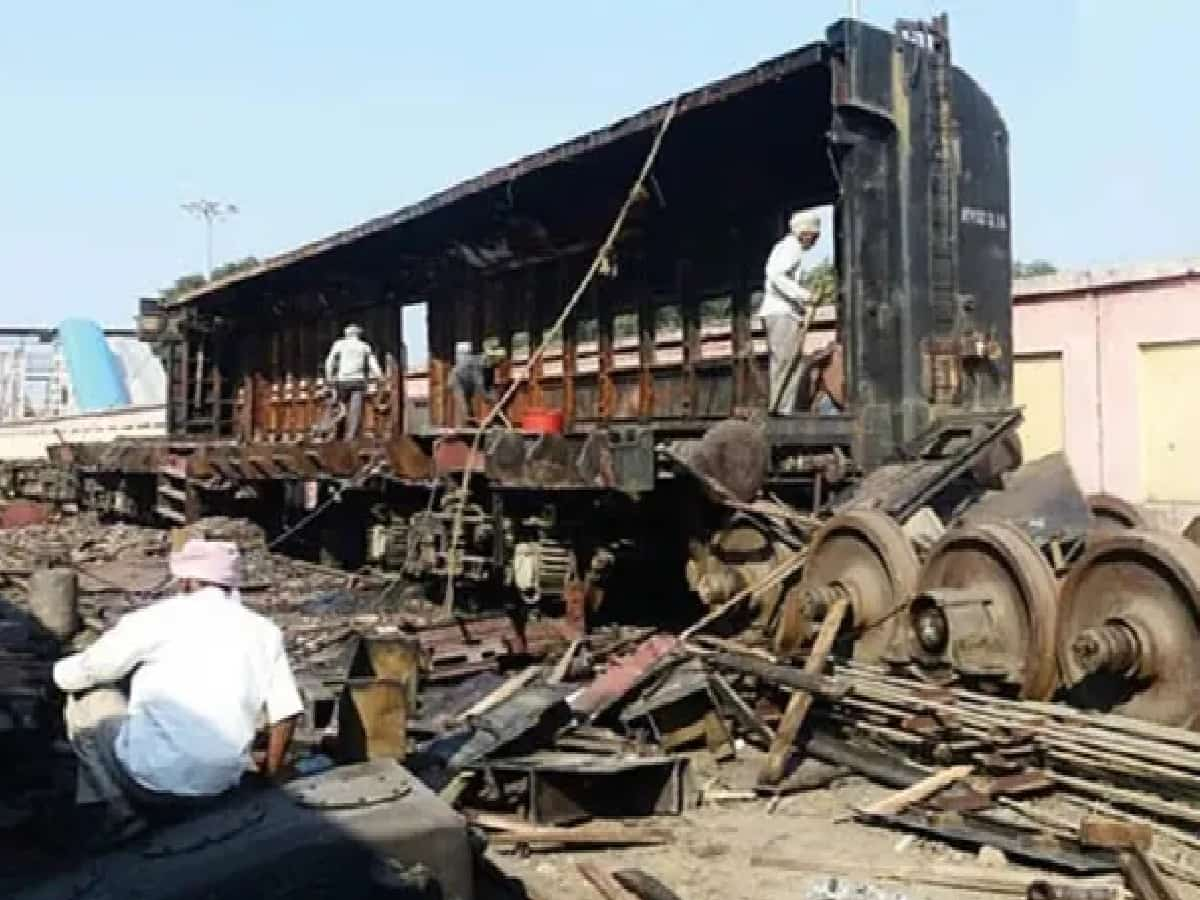
Among all participating central ministries and public sector departments, the Ministry of Railways emerged as the undisputed frontrunner in resource monetization, generating an astonishing ₹618.06 crore through the systematic auction of discarded railway assets, decommissioned rolling stock, condemned locomotives, and rusted rail tracks. Operating across 17 zonal railways, production facilities, and maintenance yards from New Delhi and Lucknow to Kolkata and Mumbai, the national carrier turned disused trackside sidings, overgrown marshalling yards, and cluttered workshops into streamlined, functional logistics hubs. Rather than allowing metallic waste to gather dust and invite encroachment, railway authorities utilized transparent electronic auction portals to liquidate thousands of metric tons of ferrous and non-ferrous scrap to certified recyclers, establishing an unprecedented revenue milestone for a single departmental campaign.
The revenue sweep was bolstered by strong performances across several other high-asset ministries. The Department of Military Affairs under the Ministry of Defence secured the second position by generating ₹88.96 crore through the scheduled disposal of unserviceable logistical hardware, obsolete camp infrastructure, and condemned vehicles. The Ministry of Coal followed closely, raising ₹61.41 crore by clearing surplus equipment from regional mining colonies and washeries, while the Ministry of Petroleum and Natural Gas contributed ₹34.81 crore from aging offshore and onshore processing yards. Crucially, the campaign integrated the scientific handling of electronic refuse under the E-Waste (Management) Rules, 2022, channeling obsolete desktop computers, servers, printers, and telecommunication hardware to authorized dismantlers, which alone yielded approximately ₹50 crore in state revenues while preventing toxic heavy metals from contaminating urban landfills.
Freeing 277 Lakh Square Feet: The Spatial Revolution in Central Offices
Beyond the multi-crore fiscal returns, one of the most transformative outcomes of the 2026 drive was the liberation of prime physical real estate trapped inside government complexes. Over the course of four weeks, government departments cleared an astonishing 277.82 lakh square feet (roughly 27.78 million square feet) of office and warehouse space across the country—an expansion of approximately 19 percent compared to the floor area recovered during the previous campaign. In prime administrative quarters such as Central Secretariat, Krishi Bhawan, Shastri Bhawan, and regional state offices across state capitals like Lucknow, Patna, and Jaipur, subterranean basements, corridor alcoves, and functional rooms previously clogged with broken furniture, decaying paperwork, and dusty files were restored to productive use.
The Ministry of Coal led the nation in spatial reclamation, freeing a staggering 1.48 crore square feet (14.8 million square feet) of space across coalfields, mining townships, and operational subsidiaries. Following behind, the Ministry of Heavy Industries cleared 50.19 lakh square feet across major public engineering complexes, while the Department of Defence Production reclaimed 19.34 lakh square feet across defense production establishments and ordnance workshops. Instead of remaining hazardous clutter traps, these reclaimed floor spaces are now being repurposed into modern citizen service centers, digital server rooms, creches for working staff, executive meeting hubs, and staff cafeterias, dramatically improving ambient working conditions and eliminating the perennial shortage of workspace in government buildings.
Digital Clean-Up and Red Tape Reduction: 15.7 Lakh Files Weeded Out
Special Campaign 6.0 was equally aggressive in tackling the systemic backlog of physical red tape and digital bureaucracy that has long constrained public administration. Demonstrating an uncompromised commitment to paperless governance, central ministries and departments carried out an exhaustive audit of 26,79,875 legacy physical files. Following strict archival retention guidelines, officers weeded out and shredded 15,76,828 obsolete paper files, eliminating structural fire hazards and liberating miles of metallic filing cabinets. Simultaneously, the audit extended into the cloud: 9,58,864 electronic files (e-files) lodged in the government's e-Office portal were scrutinized, leading to the formal closure of 7,01,723 dormant files, ensuring that digital servers remain uncluttered and responsive.
Administrative efficiency was paired with an intense focus on citizen welfare. Task forces deployed under the campaign cleared an impressive 9,99,168 public grievances, addressing citizen complaints regarding pensions, municipal amenities, tax assessments, and utility billing. Furthermore, 40,878 pending public grievance appeals were formally heard and adjudicated, while thousands of long-standing parliamentary assurances, state government references, and inter-ministerial communications were addressed. By linking cleanliness of the physical environment with the prompt clearance of public files, the campaign provided a blueprint for citizen-centric governance, demonstrating that bureaucratic accountability directly mirrors the physical order of government premises.
Expanding Reach to 19.8 Lakh Sites: Schools and Anganwadis Lead the Front
What began in 2021 as a centralized cleanup drive in New Delhi has transformed into a massive pan-India grassroots movement. Under Special Campaign 6.0, the geographical footprint of the cleanliness operations covered a record 19,88,826 campaign sites nationwide—a 71 percent surge over the 11,59,783 locations covered in the previous year. The initiative was taken far beyond urban ministries, extending into rural community hubs, border outposts, railway stations, post offices, and block-level health centers, mobilizing millions of government employees, school teachers, and auxiliary staff.
The Department of School Education and Literacy secured the top spot in site mobilization, conducting intensive cleanliness, beautification, and sanitation drives across more than 7.01 lakh government primary and secondary schools in every district of India. Close on its heels, the Ministry of Women and Child Development orchestrated localized campaigns across 6.52 lakh Anganwadi centers, childcare homes, and district welfare offices. From cleaning drinking water tanks and repainting rural classroom verandas to establishing compost pits for mid-day meal kitchen waste, the mass mobilization instilled an enduring ethic of civic hygiene and hygiene education among young pupils and frontline rural workers alike.
Institutionalizing Swachhata: From One-Off Drive to Governance Culture
The remarkable success of Special Campaign 6.0 underscores a fundamental shift in administrative philosophy under the Narendra Modi administration. Cleanliness is no longer approached as a symbolic, photo-op exercise limited to Mahatma Gandhi’s birth anniversary, but has been institutionalized as an ongoing corporate discipline within the permanent civil service. By systematically quantifying performance metrics—such as square footage cleared, scrap revenue generated, and grievances resolved—the government has established healthy competitive federalism among central departments, encouraging bureaucratic heads to treat waste management as a core operational responsibility.
As the proceeds of ₹970.33 crore are channeled back into the public exchequer and millions of square feet of workspace are integrated into everyday operations, the central cleanliness drive stands as an international model for circular economy practices within public governance. By recycling industrial metals, recovering rare materials through e-waste management, and eliminating administrative deadweight, the government has proven that environmental sustainability and fiscal prudence can converge seamlessly. Moving forward, the DARPG plans to make these review processes a continuous year-round protocol, ensuring that Indian government offices remain modern, clutter-free, and dedicated to prompt, transparent citizen service.




