desk
desk Share
Share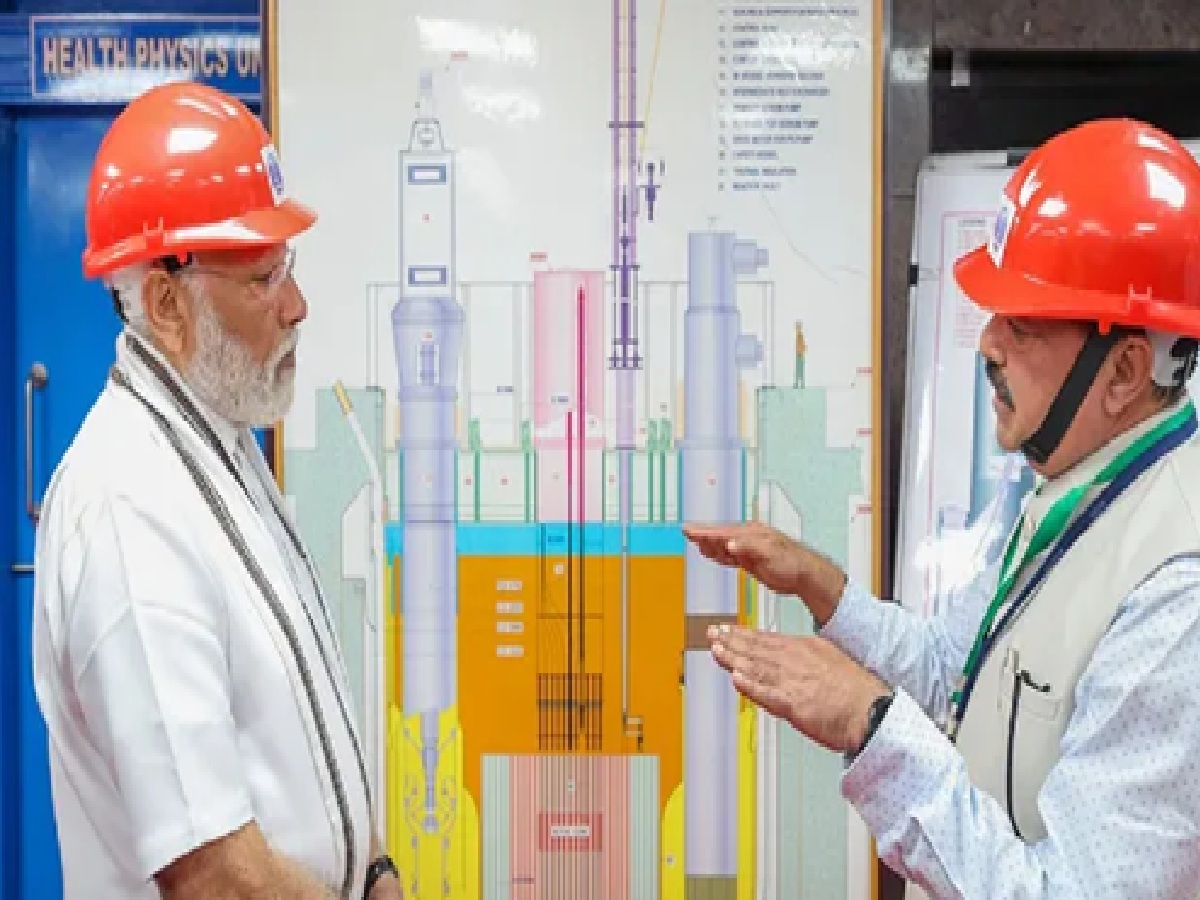
News Topical, Digital Desk : India on Monday achieved a long-awaited milestone in its civilian nuclear energy program. The country's most advanced nuclear reactor, the Prototype Fast Breeder Reactor (PFBR) located in Kalpakkam, Tamil Nadu, has reached the criticality stage. Announcing the achievement, Prime Minister Narendra Modi called it a defining moment in India's nuclear journey.
PM congratulates PFBR on its new achievement
"Today, India is taking a decisive step in its civil nuclear journey, advancing the second phase of its nuclear programme. The indigenously designed and built prototype fast breeder reactor at Kalpakkam has achieved criticality," the Prime Minister said in a statement. He further said that this achievement reflects "the depth of our scientific capability and the strength of our engineering enterprise."
This is a decisive step toward utilizing India's vast thorium reserves in the future. Criticality is the stage at which a reactor achieves a self-sustaining nuclear fission reaction. At this stage, the number of neutrons produced is sufficient to sustain the reaction without external interference.
While this doesn't mean the reactor is generating power at full capacity right now, it is one of the most important milestones in the process of commissioning any nuclear plant.
500 MW of power will be ready
The PFBR, a 500 MW sodium-cooled fast breeder reactor, took over two decades to develop. Its construction posed some of the most complex engineering and materials challenges ever faced by India's atomic energy establishment. The reactor is developed and operated by Bharatiya Nabhikiya Vidyut Nigam Limited (BHAVINI), a subsidiary of the Department of Atomic Energy. The reactor is located on the campus of the Indira Gandhi Centre for Atomic Research (IGCAR) in Kalpakkam.
Describing it as a historic milestone for India's peaceful nuclear energy programme, Dr. Ajit Kumar Mohanty, Chairman, Atomic Energy Commission and Secretary, Department of Atomic Energy, said that the Prototype Fast Breeder Reactor at Kalpakkam has achieved its 'first criticality'. This achievement marks the entry into the second phase of India's three-stage nuclear energy programme, envisioned by Homi Jehangir Bhabha.
Russia is using this technology globally
Today, India has achieved another historic milestone in the peaceful use of nuclear energy in the country. India has entered the second phase of the three-stage nuclear energy program envisioned by Dr. Homi Jehangir Bhabha. Dr. Bhabha is considered the father of our country's nuclear energy program.
Globally, only Russia currently operates a working commercial fast breeder reactor, underscoring the technological uniqueness of this achievement. Several other countries have pursued breeder reactor programs in the past, but have abandoned them due to cost, safety concerns, and technical complexities.
This achievement is also consistent with India's broader climate and energy goals. As part of its efforts towards low-carbon and clean energy sources, the government has formulated an ambitious plan to increase nuclear power capacity to 100 gigawatts by 2047. Fast breeder reactors like the PFBR are seen as potential game-changers, capable of significantly reducing carbon emissions while ensuring long-term energy security.
Read More: 'Congress dancing to Pakistan's tune', PM Modi attacks at Assam election rally
--Advertisement--