desk
desk Share
Share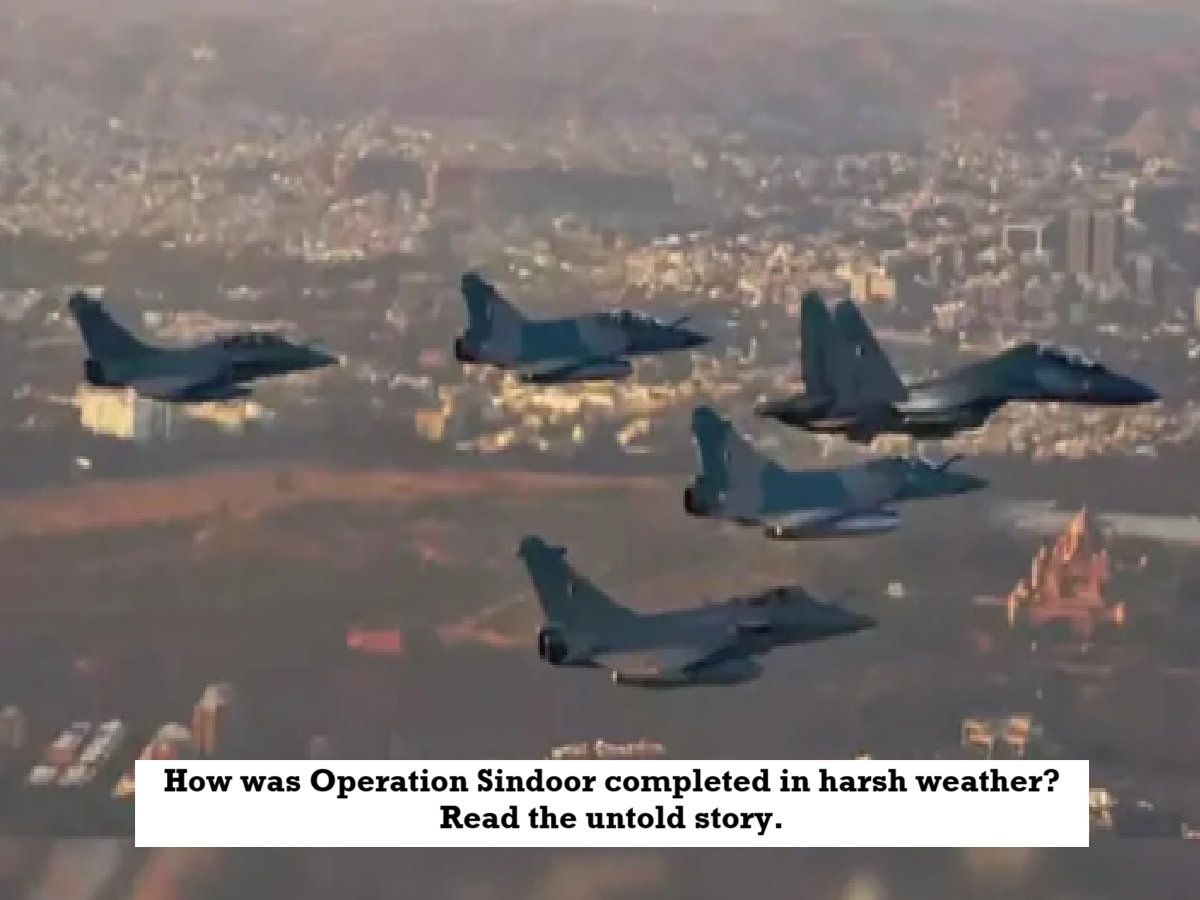
News Topical, Digital Desk : In the four-day long Operation Sindoor, the valiant Indian Air Force destroyed several targets in Pakistan and PoJK by firing 24 missiles in just 25 minutes.
But to successfully hit the difficult target, our Air Force pilots not only risked their lives but also faced challenges like extreme weather and technical flaws in the cockpit. However, their valiant pilots, while evading Pakistani radar detection, displayed valor and maneuver, painting the Pakistani skies ablaze with their explosive bombs.
The book "The Sky Warriors: Operation Sindoor Unveiled", released on Monday, tells chilling, hitherto unheard stories of the Indian Air Force's strikes deep inside Pakistan.
In his book , veteran journalist-author Vishnu Som recounts the story of the Indian bravehearts. The situation inside the cockpit defines some of the most dangerous hours. After midnight on May 7, 2025, the Indian Air Force, using Sukhoi-30 MKI and Rafale fighter jets, cut through rain and dense clouds and razed Pakistani airfields.
Group Captain Kunal Kalra flew his Sukhoi-30 MKI toward a target in Pakistan, navigating through lightning, turbulence, and high clouds filled with rain. Indian fighters entered launch positions across the border. Then, suddenly, a red master warning light flashed in Kalra's cockpit, and an automated warning sound indicated an electrical system malfunction in the aircraft. Under normal circumstances, such a warning would have caused the pilot to abandon the mission and return, but Kalra decided to proceed. The risk was great.
Pakistani radars were active, and enemy missiles could arrive without warning. Despite bad weather and technical problems, he managed to reach his designated launch point. But before he could fire the second missile, his aircraft developed another problem.
The danger of enemy radar locking onto his Sukhoi was increasing. Kalra needed five more minutes to reset the system. If he couldn't launch again in time, he would certainly have to return. The system reset successfully, and Kalra managed to fire a second missile before his plane could turn away from enemy airspace.
In the final stages, when the Indian Air Force was targeting key Pakistani military aviation bases, Group Captain Manav Bhatia was leading a squadron that also flew Rafale aircraft. His Sukhoi aircraft was equipped with the supersonic BrahMos missile.
In the front cockpit was a 27-year-old fighter pilot, one of the squadron's youngest pilots, who had practiced the mission several times during briefings. Bhatia, with two decades of experience, had decided the young pilot would be the one to fire the missile. As soon as the Sukhoi reached the launch position, the young pilot pulled the trigger at his command. The BrahMos missile flew from the aircraft and hit the target.
--Advertisement--