







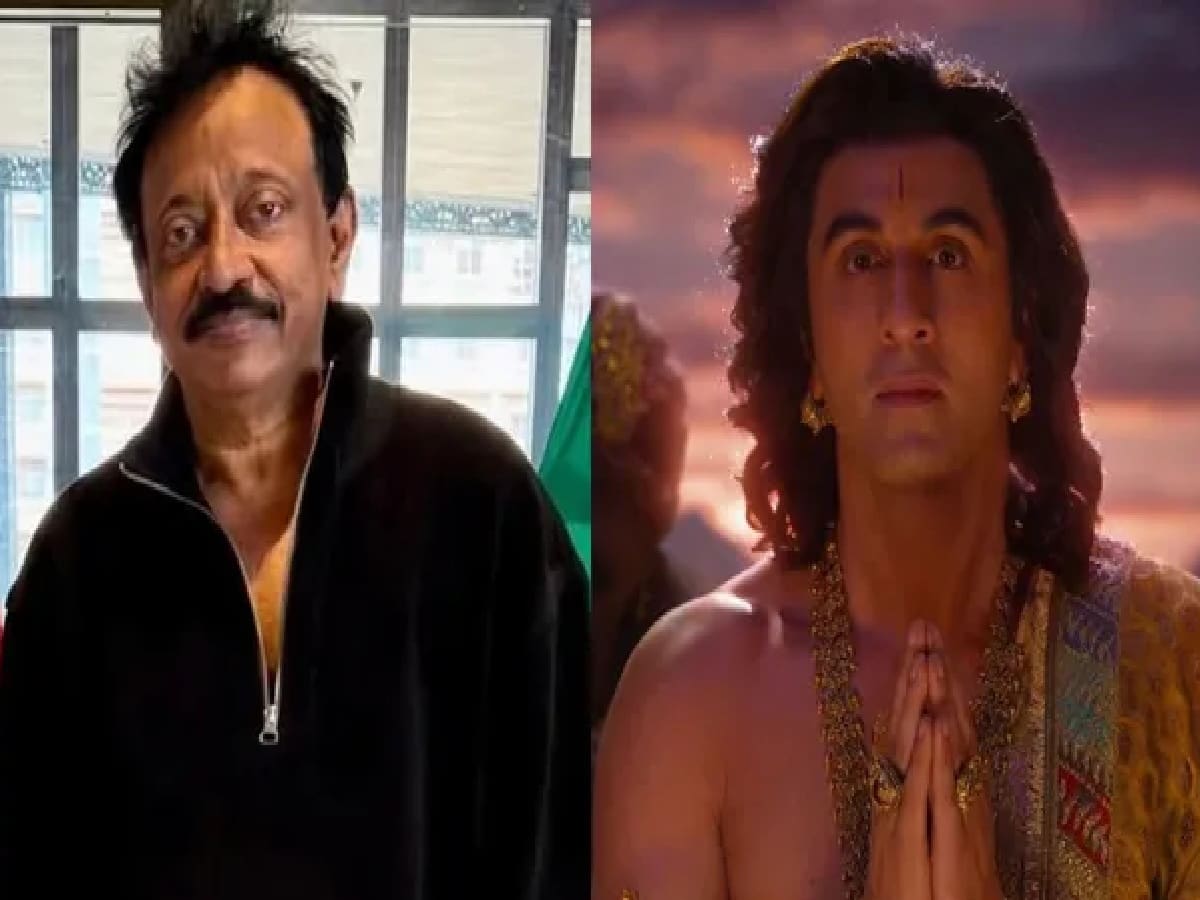
RGV Hails Ramayana: Not a Devotional Film, a Devotional Force
The Indian cinematic landscape witnessed a passionate artistic endorsement on Monday, November 9, 2026, as maverick filmmaker Ram Gopal Varma shared a detailed critique of director Nitesh Tiwari’s mythological opus, Ramayana: Rise of a Legend. Known for his uncompromising visual language and disregard for conventional industry platitudes, Varma took to social media platform X to express his admiration for the epic, declaring that the multi-part cinematic spectacle has propelled Indian filmmaking onto a level that comfortably surpasses Hollywood standards. Departing sharply from standard festive appraisals, the veteran director analyzed the film not as an orthodox religious pageant, but as an unapologetic exploration of absolute power, philosophical duty, and human mortality. Dismissing detractors and skeptical commentators as "barking street dogs" against an "elephantine effort," Varma singled out the performances of Ranbir Kapoor, Kannada superstar Yash, and veteran actor Anupam Kher, offering a compelling breakdown of why this cinematic interpretation marks a historic turning point in Indian cinema.
Beyond Religious Pageantry: A Raw Force That Inspires Devotion
In his critique, Ram Gopal Varma challenged the traditional framework through which mainstream Indian cinema has historically approached ancient scriptures. The director observed that rather than conforming to the formulaic boundaries of a devotional calendar piece, the film operates on the frequency of raw existential conflict. Varma emphasized that the central protagonist is consciously stripped of divine detachment, writing: "The Ramayana is not a devotional film. It is a devotional force. The hero is not some blue god floating comfortably above the narrative. He is a mortal who has already witnessed the collapse and end of the world, yet willfully chooses to walk right into that oblivion".
This thematic reimagining redefines the emotional architecture of the epic. According to Varma, the dramatic thrust of the film does not dwell merely on the expansion of kingdoms or royal victory; it documents the emergence of an uncompromising state of mind that systematically challenges human frailty. He observed that every camera angle carries the weight of a leader who has abandoned superficial rules and now navigates solely by the severe clarity of consequence. The violence rendered on screen is treated not as sensational theatrical excess, but as an inescapable moral reckoning. For Varma, this creative courage ensures that audiences do not simply observe a familiar childhood tale from an emotional distance; they are compelled to live through a visceral, high-stakes trial of human endurance.
Dissecting Iconic Sequences: Ranbir's Silence, Yash's Cold Menace, and Kher's Jatayu
Delving into specific directorial sequences, Varma reserved high praise for the nuanced execution of the central performances. Analyzing Ranbir Kapoor’s interpretation of Lord Shri Ram, Varma drew particular attention to the desolate sequence immediately following Mata Sita’s abduction from Panchavati. While traditional cinematic renditions often lean into loud melodrama and theatrical wailing, Tiwari’s camera lingers silently on Kapoor standing in the center of the abandoned hermitage. Varma noted that the camera holds on Kapoor’s countenance long enough to demonstrate that his grief has moved beyond tears and been converted into cold arithmetic. By withholding emotional monologues, Kapoor captures a man processing profound heartbreak while quietly preparing the logistical blueprint for an inevitable war.
The filmmaker was equally transfixed by Yash’s towering portrayal of the ten-headed demon king, Ravana. Rather than playing a one-dimensional antagonist prone to manic laughter and broad physical posturing, Yash portrays a monarch of supreme intellect whose mind has fully calculated the devastation his hubris will unleash. Varma highlighted the tense pre-battle confrontation where Ravana confronts Ram across an open expanse with no armies separating them. The actor neither raises his voice nor changes his physical stance; he merely articulates the non-negotiable cost of war. In a succinct observation that resonated widely across film circles, Varma summarized: "Yash killed it and Ranbir lived it".
Furthermore, Varma highlighted the vocal and motion-captured turn by veteran actor Anupam Kher as the heroic demi-god Jatayu. Describing Jatayu's desperate interception of the Pushpak Viman, Varma stated that the airborne clash transcends simple feudal loyalty. Even with his wings shattered and feathers soaked in blood, the mythical bird continues to strike because the spirit refuses to surrender to physical ruin. When Jatayu ultimately plummets to the forest floor, the camera refuses to cut away, focusing on eyes that continue to debate the injustice long after the wings have ceased to move. For Varma, this poignant sequence elevates myth into timeless tragedy, portraying a character who understands that when all hope is lost, the only remaining law is to fight until your last breath.
Taking Bollywood Beyond Hollywood: RGV's Salute to Namit Malhotra
Varma’s review extended beyond artistic direction to offer an assessment of the film's production standards. Offering a direct salute to global visual effects entrepreneur and producer Namit Malhotra, Varma credited the production team with shattering the technological ceiling that has long separated Indian mainstream cinema from Western franchise filmmaking. Backed by the visual wizardry of Oscar-winning studio DNEG, the world-building of Ayodhya, Kishkindha, and Lanka has presented a textured visual landscape that rivals international studio blockbusters.
Addressing the vocal minority of online commentators and purist critics who raised questions regarding runtime pacing and creative liberties, Varma did not mince words. The director urged the creative ensemble to dismiss reactionary negativity, famously advising them to treat detractors as "barking street dogs" against an "elephantine effort" that has successfully delivered an unforgettable visual triumph. Varma argued that while industry conformists frequently hesitate to explore darker, more complex thematic palettes, Tiwari and Malhotra took bold structural risks, producing a film that refuses to pause for didactic explanations and instead trusts the visual maturity of its audience.
Box Office Juggernaut: Worldwide Collections Breach ₹507 Crore
While critical discourse continues to dominate social feeds, the film’s commercial momentum across theatrical circuits remains unshakeable. Over its extended four-day opening weekend spanning Thursday, November 5 through Sunday, November 8, Ramayana: Rise of a Legend unleashed an unprecedented box office wave across domestic and international markets. The film posted an India net collection of ₹238.85 crore across all linguistic formats, translating into a gross domestic haul of ₹285.20 crore.
The visual epic has seen strong multi-lingual resonance across South Indian territories, registering solid theatrical occupancy across its dubbed Telugu, Tamil, Malayalam, and Kannada prints alongside its flagship Hindi run. Bolstered by historic diaspora turnouts across North America, the United Kingdom, and the Gulf Cooperation Council (GCC) territories, overseas collections added substantial volume, carrying the worldwide gross to an astounding ₹507.20 crore within its first ninety-six hours of release. The commercial momentum confirms that the modern cinematic treatment has connected with diverse demographics, turning the project into an undisputed box-office milestone.
A New Paradigm for Indian Mythological Storytelling
The resounding commercial and critical validation of Ramayana highlights a fundamental maturation within the contemporary film trade. By moving away from antiquated visual aesthetics and embracing psychological realism, high-concept world-building, and understated emotional performances, the production has established a fresh benchmark for grand mythic cinema. As Ram Gopal Varma’s passionate appraisal illustrates, the epic demonstrates that ancient cultural narratives, when treated with technical excellence and thematic gravitas, carry the universal power to captivate global audiences while inspiring genuine awe across generations.




