







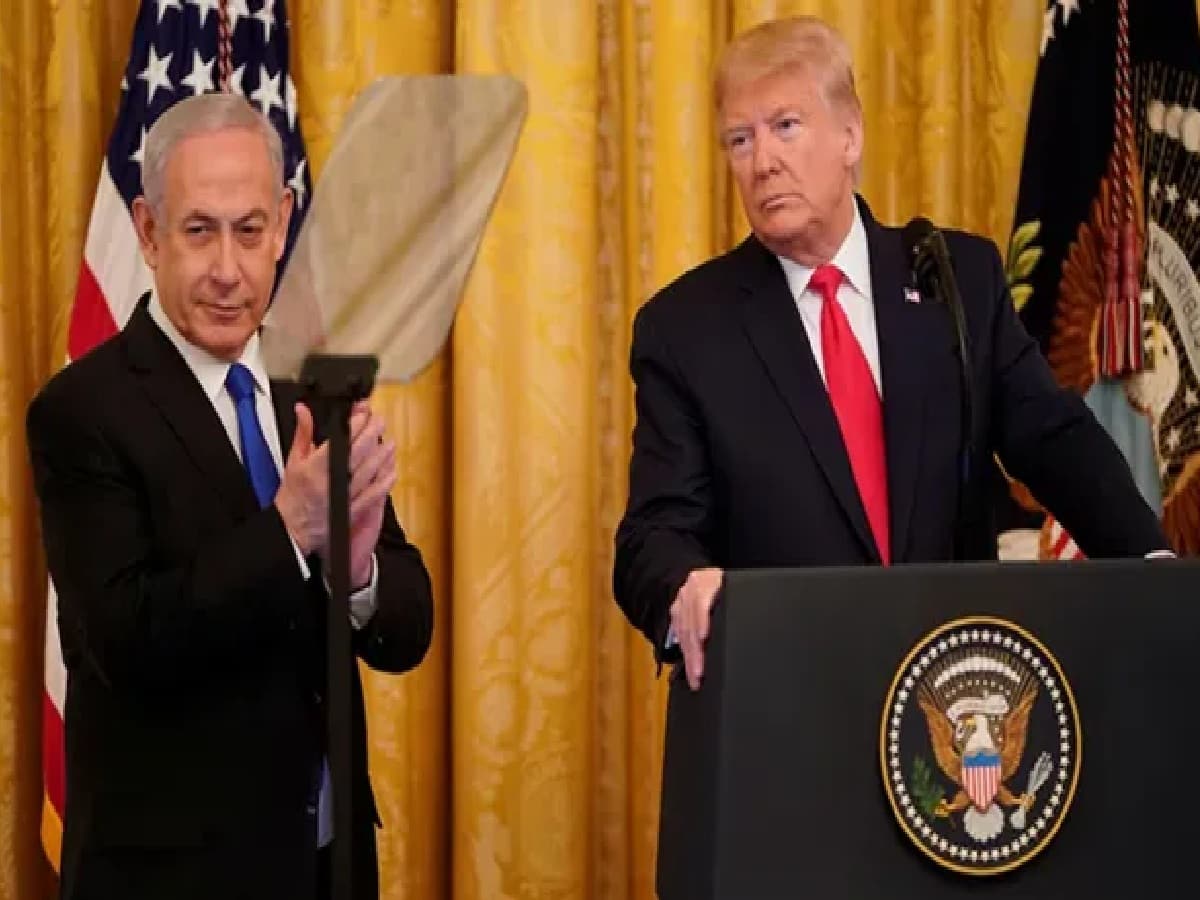
Trump Weighs Fresh Joint Strikes on Iran With Israel After China Trip
Fresh flashpoints across West Asia and Washington signal that the United States and Israel could be preparing for a renewed military confrontation with Iran once US President Donald Trump returns from his high-stakes diplomatic trip to China. According to Israeli and American media reports published on November 19–20, 2026, Israeli leaders—including outgoing Prime Minister Benjamin Netanyahu and Mossad chief Roman Gofman, who held closed-door consultations with senior US officials in Washington last week—have been urging the White House to authorize a concentrated new air campaign against Iranian missile, drone, and nuclear-related infrastructure. While a senior US official emphasized that President Trump has made no final decision and is keeping all options open—balancing Israeli proposals for renewed strikes against advisers who contend that economic sanctions and maritime blockades are already squeezing Tehran—the issue is expected to top the White House agenda immediately upon Trump's return from China, where he ruled out relying on Chinese President Xi Jinping or Russian President Vladimir Putin to broker an end to the Iran conflict while reiterating that Tehran can never acquire nuclear weapons. Meanwhile, developments on the water and in the air underscore how volatile the region remains: the US Pacific Fleet confirmed that nuclear-powered aircraft carrier USS George Washington (CVN-73) has departed West Asia after a three-month deployment—reducing the US carrier presence in the region from three strike groups to two (USS Theodore Roosevelt and USS George H.W. Bush)—just as Iran's Islamic Revolutionary Guard Corps (IRGC) claimed that three oil tankers caught fire after striking naval mines near the Strait of Hormuz, and American forces carried out precision strikes on an IRGC missile and military site on Qeshm Island in retaliation for Iranian drone attacks targeting a US radar installation in Bahrain. Simultaneously, Iranian Foreign Ministry spokesman Esmail Baghaei traded sharp barbs with International Atomic Energy Agency (IAEA) Director General Rafael Grossi over nuclear safeguards applied to Iran versus Israel. For energy markets, shipping operators, overseas Indian workers in the Gulf, and readers across Unnao, Lucknow, Kanpur, Mumbai, Kochi, Bengaluru, and New Delhi, every shift in the US–Iran–Israel standoff carries immediate economic and strategic consequences.
US–Iran–Israel Tensions (Nov 20, 2026): Military, Maritime & Nuclear Snapshot
To bring together the diplomatic deliberations in Washington and Shenzhen alongside naval movements, Strait of Hormuz incidents, and the IAEA nuclear dispute, the table below summarizes the key developments:
| Front / Dimension | Verified Developments (November 19–20, 2026) | Strategic & Geopolitical Impact |
| Potential US–Israel Strikes on Iran | Israeli media (Mako) and US reports indicate Donald Trump is weighing fresh joint strikes with Israel after returning from China; Benjamin Netanyahu and Mossad chief Roman Gofman pushed for strong action during Washington talks, while Trump told Xi and Putin he will not rely on Beijing or Moscow to resolve the crisis. | Keeps West Asia on edge between renewed aerial escalation and Trump's stated desire to force a lasting nuclear settlement "one way or the other". |
| US Carrier Realignment in West Asia | US Pacific Fleet spokesperson Cmdr. Katie Koenig confirmed USS George Washington (CVN-73) completed its three-month 5th Fleet deployment and returned to 7th Fleet operations in the Indo-Pacific, leaving two US carrier strike groups (USS Theodore Roosevelt and USS George H.W. Bush) in West Asia. | Restores carrier coverage in the Indo-Pacific while maintaining two carrier strike groups plus over a dozen destroyers and cruisers near the Arabian Sea. |
| Strait of Hormuz Tankers & Qeshm Island Strikes | The IRGC claimed three oil tankers caught fire after hitting mines east of the Strait of Hormuz for allegedly ignoring warnings and disabling AIS transponders; separately, US forces struck an IRGC missile/military site on Qeshm Island after Iranian drone strikes targeted a US base/radar in Bahrain. | Heightens maritime insurance and energy-supply risks along one of the world's busiest oil transit chokepoints. |
| Iran vs. IAEA Chief Rafael Grossi | Iranian Foreign Ministry spokesman Esmail Baghaei criticized IAEA chief Rafael Grossi for denying double standards between Iran and Israel; Grossi noted Iran is bound by Non-Proliferation Treaty (NPT) comprehensive safeguards whereas non-signatory Israel is not, which Baghaei rejected as insufficient. | Deepens diplomatic friction over nuclear inspections and non-proliferation enforcement in West Asia. |
Military Friction in the Gulf: Carrier Rotation, Hormuz Mines, and Qeshm Island
Even before President Trump convenes his national security team in Washington, tit-for-tat military incidents across the Persian Gulf have underscored how fragile the current lull remains. While the departure of USS George Washington back to the US Seventh Fleet eases strain on Navy deployments in the Indo-Pacific—leaving USS Theodore Roosevelt and USS George H.W. Bush on station in the Arabian Sea—exchanges of fire have continued. Earlier this week, US Central Command launched precision strikes against IRGC military infrastructure on Qeshm Island in the northern Strait of Hormuz after Iranian drones targeted a US radar facility in Bahrain. Hours later, the IRGC claimed that three commercial oil tankers caught fire after striking naval mines east of the strait—accusing the vessels of entering restricted waters with their navigation transponders switched off—even as US naval officials maintained that southern shipping lanes remain open and warned that Tehran's daily mine claims lack independent verification.
Diplomatic & Nuclear Deadlock: Washington Decisions and the IAEA Row
On the diplomatic front, President Trump made clear during his meetings in China with Xi Jinping and Vladimir Putin that Washington will not outsource the Iran file to Beijing or Moscow, insisting that Tehran must permanently abandon any path toward nuclear weapons. Meanwhile, Iranian Foreign Ministry spokesman Esmail Baghaei escalated Tehran's war of words with IAEA Director General Rafael Grossi, arguing that legal distinctions under the Nuclear Non-Proliferation Treaty (NPT) cannot excuse what Iran portrays as unequal scrutiny between Iranian facilities and Israel's undeclared nuclear arsenal. With Mossad chief Roman Gofman having already laid Israel's intelligence case before Washington—including warnings that Tehran is rebuilding missile capabilities—all eyes now turn to the White House once Trump lands back from Asia.




