







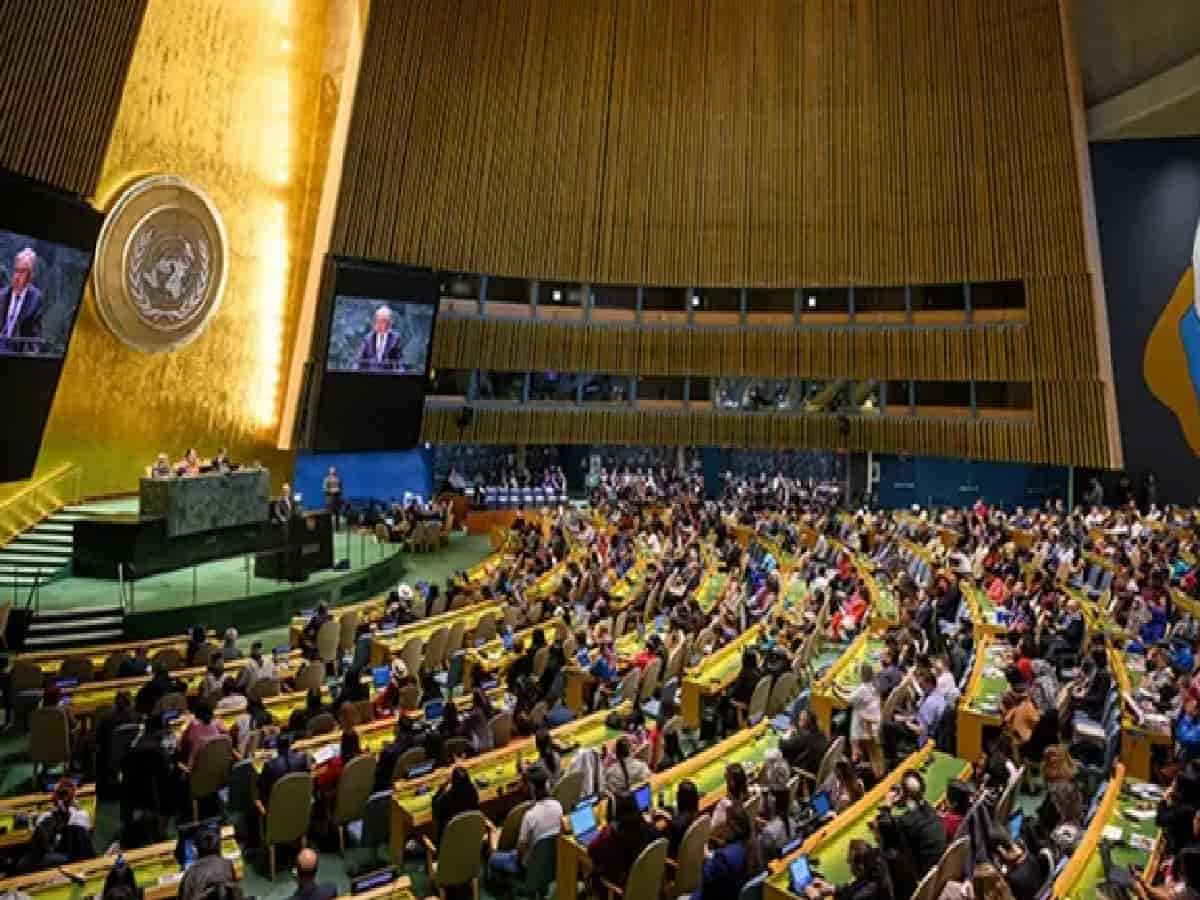
India Backs Four UNGA Resolutions Supporting Palestine; Israel Opposes
Reaffirming its long-standing diplomatic commitment to a negotiated two-state solution in West Asia, India voted in favour of four key resolutions supporting Palestinian rights, humanitarian relief, and territorial integrity in the 193-member United Nations General Assembly (UNGA) on Wednesday, November 18, 2026 (reported on November 19–20, 2026). Across all four ballots in New York, New Delhi joined overwhelming global majorities even as Israel and the United States voted against the measures. Specifically, India backed the flagship resolution affirming the right of the Palestinian people to self-determination and an independent State of Palestine—adopted by 162 votes in favour to 8 against; supported the continuation and unimpeded humanitarian work of the United Nations Relief and Works Agency for Palestine Refugees in the Near East (UNRWA)—passed 143 to 9, with 20 abstentions; endorsed the resolution protecting Palestinian refugees' entitlement to their properties and revenues—carried by 155 votes to 9, with 9 abstentions; and voted in favour of demanding an immediate and complete halt to Israeli settlement activities in the Occupied Palestinian Territory, including East Jerusalem, and the occupied Syrian Golan—adopted 143 to 11, with 17 abstentions. Reacting in New Delhi on Thursday, Ambassador of the State of Palestine to India Abdullah M. Abu Shawesh welcomed India's votes, recalling that India was the first non-Arab and non-Muslim nation to recognize the Palestine Liberation Organization (PLO) and the State of Palestine, and praising New Delhi's consistent backing for a two-state settlement. For diplomats, foreign-policy observers, and readers across Unnao, Lucknow, Kanpur, Varanasi, Ayodhya, Prayagraj, Mumbai, and New Delhi, the UNGA votes illustrate how India continues to balance strategic ties with Israel alongside principled support for Palestinian statehood and multilateral humanitarian norms.
India's Votes on Four UNGA Resolutions on Palestine (Nov 2026): Complete Tally
To bring together the four United Nations General Assembly resolutions supported by India alongside the exact voting tallies and positions of Israel and the United States, the table below summarizes the outcome:
| UNGA Resolution Subject | UNGA Vote Tally | India's Vote & Key Positions |
| 1. Right of the Palestinian People to Self-Determination | 162 in favour, 8 against | India voted YES; reaffirms the inalienable right of Palestinians to self-determination and an independent State of Palestine. |
| 2. Operations of UNRWA (Palestine Refugee Agency) | 143 in favour, 9 against, 20 abstentions | India voted YES; upholds the necessity and unimpeded humanitarian operations of UNRWA across Gaza, the West Bank, Jordan, Lebanon, and Syria; Israel and the US voted against. |
| 3. Palestine Refugees' Properties and Their Revenues | 155 in favour, 9 against, 9 abstentions | India voted YES; affirms refugees' entitlement to property and derived income under international law and urges resolution within final-status peace talks. |
| 4. Israeli Settlements in Occupied Territories & Syrian Golan | 143 in favour, 11 against, 17 abstentions | India voted YES; declares settlements illegal and an obstacle to peace and development, calling for a complete halt in the Occupied Palestinian Territory, East Jerusalem, and occupied Syrian Golan; Israel and the US voted against. |
Breaking Down the Four Resolutions: Self-Determination, UNRWA, and Settlements
Each of the four resolutions adopted by the 193-member General Assembly addressed a core pillar of the Israeli–Palestinian question. First, the 162–8 vote on Palestinian self-determination underscored near-universal international consensus on the right of Palestinians to sovereign statehood. Second, by voting with 143 nations to safeguard UNRWA's mandate, India reinforced its support for uninterrupted food, education, healthcare, and emergency assistance for millions of registered Palestinian refugees at a moment when the agency has faced intense political and funding headwinds. Third, India joined 155 countries in backing refugee property and revenue protections as an essential component of eventual final-status negotiations. Fourth, in a 143–11 ballot opposed by Israel and the United States, India affirmed that ongoing Israeli settlement expansion in the West Bank, East Jerusalem, and the occupied Syrian Golan contravenes international law and undermines prospects for a viable peace.
Palestinian Envoy Abdullah M. Abu Shawesh Hails Historic India–Palestine Ties
Welcoming New Delhi's votes at the United Nations, Palestinian Ambassador to India Abdullah M. Abu Shawesh highlighted the deep historical continuity underpinning India's foreign policy. Speaking to reporters in New Delhi, Abu Shawesh noted that India holds a unique place in Palestinian diplomatic history as the first non-Arab and non-Muslim country to recognize the Palestine Liberation Organization (PLO) as the sole legitimate representative of the Palestinian people and to extend formal recognition to the State of Palestine. While UN General Assembly resolutions are non-binding under the UN Charter, they carry substantial diplomatic and moral weight—demonstrating that even as India maintains close bilateral partnerships across West Asia, its multilateral vote at the United Nations remains firmly anchored in international law, humanitarian protection, and a negotiated two-state solution.




