







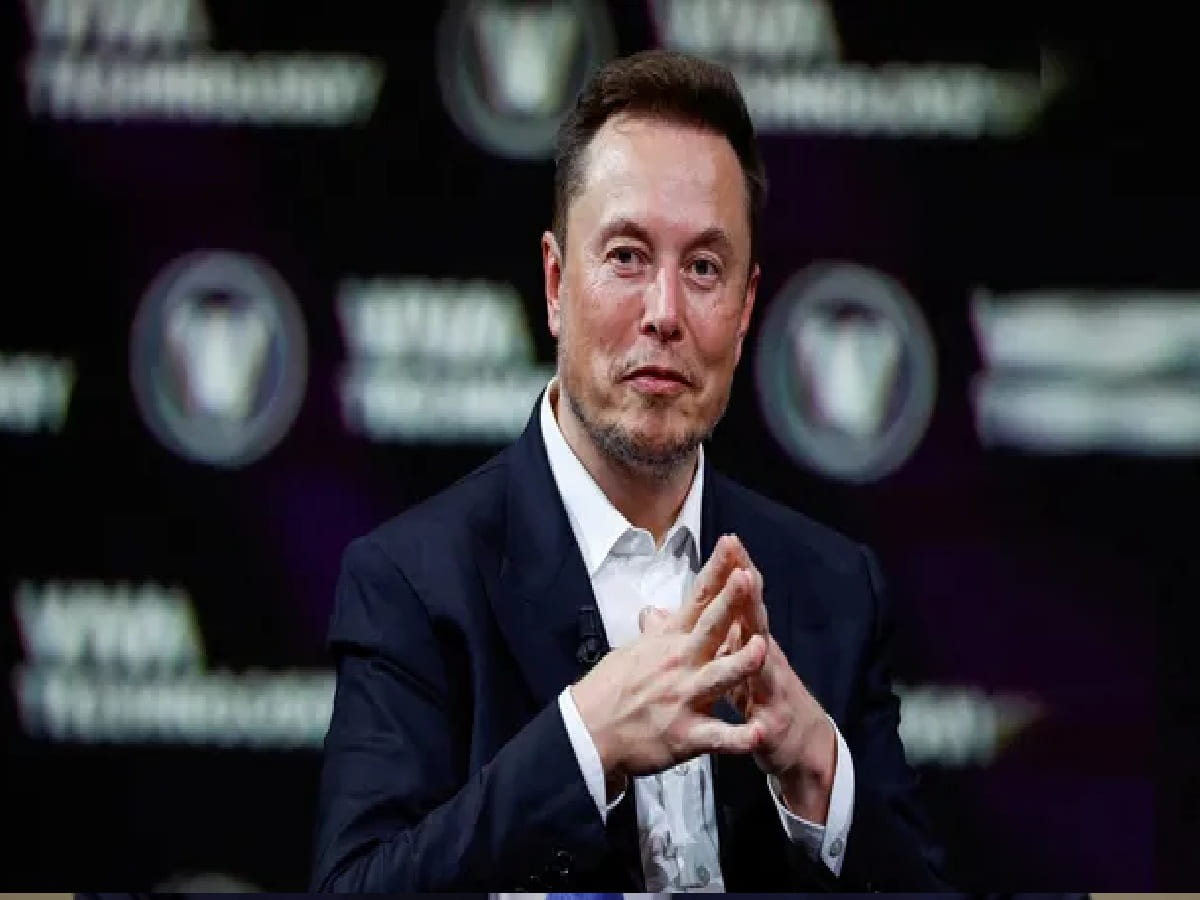
'I Feel Foolish,' Says Musk After $500M US Midterm Spending Flops
Billionaire technology entrepreneur Elon Musk has offered a remarkably candid reassessment of his massive political spending during the 2026 United States midterm elections, admitting he feels "pretty foolish" after pouring nearly $500 million (tracked between $445 million and $474 million in federal filings) into backing Republican candidates—only to watch Democrats sweep both chambers of Congress and capture the Texas governorship. Appearing virtually via videoconference from China—where he is traveling alongside US President Donald Trump's delegation for the APEC summit—during The New York Times' DealBook Summit in New York City on Wednesday, November 18, 2026, the Tesla, SpaceX, and xAI chief executive told moderator Andrew Ross Sorkin that if he could rewind the clock, he would have spent significantly less. Although Musk argued that Republican contenders might have fared even worse without his financial backing, he conceded that the results demonstrated how campaign money alone cannot decide American elections—especially in Texas, the manufacturing home of Tesla, SpaceX, and a planned joint semiconductor venture, where Democrat Gina Hinojosa unseated incumbent Republican Governor Greg Abbott and Democratic state lawmaker James Talarico defeated Republican Ken Paxton in the US Senate race despite over $212 million in Musk-backed spending. Stepping back from partisan branding, Musk also declared "I'm not MAGA," explaining that his goal had been to prevent single-party control across Washington, before pivoting to artificial intelligence infrastructure to reveal that AI firm Anthropic is likely to continue leasing SpaceX compute and is seeking an additional 10 gigawatts of computing capacity. For investors, political analysts, technology leaders, and readers across Unnao, Lucknow, Kanpur, Bengaluru, Mumbai, New Delhi, Austin, and New York, Musk's post-election candor marks a major inflection point at the intersection of Silicon Valley capital and Washington politics.
Elon Musk's 2026 Midterm Spending & DealBook Remarks: Key Facts
To bring together the financial scale of Elon Musk's 2026 campaign contributions, the decisive electoral outcomes in Washington and Texas, and his strategic AI business update, the table below summarizes the verified developments:
| Dimension / Area | Verified Details (November 2026) | Political & Business Implications |
| Total 2026 Midterm Spending | Nearly $500 million (~$445M–$474M across America PAC and allied Republican groups), making Musk the largest individual donor of the 2026 US election cycle. | Set modern midterm spending records, yet failed to deliver return on political investment. |
| Congressional & Texas Election Results | Democrats won control of both the US House and US Senate; in Texas, Democrat Gina Hinojosa defeated Republican Governor Greg Abbott, while Democrat James Talarico defeated Ken Paxton (despite $212M+ spent backing Paxton). | Deal a major setback to Donald Trump and shift statehouse dynamics in Texas, where Tesla, SpaceX, and planned chipmaking facilities are headquartered. |
| DealBook Summit Admission & 'Not MAGA' Remark | Speaking virtually to Andrew Ross Sorkin on Nov 18, 2026, Musk said: "I feel pretty foolish having spent so much money and not seeing much for it... If I could rewind the clock, I would have spent less," while stating "I'm not MAGA". | Signals a likely scaling back of future mega-donations and an effort to decouple his commercial brands from partisan polarization. |
| SpaceX & Anthropic AI Compute Expansion | Turning to AI infrastructure, Musk stated that Anthropic (which just debuted publicly at a $1.3 trillion valuation) is likely to keep leasing compute from SpaceX and wants an additional 10 gigawatts of computing capacity. | Highlights how massive orbital and terrestrial compute demand—rather than political donations—remains the primary growth engine for SpaceX and xAI. |
Why Half a Billion Dollars Failed to Hold Congress or Texas
During the 2026 cycle, Elon Musk emerged as the single largest financial backer of Republican campaigns, funneling close to half a billion dollars into advertising and ground operations aimed at preserving GOP majorities in Washington and safeguarding friendly governance in Texas—the operational heartland of Tesla and SpaceX. Yet voters delivered a sweeping rebuke across both federal and state races: Democrats reclaimed control of both houses of Congress, Gina Hinojosa toppled long-serving Republican Governor Greg Abbott in Austin, and James Talarico defeated Ken Paxton in the Texas Senate contest despite more than $212 million poured into supporting Paxton. Reflecting on the rout at the DealBook Summit, Musk acknowledged that while GOP margins might have been even steeper without his money, the outcome proved that American elections cannot be won by checkbook power alone—and that incoming Democratic majorities now pose heightened regulatory and oversight scrutiny for his companies.
Pivoting Back From Partisan Politics to Gigawatt-Scale AI Infrastructure
Beyond expressing regret over his campaign outlay and distancing himself from the MAGA label by saying he was "not sure" what MAGA even means anymore, Musk quickly steered the DealBook conversation back toward frontier technology and energy-intensive computing. Pointing to surging demand for power and data-center capacity across the artificial intelligence industry, Musk disclosed that leading AI developer Anthropic is expected to continue leasing computing infrastructure from SpaceX and is seeking an additional 10 gigawatts of capacity—an extraordinary scale of power underscoring how SpaceX's compute ambitions and commercial partnerships remain his core strategic priority heading into 2027.




