







Pakistan Blames India’s Diwali Firecrackers for Toxic Lahore Smog
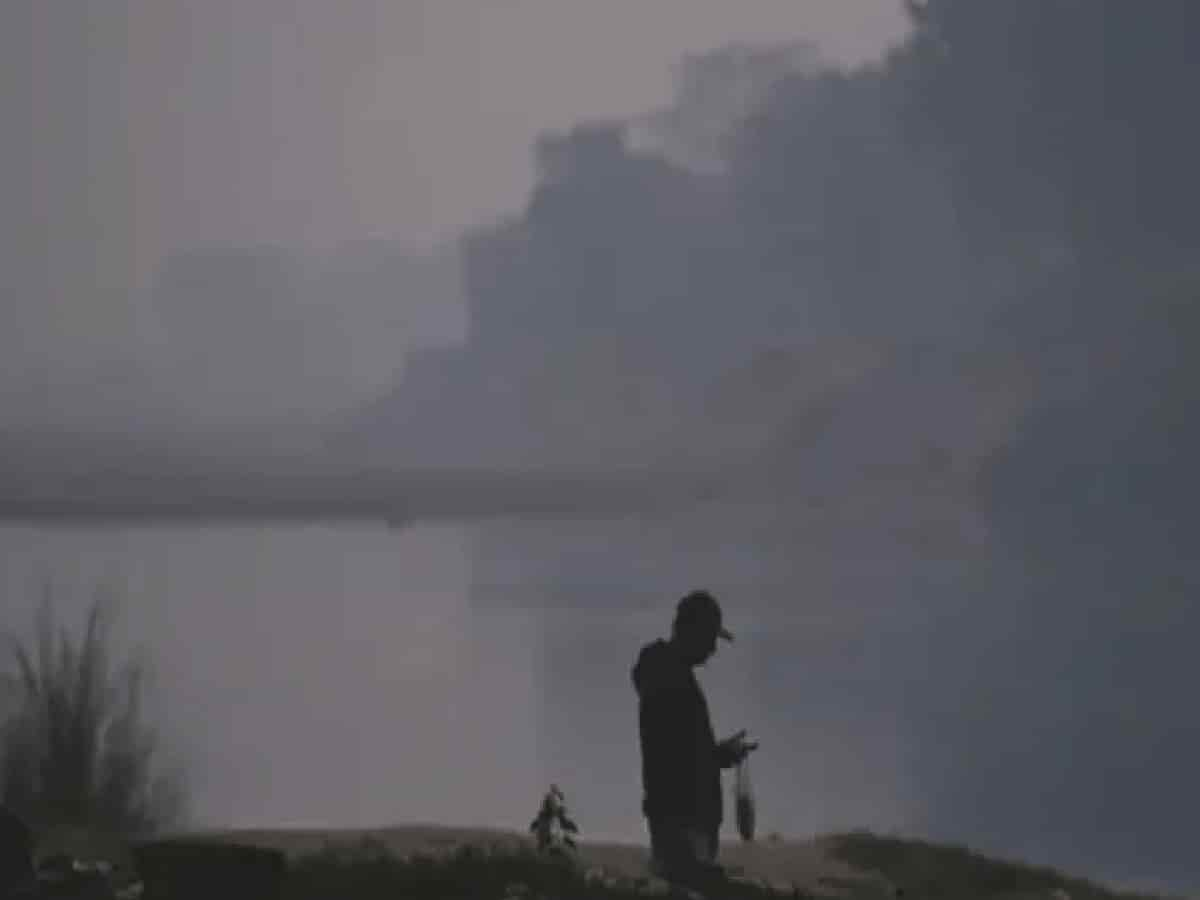
A diplomatic and environmental dispute has erupted between Islamabad and New Delhi as a dense layer of hazardous smog blankets the borderlands of South Asia, sending particulate levels soaring to critical extremes. Pakistan has officially attributed the acute deterioration of ambient air quality in Lahore to festive fireworks set off across northern India during Diwali. For the second consecutive day, the cultural and economic capital of Pakistan’s Punjab province ranked at the summit of Swiss air-monitoring group IQAir’s live global index of the world's most polluted major cities. The city recorded an Air Quality Index reading of 263, placed squarely within the "very unhealthy" category, triggering emergency health warnings for millions of urban residents.
The environmental crisis highlights the vulnerable geographic positioning of the shared Indo-Gangetic basin during the onset of the northern winter. Throughout early November, thermal inversion traps atmospheric contaminants close to the soil across Punjab, Haryana, Delhi, and Pakistani Punjab. In Islamabad and Lahore, officials argue that cross-border air drift pushed emissions from neighboring Indian states across the international boundary, intensifying what was already a difficult seasonal baseline. While post-festival air degradation sparked domestic concerns across India's National Capital Region, the issue has quickly spilled over international lines, transforming a seasonal meteorological challenge into a geopolitical talking point.
Dangerous PM2.5 Levels Surge to 37 Times WHO Safety Guidelines
The quantitative measurements emerging from environmental monitoring stations across Lahore depict a severe public health hazard. Analytical readings compiled by IQAir revealed that atmospheric concentrations of fine particulate matter, known as PM2.5, reached levels 37.2 times above the annual exposure guidelines established by the World Health Organization. These microscopic airborne particulates measure 2.5 micrometers or less in aerodynamic diameter, enabling them to bypass upper respiratory defenses, penetrate deep into the pulmonary bronchioles, and cross into the bloodstream.
Public hospitals and outpatient pulmonary clinics throughout Lahore have witnessed an influx of patients presenting with acute respiratory symptoms, throat infections, chronic asthma flare-ups, and severe eye irritation. Health practitioners emphasize that prolonged exposure to particulate levels of this magnitude causes severe cellular inflammation and accelerates cardiovascular distress, particularly among children, elderly individuals, and those with pre-existing cardiopulmonary ailments. The severity of the air quality prompted regional authorities to issue general advisories urging citizens to minimize outdoor activities, wear filtration masks, and keep domestic windows sealed.
Punjab Environment Minister Cites Transboundary Winds from India
Pakistani Punjab’s Senior Minister for Environmental Protection, Marriyum Aurangzeb, formally addressed the worsening atmospheric emergency, stating that wind patterns had transported chemical residues and particulate plumes from Indian territory into Pakistan. Aurangzeb noted that following the widespread bursting of firecrackers across border regions in India over the weekend, low-speed atmospheric winds carried plumes directly into the Lahore airshed, triggering a rapid spike in local pollution gauges.
The minister expressed optimism that the situation would stabilize as atmospheric dynamics shifted, forecasting that shifting wind directions and stronger breezes would gradually disperse the suspended smoke layer. She noted that the Punjab government has deployed anti-smog inspection teams, closed non-compliant industrial units, and clamped down on local brick kilns to curb internal emissions. While the Indian Ministry of External Affairs did not immediately issue a formal response to Pakistan's assertions, independent atmospheric modelers in South Asia note that tracing specific chemical signatures to single events across international borders remains complex, given that both sides of the frontier share common industrial and agrarian landscapes.
Shared South Asian Crisis: Delhi Follows as Second Most Polluted City
The toxic atmospheric conditions afflicting Lahore mirror the harsh environmental realities unfolding on the Indian side of the border. In IQAir’s international rankings, India’s capital, New Delhi, held the second position globally with an AQI of 188 on Tuesday, with several neighborhood monitoring points registering readings well into the "poor" and "very poor" classifications. Official telemetry data released in India indicated that the combustion of celebratory firecrackers contributed approximately 55 percent of the total PM2.5 concentration measured in Delhi the day after Diwali, confirming that localized festive fireworks generated an undeniable, sharp spike in toxic particulate load.
However, environmental scientists emphasize that festive fireworks represent a temporary trigger superimposed on a much larger, systemic crisis. Across the shared Punjab plain spanning both nations, agricultural residue burning—where farmers clear paddy stubble using fire to prepare seedbeds for winter wheat—remains a major recurring seasonal factor. Unregulated vehicular exhausts, ongoing construction dust, industrial coal combustion, and municipal waste burning generate thousands of tons of emissions daily. When light winter winds stall and air temperatures fall, these baseline contaminants remain trapped in a stationary pocket, turning the entire geographical basin into a collective toxic airshed regardless of administrative boundaries.
Transboundary Airshed Demands Regional Environmental Cooperation
The recurring war of words between Islamabad and New Delhi during early winter highlights the absence of a unified, cross-border mechanism to manage South Asia’s shared environmental health. Meteorological airflow does not stop at international frontiers, and independent climate scientists have repeatedly urged South Asian governments to treat the Indo-Gangetic plain as a contiguous, single environmental zone that requires shared policies.
Without coordinated regional data sharing, synchronized stubble-management incentives, and collective curbs on industrial emissions, the annual cycle of blame will continue to outpace genuine remediation. As weather patterns shift and seasonal winds change speed, the immediate crisis in Lahore and Delhi may experience periodic pauses, but the underlying systemic pollutants will linger. For the tens of millions of citizens living along both sides of the border, meaningful relief will require moving beyond political finger-pointing toward joint scientific accountability and cross-border environmental management.




