







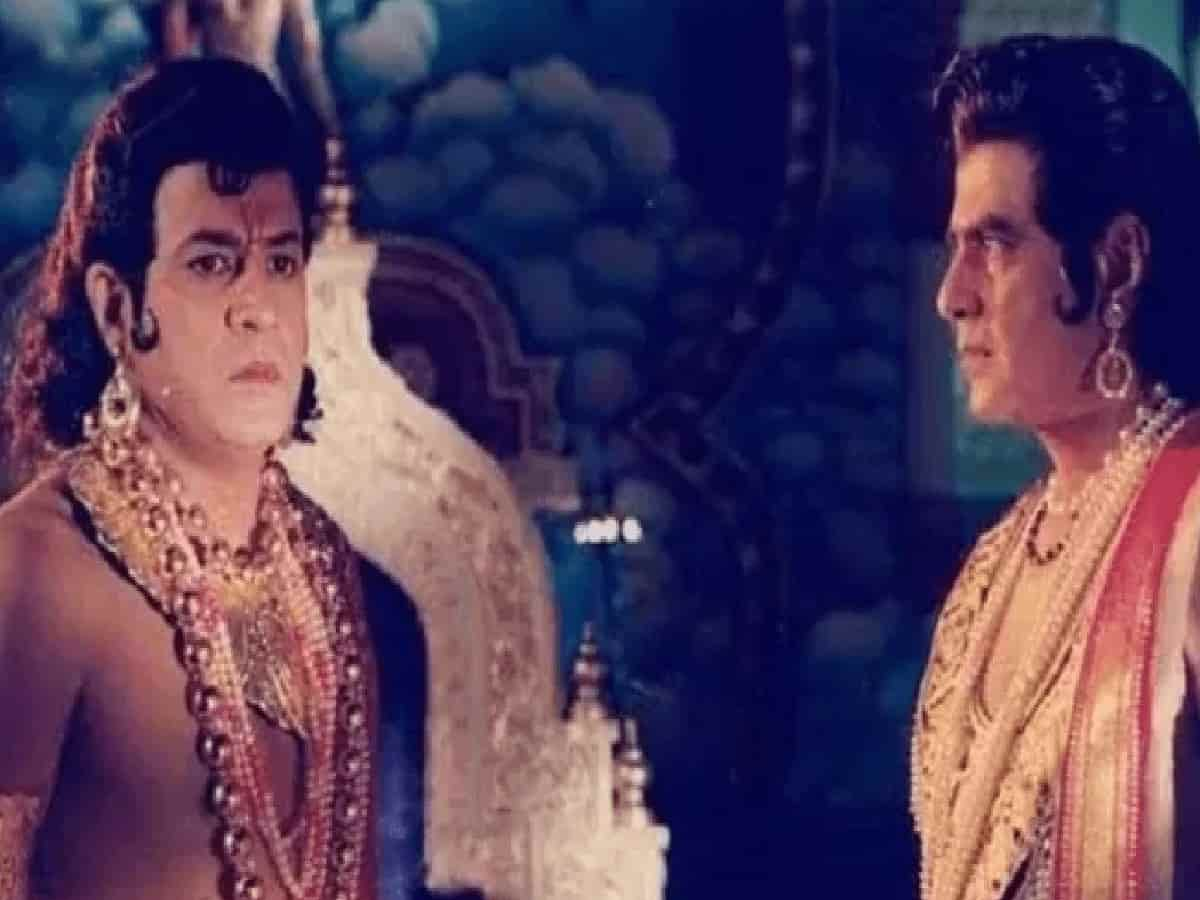
Arun Govil Recalls Being Pressured to Play Lakshman in Flop Film
For millions of households across India and the global diaspora, veteran actor Arun Govil remains permanently etched in memory as the definitive embodiment of Lord Rama. His portrayal in Ramanand Sagar’s groundbreaking 1987 television serial Ramayan turned him into a revered household icon, elevating him to legendary status. Decades later, Govil has come full circle within the grand mythological epic, earning acclaim for his role as King Dasharatha in director Nitesh Tiwari’s big-budget cinematic magnum opus Ramayana. However, bridging the span between these two revered avatars is an obscure, forgotten chapter in Indian cinema that the actor resisted taking on. In a candid interaction, Govil revealed that 29 years ago, he was pressured by film producers to step into the shoes of Lord Rama’s younger brother, Lakshman, in a project that collapsed into a box office disaster.
The project in question was the 1997 mythological feature film Lav Kush, directed by V. Madhusudhana Rao and produced by Dilip Kanikaria under the Devyank Arts banner. Centered on the poignant events of the Uttar Ramayana, the film cast Bollywood superstar Jeetendra as Lord Rama and veteran actress Jaya Prada as Goddess Sita. Having previously worked with the filmmakers on other projects, Govil found himself cornered into accepting the subsidiary role of Lakshman, despite expressing serious misgivings regarding the jarring public perception of demoting television's quintessential Rama to a younger sibling.
The Producers Ignored Warnings Over Conflicting Screen Images
Speaking in an interview with Variety India, Govil recalled the reluctance and discomfort he experienced when the filmmakers approached him for Lav Kush. By the mid-1990s, public reverence for Govil was so profound that devotees routinely touched his feet in public spaces, associating his facial demeanor and dignified screen presence with divinity itself. Casting him as Lakshman alongside an established mainstream Bollywood lead like Jeetendra threatened to shatter that deep emotional bond.
"In the film Lav Kush, where Jeetendra played Rama, they wanted me as Lakshman," Govil recounted. "I had told the producer it's not right, don't make me play the character of Lakshman, but they did not listen. They wanted me. I had told them that my image is that of Rama, and both images would clash. But they insisted. So, I said, 'Okay, let's do it.' But then, look what happened. The film didn't even run for one day. Nobody knows about that film." His warning was validated the moment the reels arrived in cinema halls, as viewers rejected the visual dissonance of seeing television's revered Rama standing secondary to another actor.
Lav Kush Sank at the Box Office Despite an Ensemble Star Cast
On paper, Lav Kush was envisioned as a grand commercial spectacle uniting legendary silver-screen veterans with iconic television figures. The production featured beloved wrestling icon and actor Dara Singh reprising his celebrated role as Lord Hanuman, alongside veteran character artist Pran portraying Maharishi Valmiki. The musical score was composed by Raamlaxman, and the production scale was mounted with ambitious practical sets and visual effects.
However, when the film opened in theaters on July 25, 1997, it was met with cold audience indifference. Moviegoers simply could not digest the awkward casting dynamics, and the theatrical release was pulled from marquee screens almost immediately. Despite its hefty production budget, the film generated a meager lifetime domestic box office collection of approximately ₹43 lakh (₹4.3 million), turning it into a total financial catastrophe for the producers. Today, Lav Kush remains an obscure footnote in 1990s Bollywood history, remembered almost entirely for the peculiar casting contradiction that Govil had explicitly warned against.
Transitioning from Lord Rama to King Dasharatha in Tiwari's Ramayana
Nearly three decades after that miscalculated venture, Govil’s relationship with the ancient epic has found profound artistic redemption. In Nitesh Tiwari’s modern retelling of Ramayana—starring Ranbir Kapoor as Lord Rama, Sai Pallavi as Sita, and Yash as Ravana—Govil was cast to play King Dasharatha, the royal father of Shri Ram. The transition from portraying the divine prince to embodying the grief-stricken Ayodhya monarch carries immense generational resonance, though Govil admitted that accepting the assignment was an emotional process that took months of deliberation.
"It took me almost three months to say yes," Govil revealed regarding director Nitesh Tiwari's persistent outreach. "I didn't feel the need for it when it was offered to me. But these people were so insistent. Nitesh Tiwari was adamant: 'No, sir, you have to do it.' They were after me to such an extent that they joked it was easy to sign Yash and Ranbir, but very difficult to sign Dasharatha." Govil explained that stepping into Dasharatha's royal robes came naturally once cameras rolled, because the emotional weight of a king balancing moral duty against the heartbreak of banishing his beloved son was an emotion he had deeply understood since his days playing Rama.
Enduring Legacy of Indian Television's Revered Cultural Icon
The contrasts across Arun Govil’s career demonstrate the fragile boundary between star persona, audience devotion, and character casting in Indian cinema. While commercial filmmakers in the late 1990s attempted to exploit his association with the epic by placing him in an ill-fitting supporting role, the collective cultural memory of the audience remained fiercely protective of his divine image. His frank reflections serve as a fascinating glimpse into the mechanics of film casting, proving that an actor’s emotional connection with the public can sometimes outshine the desires of commercial movie producers.
Now, with global box-office records acknowledging the enduring appeal of the epic and theatergoers celebrating his dignified performance as Dasharatha, Govil’s artistic journey has come full circle. By standing by his artistic instincts and candidly addressing the missteps of the past, the veteran actor continues to occupy an unparalleled, sacred space in the cultural consciousness of Indian cinema.




