







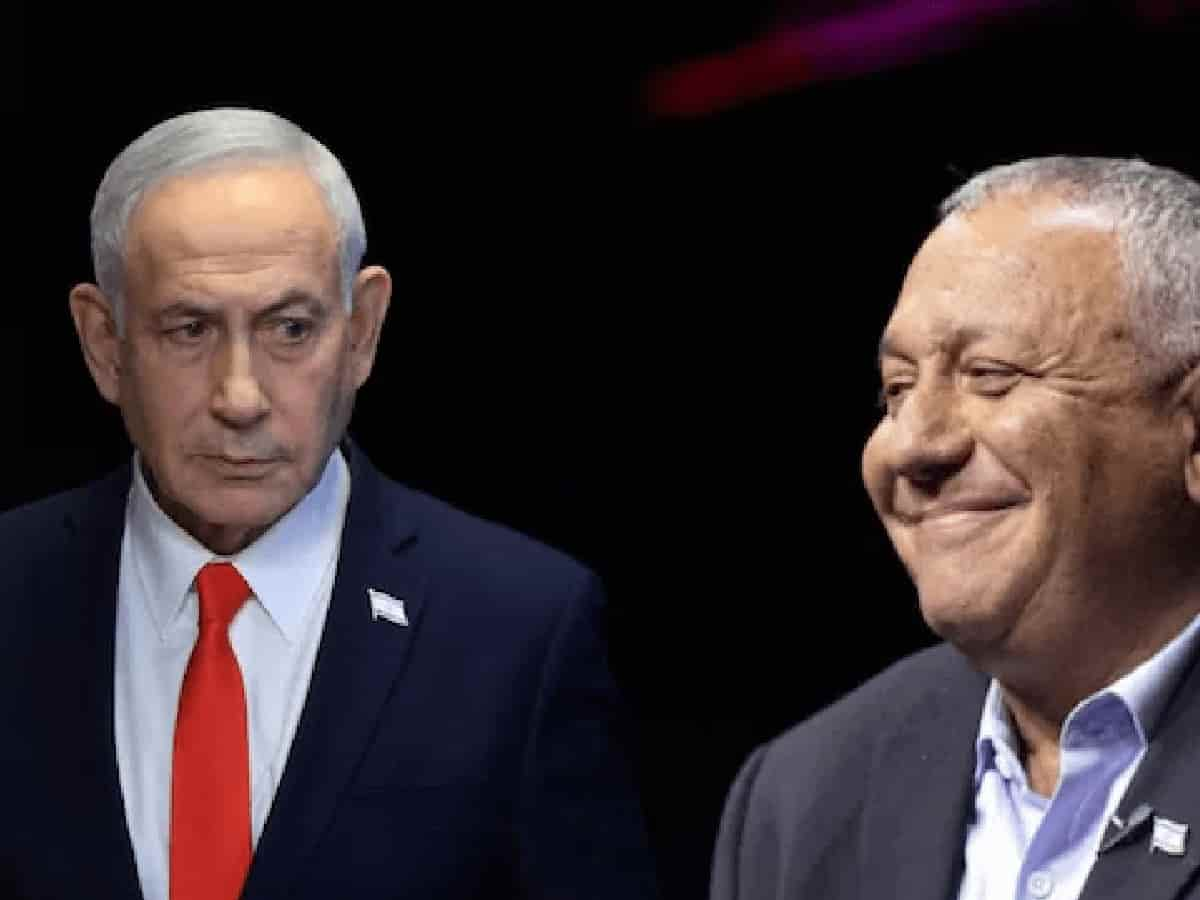
Knesset Drama: Eisenkot Hits Back at Bibi, Sara Shouts at Bennett
The opening session of Israel’s 26th Knesset transformed into a chaotic political arena on Tuesday as rival factions clashed over executive legitimacy and coalition arithmetic. Following an inconclusive national ballot on October 27 that left the 120-seat parliament divided, long-serving Prime Minister Benjamin Netanyahu and his chief political challenger, Gadi Eisenkot of the Yashar party, traded sharp accusations from the assembly floor. What was meant to be a formal swearing-in ceremony quickly deteriorated into an acrimonious shouting match, underscoring the deep polarization paralyzing Jerusalem's political establishment.
The confrontation highlights an escalating battle for Israel's top executive post. While Netanyahu has led the nation for years, his inability to capture an outright 61-seat parliamentary majority has left his political future precarious. On the opposite side, Eisenkot—a former military chief of staff who recently secured the official presidential mandate from President Isaac Herzog—is actively working to dismantle Netanyahu’s governing apparatus. With neither faction holding an effortless path to power, the dramatic parliamentary session revealed how deeply personal and rancorous the race to form the next administration has become.
Netanyahu Appeals for National Unity Amid Looming Iranian Nuclear Threat
Taking to the Knesset rostrum during the festive gathering, Netanyahu called for the immediate creation of an expansive national emergency government. The Likud leader framed broad cross-party cooperation as an urgent strategic necessity, arguing that Israel faces unprecedented external dangers centered around Iran’s advancing nuclear program. Netanyahu warned lawmakers that mounting diplomatic and geopolitical pressures could soon force the international community to accept Iran as a threshold or declared nuclear-armed power, creating an existential peril that transcends domestic party divisions.
However, opposition leaders viewed the premier’s appeal with deep skepticism, interpreting it as an attempt to leverage external security concerns to secure his own political survival. Rather than uniting lawmakers, Netanyahu's address shifted into an aggressive broadside against rival factions exploring a minority or majority arrangement supported by Arab-majority parties. Challenging opposition figures directly, Netanyahu questioned whether Zionist leaders were prepared to compromise national security by relying on factions that oppose the traditional foundations of the state. The remarks immediately drew loud jeers, laughter, and vocal protests from the opposition benches, disrupting the cadence of his speech.
Why Sara Netanyahu Heckled Former Prime Minister Naftali Bennett
The tension inside the Knesset chamber reached a boiling point when former Prime Minister Naftali Bennett interrupted Netanyahu's speech. Challenging the premier's moral authority on national security, Bennett yelled from the floor, demanding answers regarding government transparency and diplomatic ties. "What about a State Commission of Inquiry into October 7? Why don't you declare Qatar an enemy state? What about your Qatari advisers?" Bennett shouted across the plenum, referencing reports alleging that prime ministerial aides maintained financial connections with Qatari commercial entities.
The pointed heckling sparked an immediate, furious response from the prime minister's allies and family. Far-right National Security Minister Itamar Ben-Gvir and Likud faction chairman Ofir Katz interjected loudly, labeling Bennett a hypocrite. As Knesset Speaker Amir Ohana attempted to restore decorum by warning that such outbursts were profoundly disrespectful, Bennett retorted that Netanyahu himself respects no one. At that moment, Netanyahu's wife, Sara Netanyahu, leaned forward from her seat in the visitors' gallery and shouted directly at Bennett. Visibly enraged, she yelled, "You sit with the Arab Joint List! You worthless man! Shame on you! You shameless man!" The outburst from the gallery brought parliamentary proceedings to a brief standstill, providing a striking visual testament to the anger roiling the chamber.
Eisenkot Condemns Netanyahu's Speech and Scraps Likud Coalition Talks
The fallout from the combative parliamentary session was swift and consequential. Gadi Eisenkot responded with a scathing public assessment of the prime minister’s address, characterizing it on social media as confusing, divisive, hate-filled, and shameful. Eisenkot accused the caretaker prime minister of weaponizing a solemn state occasion to drive wedges between citizens, declaring that the performance convinced him that Netanyahu does not deserve to remain in office for even one minute longer. Eisenkot stressed that true national security requires responsible leadership that unites society rather than exploiting collective fears for narrow partisan gain.
Demonstrating his resolve, Eisenkot ordered his negotiating team to immediately call off a bilateral coalition meeting with Likud that had been scheduled for Wednesday. The Yashar party stated that while it remains committed to honest negotiations based on state integrity, security deterrence, and economic stability, Netanyahu’s confrontational conduct rendered sincere dialogue impossible. By pulling the plug on direct talks with Likud, Eisenkot signaled that his mission to form a government is anchored squarely on removing Netanyahu from power, rather than serving as a junior partner in an arrangement designed to prolong the incumbent’s tenure.
Core Battlegrounds: October 7 Investigation and the Judicial Overhaul
The bitter standoff between the Netanyahu and Eisenkot camps is defined by two foundational legislative and constitutional battlegrounds that continue to shape domestic Israeli politics:
-
State Commission of Inquiry on October 7: Eisenkot and his opposition partners have placed the immediate establishment of an independent, judge-led State Commission of Inquiry at the top of their governing priorities. The panel would be tasked with investigating the institutional, intelligence, and operational lapses that enabled the catastrophic Hamas cross-border assault on October 7, 2023. While Netanyahu has consistently sought to postpone or limit such inquiries until all military operations conclude, the opposition maintains that full institutional accountability is an indispensable prerequisite for national healing.
-
Repeal of Controversial Judicial Reforms: The second core friction point concerns the sweeping judicial overhaul previously championed by Netanyahu’s right-wing religious coalition. Eisenkot’s bloc has pledged to completely dismantle and repeal the contentious legislative amendments that sought to curb the Supreme Court’s oversight powers. These proposals had ignited unprecedented civil protests and military reserve walkouts prior to the war, and the opposition argues that rolling them back is critical to restoring judicial independence and protecting Israel's democratic fabric.
The Arithmetic of Power: Who Holds the Advantage in the Knesset?
As the constitutional clock runs, both political camps face intricate hurdles in securing the required 61-seat majority. Netanyahu retains the institutional advantages of executive incumbency and the disciplined loyalty of Likud's 53 parliamentary seats. However, with key former allies maintaining distance and right-wing ultra-Orthodox partners reevaluating their leverage, his pathway toward building a stable majority within the current Knesset appears increasingly constrained.
On the other hand, Eisenkot has succeeded in coordinating a four-way opposition coalition that unites Naftali Bennett, Yair Golan, Avigdor Lieberman, and Yair Lapid. Backed by recommendations from 67 lawmakers—which include vital external support from Ra'am and the Joint List—Eisenkot commands the theoretical numbers to install an alternative administration. Yet balancing the demands of Arab factions with hawkish right-wing figures like Lieberman requires delicate compromise. With statutory deadlines approaching and tensions running high in the Knesset, Israel stands at a pivotal historical junction, where every closed-door maneuver will determine whether Netanyahu's long era at the helm concludes or the country spirals into another round of political deadlock.




