







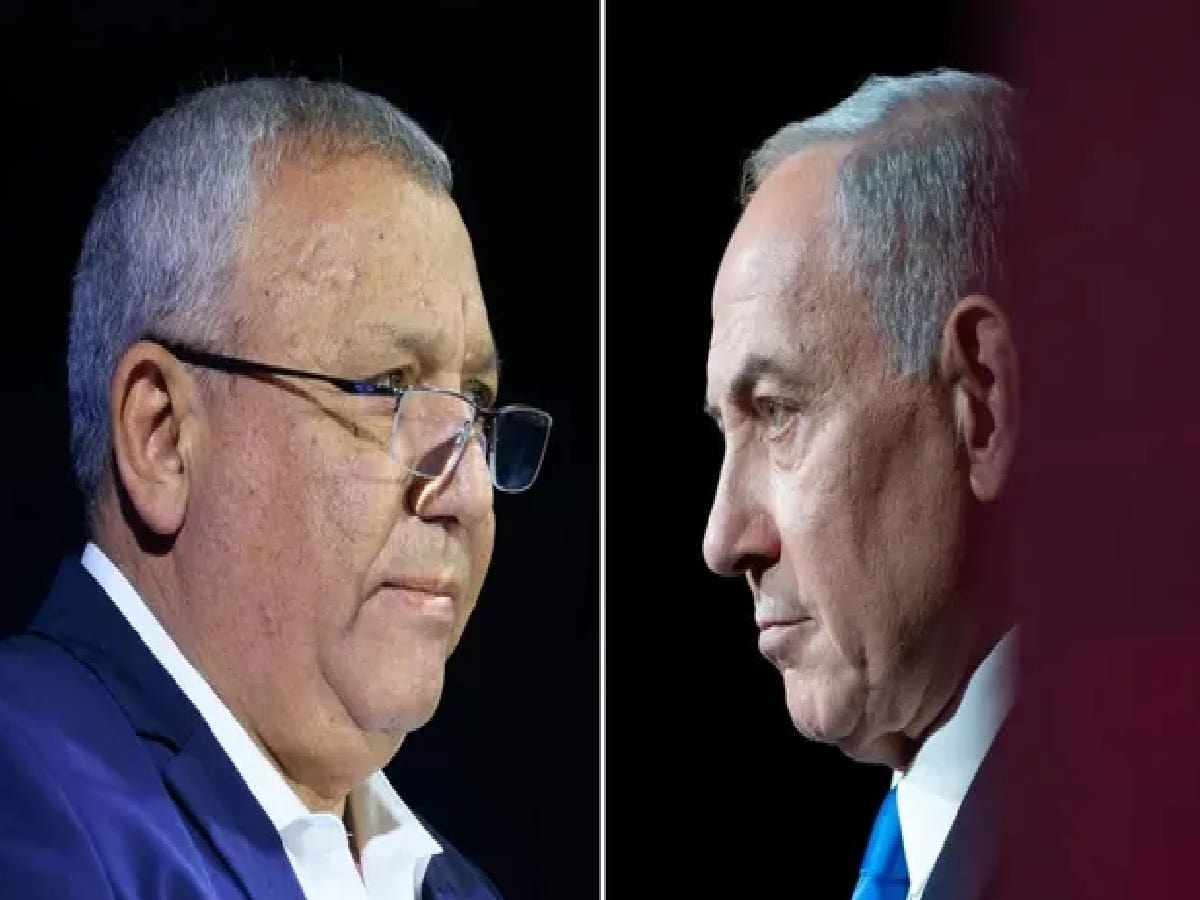
Netanyahu Blow: 67 MKs Back Eisenkot for Israeli PM Post
In a dramatic turning point in contemporary Israeli politics, President Isaac Herzog announced that he will formally reveal on Sunday which political leader will be tasked with cobbling together the nation's next governing coalition, following the conclusion of intensive consultations at the President’s Residence in Jerusalem on Thursday. The consultative rounds concluded with a severe political blow to long-serving Prime Minister Benjamin Netanyahu, as former military chief and opposition figure Gadi Eisenkot secured official recommendations from 67 members of the 120-seat Knesset. In contrast, Netanyahu garnered support from just 46 lawmakers, while the seven parliamentarians representing the Ultra-Orthodox United Torah Judaism (UTJ) party pointedly abstained from backing any candidate. Although traditional Israeli constitutional convention dictates that the presidential mandate is automatically conferred upon the lawmaker with the highest number of endorsements, President Herzog issued a cautious note, emphasizing that the legal authority to grant the mandate hinges not merely on raw recommendations, but on an individual's realistic ability to overcome internal ideological vetoes and successfully build a stable 61-seat legislative majority.
Herzog Weighs Mandate as Eisenkot Clinches Decisive Recommendation Lead
President Herzog’s measured deliberation reflects the intricate parliamentary labyrinth exposed by the October 27 election results, which yielded a fractured Knesset where neither Netanyahu's right-wing religious bloc nor Eisenkot's centrist-liberal camp controls a homogenous, cohesive majority on its own. Addressing reporters following the second day of multi-party discussions, Herzog acknowledged that while the statistical outcome of the consultations appears lopsided on paper, the underlying political arithmetic is fraught with structural contradictions. "The outcome of the consultations may seem clear, but under the law I have the right to decide who has the capacity to form a government," Herzog stated, noting that irreconcilable red lines and factional vetoes could swiftly paralyze either candidate’s efforts to govern. Over the weekend, the President intends to conduct direct, private discussions with pivotal faction leaders to determine whether Eisenkot's numerical advantage translates into a viable, governing parliamentary coalition before committing the state to the statutory 28-day coalition clock.
Following the consultative tally, Eisenkot's Yashar party issued a resolute declaration framing the outcome as an unmistakable mandate for nationwide political renewal and constitutional accountability. The faction argued that the public has decisively registered a vote of no confidence in Netanyahu's prolonged governance and called for the immediate constitution of a broad national emergency administration dedicated to serving all sectors of Israeli society. Eisenkot, a former Chief of Staff of the Israel Defense Forces who entered frontline politics with an emphasis on institutional integrity, national security reform, and equitable burden-sharing, has positioned himself as a pragmatic unifier capable of healing the domestic rifts widened by years of constitutional polarization and ongoing military conflicts across Gaza, Lebanon, and the wider region.
Arab Parties Emerge as Kingmakers: Historic 19 Seats Alter Knesset Math
The decisive factor propelling Eisenkot past the 61-seat threshold in the recommendation phase was the unified, unprecedented intervention of Israel’s Arab-majority parties, who captured a historic collective total of 19 Knesset seats in the October ballot. The Joint List, which secured 11 seats, and Mansour Abbas's Ra'am, which retained 8 seats, both formally submitted Eisenkot’s name to President Herzog on Thursday. This historic convergence represents a dramatic mobilization by Arab-Israeli citizens, who turned out in record numbers to counter Netanyahu's hard-right coalition partners and express profound frustration over institutional neglect, pervasive community violence, and inflammatory rhetoric from far-right cabinet ministers. By acting as kingmakers, the Arab factions demonstrated their capacity to decisively block Netanyahu's path back to power, demanding tangible policy concessions on civil infrastructure, law enforcement equity, and socio-economic integration in exchange for their parliamentary weight.
However, the Arab parties' recommendation of Eisenkot immediately ignited fiery pushback from the outgoing Prime Minister and exposed the fragile fault lines within Eisenkot's potential alliance. In a video message released Wednesday, Netanyahu launched a scathing preemptive attack against the opposition, warning that any government dependent on Arab lawmakers would compromise national sovereignty and alleging without empirical evidence that foreign actors had channeled funds into the electoral campaign to manipulate voter turnout. While Arab lawmakers underscored their repeated, unambiguous condemnations of the tragic October 7, 2023 terror attacks, Netanyahu sought to paint them as inherently disloyal, attempting to polarize public sentiment and make it politically unviable for right-leaning Zionist factions to cooperate with them in any legislative capacity.
The Haredi Revolt: Why United Torah Judaism Refused to Back Netanyahu
Netanyahu's vulnerability was further compounded by a rebellion within his traditional right-wing religious base, where the Ultra-Orthodox United Torah Judaism (UTJ) party chose to deliberately withhold its endorsement from the incumbent premier. Winning seven seats in the new parliament, UTJ informed President Herzog that it would not recommend any Knesset member for the premiership, depriving Netanyahu of crucial votes that would have lifted his tally from 46 to 53. The rift stems from the unresolved domestic battle over mandatory military conscription for full-time Torah seminary students. While the Supreme Court of Israel struck down blanket military exemptions and ordered the defense establishment to begin drafting eligible yeshiva scholars, Netanyahu repeatedly delayed codifying a statutory exemption into law, wary of alienating mainstream secular and religious-Zionist Israelis who are bearing the immense personal and economic burdens of prolonged reserve duties across multiple active war zones.
"Regardless of who forms the next government, our first task will be to clarify the status of Torah students," affirmed UTJ lawmaker Isaac Pindrus, signaling that the party’s primary loyalty remains anchored to protecting its religious community rather than ensuring Netanyahu’s personal political survival. By withholding their recommendations, UTJ aimed to demonstrate to Netanyahu that their parliamentary backing cannot be treated as a foregone conclusion. Yet, the conscription conundrum presents an equally daunting barrier for Eisenkot, who has championed the universal civic principle of an "equal burden" and insisted that Ultra-Orthodox youths must serve in the IDF, a position passionately echoed by his centrist and secular allies who view continuing exemptions as an unsustainable economic and defense liability.
Coalition Gridlock: Lieberman's Veto, Ideological Fault Lines, and the 28-Day Clock
Despite commanding 67 recommendations, Eisenkot faces nearly insurmountable hurdles in converting these endorsements into a functioning cabinet, primarily due to the stringent conditions imposed by right-wing opposition leader Avigdor Lieberman and his Yisrael Beytenu party, which controls seven seats. Lieberman has repeatedly reiterated that his faction will refuse to sit in or support any government that relies, directly or indirectly, on the legislative votes of the Arab parties, citing their refusal to designate regional militant groups explicitly in terms that align with his party's hawkish platform. If Yisrael Beytenu boycotts an Eisenkot-led coalition that includes Arab support, Eisenkot’s functional baseline shrinks to 60 seats or fewer, leaving him short of the 61-seat threshold required to swear in a new government before the Knesset.
Once President Herzog officially designates a prime ministerial candidate on Sunday, that lawmaker will have an initial statutory window of 28 days to conclude coalition agreements, with the possibility of a 14-day discretionary extension granted by the presidency. If the chosen candidate fails to assemble a viable majority within the allotted 42 days, Herzog must reassign the mandate to another lawmaker or return it directly to the Knesset, raising the specter of continued political deadlock and the prospect of yet another snap election. As Jerusalem prepares for Sunday's announcement, the balance of power in Israel hangs in an uneasy state of suspension, caught between an emboldened opposition seeking institutional change and an entrenched incumbent battling for political survival amid profound regional turmoil.




