







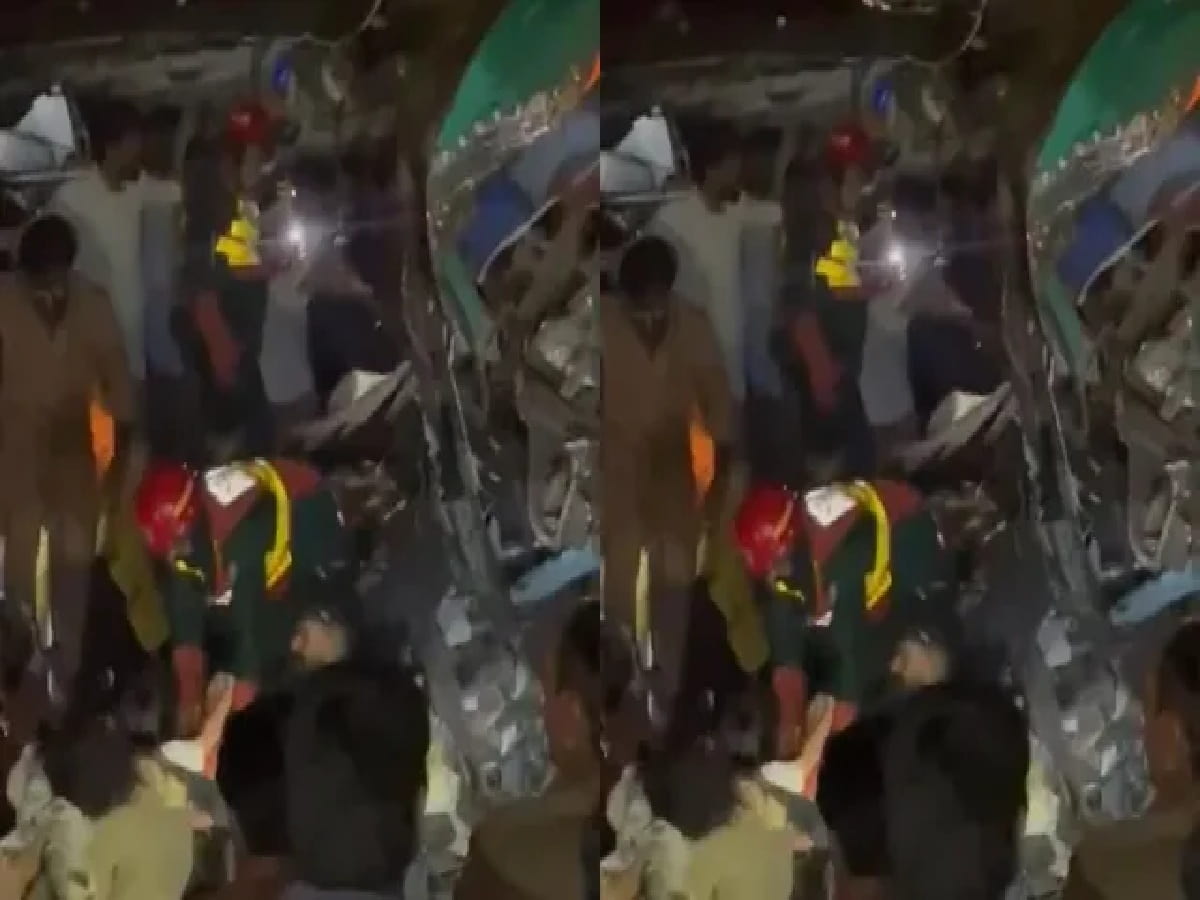
8 Dead, 29 Hurt as Bus Hits Dumper on Pakistan Motorway
A devastating high-speed collision between a commercial passenger coach and a heavy dump truck claimed the lives of at least eight commuters and left twenty-nine others injured on the Hazara Motorway in Pakistan’s northwestern Khyber Pakhtunkhwa province on Friday morning, November 6, 2026. The crash occurred during early morning transit along the arterial motorway corridor near the Havelian interchange within the administrative bounds of Abbottabad district, throwing regional emergency services into high alert and halting vehicular traffic across major southbound lanes. Transporting dozens of passengers from the northern mountainous valleys of Gilgit-Baltistan toward the federal capital region and Rawalpindi, the long-distance coach was reduced to a mangled frame upon violent contact with the heavy commercial carrier. Emergency rescue units and trauma specialists swiftly mobilized across the Hazara division, declaring a high-level medical emergency as bleeding survivors, trapped passengers, and deceased victims were extracted from the crushed wreckage.
Deadly Dawn on Hazara Motorway: Overcrowded Coach Collides with Dumper
The disaster unfolded in the early morning twilight when visibility along the elevated mountain passes and multi-lane expressways was beginning to clear. The passenger bus, packed with families, students, and workers returning from the high-altitude districts of Gilgit, had navigated through arduous terrain overnight and was descending along the Hazara Motorway (M-15). As the vehicle approached the outskirts of Abbottabad, tragedy struck with terrifying speed. According to preliminary field reports filed by the National Highways and Motorway Police (NH&MP) and local district authorities, a catastrophic mechanical failure stripped the driver of steering control, causing the heavy coach to swerve violently across the carriageway before ramming at highway speeds into a heavy dump truck that was operating along the transit route.
The violence of the impact sheared off large portions of the bus’s passenger compartment, trapping dozens of travelers within crumpled metal and broken safety glass. Motorists navigating the motorway were confronted with an apocalyptic scene of scattered luggage, twisted chassis fragments, and the desperate cries of wounded passengers calling for assistance. Eyewitnesses reported that the heavy dumper sustained severe rear-end and lateral structural damage, while the passenger coach bore the brunt of the kinetic energy, caving in across its left and frontal sections where passengers were seated in dense rows. Nearby toll plaza personnel and patrol officers quickly cordoned off the crash zone to prevent secondary pileups, alerting regional dispatch centers to mount an immediate multi-agency rescue effort.
Tyre Burst and High Speed: How the Catastrophe Unfolded
Forensic crash reconstructions and official assessments released by emergency rescue teams confirm that the primary catalyst behind the disaster was a sudden, violent tyre blowout on the passenger coach. Navigating long descents from northern mountain highways imposes intense thermal and mechanical stress on commercial vehicle tyres, especially when buses operate with heavy passenger rosters and rooftop cargo loads. Investigators noted that when the high-speed coach suffered a sudden tyre burst, the driver was instantly deprived of directional steering control on the smooth motorway asphalt. The bus yawed sharply, crossed marked traffic lanes, and collided headlong with the dumper truck before coming to a standstill against the crash barriers.
Initial inquiries conducted by traffic inspectors indicate that excessive speed and potential commercial overloading likely worsened the severity of the collision. Motorway regulations strictly mandate speed limits and periodic tyre integrity checks, yet long-distance intercity buses frequently run on retreaded, substandard rubber to cut operating overheads. The combination of early morning driver fatigue, high descent speeds, and an uncontainable tyre burst created an inescapable hazard where neither vehicle's operator could execute an evasive braking maneuver in time. Transport safety officials have seized the mechanical remnants of both vehicles for detailed engineering evaluations to determine whether braking systems failed in tandem with the tyre blowout.
Rescue 1122 Operation: Emergency Declared at Ayub Medical Complex
Within minutes of the distress call, the Abbottabad district control room of Rescue 1122 initiated a full-scale tactical disaster response under the supervision of District Emergency Officer Hafeezur Rehman. A dedicated convoy comprising seven fully equipped paramedic ambulances, specialized rescue trucks, and disaster management personnel rushed to the crash site near Havelian. Rescue personnel utilized hydraulic cutters, spreaders, and heavy extraction machinery to peel back crushed sheet metal and extricate trapped passengers from beneath collapsed seating rows. First-aid responders set up an emergency roadside triage perimeter, stabilizing hemorrhaging wounds and administering intravenous fluids before rushing victims to nearby health facilities.
The casualty toll proved severe: seven individuals were declared dead on arrival at local medical facilities, while an eighth victim succumbed to catastrophic internal injuries shortly after reaching the emergency ward. Thirty wounded individuals were pulled from the wreckage, with hospital registries confirming twenty-nine survivors currently undergoing active clinical management. The injured include five children and six women, many of whom suffered complex head trauma, severe blunt-force injuries, and multiple orthopedic fractures. The majority of the casualties were evacuated to the tertiary-care Ayub Teaching Hospital (Ayub Medical Complex) in Abbottabad, where hospital executives instituted a "code red" emergency, mobilizing surgical teams, blood transfusion banks, and trauma specialists. Additional victims and bodies were transported to District Headquarters (DHQ) Hospital Abbottabad and the Type-D Hospital in Havelian, with medical spokespersons warning that several patients remain in critical condition in intensive care.
Chronic Highway Perils and the Toll of Mountain Transit Corridors
The Hazara Motorway tragedy once again casts an intense spotlight on the chronic, structural safety deficits that plague Pakistan's overland transportation infrastructure. Despite significant investments in multi-lane expressways like the M-15 and the expansion of modern highway corridors, fatal vehicular accidents remain an alarming regular occurrence across the country. Only a day prior to the Abbottabad crash, a devastating collision between an intercity passenger bus and a cargo truck in the Pakpattan district claimed eleven lives and left thirty-three injured, while a separate mishap in Punjab's Hafizabad district saw five commuters killed when a bus plunged into an open drainage canal.
Transportation experts and public safety advocates emphasize that world-class tarmac alone cannot prevent road carnage when foundational safety regulations are systematically bypassed. Long-distance transit operators operating routes between Gilgit-Baltistan, Khyber Pakhtunkhwa, and Punjab frequently push drivers to complete grueling shifts without mandatory rest intervals, fostering chronic driver exhaustion and diminished reaction times. Furthermore, the widespread prevalence of counterfeit mechanical spare parts, unregulated commercial retreading of worn tyres, and the absence of weigh-station enforcement against overloaded freight dumpers create an inherently volatile environment on high-speed thoroughfares. Civic organizations across Abbottabad and Peshawar have called for immediate government interventions, including automated vehicle fitness scanning and mandatory dual-driver protocols on overnight mountain transit services.
Administrative Scrutiny and Community Mourning Across Gilgit-Baltistan
The news of the tragedy has plunged communities across Gilgit-Baltistan into deep sorrow, as the vast majority of the deceased and severely injured passengers were native residents traveling south for employment, medical consultations, and university education. Relatives and local leaders gathered outside hospitals in Abbottabad and Havelian to identify loved ones and arrange the repatriation of remains back to northern villages. Community representatives voiced profound frustration with commercial bus operators who prioritize passenger volume over passenger safety, demanding swift legal action against the transport company responsible for fielding an unroadworthy coach.
Khyber Pakhtunkhwa provincial authorities and the National Highways and Motorway Police have formally initiated an administrative and criminal probe into the collision. Investigators are reviewing whether the commercial coach maintained valid route permits, up-to-date fitness certificates, and certified passenger insurance before departing Gilgit. Provincial administrative leaders expressed heartfelt condolences to the bereaved families, promising swift financial assistance to cover medical expenses and funerary logistics. As surgeons at Ayub Medical Complex work tirelessly to stabilize the surviving victims, the tragic incident stands as a somber reminder that without stringent regulatory compliance and uncompromising vehicle safety standards, the country's modern expressways will continue to claim innocent lives.




