







'Hold Attackers Accountable': India's Stern Message at UN
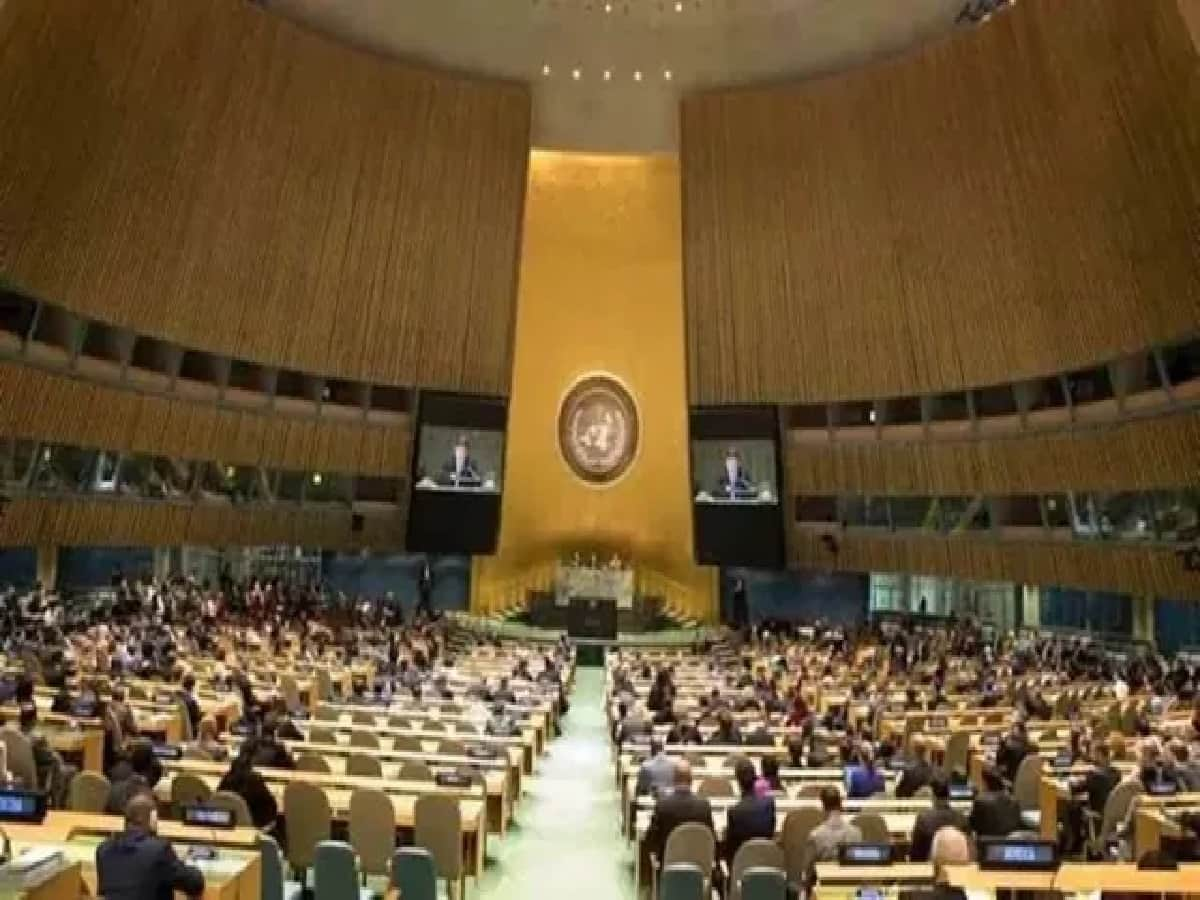
In an uncompromising intervention on the global stage, India demanded strict, enforceable accountability for individuals, rogue armed factions, and non-state actors who target United Nations peacekeepers serving in volatile conflict zones worldwide. Speaking during the comprehensive review debate on peacekeeping operations at the UN headquarters in New York, Colonel Tarunendra Pratap Singh, Military Adviser at the Permanent Mission of India to the United Nations, emphasized that the security and operational safety of Blue Helmets must remain the foremost priority for the international community. New Delhi asserted that peacekeepers are increasingly deployed into complex environments characterized by hostile proxy skirmishes, asymmetric warfare, and coordinated terror networks, making the principle of zero tolerance toward attacks on UN personnel a fundamental necessity. Stressing that peacekeepers cannot be sent into life-threatening friction points without adequate protections, legal mechanisms, and operational backing, the Indian delegation called upon host nations and the UN Secretariat to put an end to the culture of impunity that frequently shields perpetrators of violence against multilateral missions.
India's moral authority on the subject is anchored in an extraordinary legacy of multilateral engagement and field sacrifice. As one of the world's historic and largest cumulative contributors of military and police personnel to United Nations peacekeeping operations, India has deployed more than 300,000 troops across 50 distinct missions spanning seven decades. This operational footprint has come at a tremendous human cost, with 182 Indian soldiers having made the supreme sacrifice in the line of international duty—the highest number of casualties suffered by any single troop-contributing nation in the history of UN peacekeeping. Colonel Singh noted that New Delhi’s commitment to multilateral peace is not merely rhetorical or philosophical, but fundamentally forged through decades of operational leadership and the dedication of its armed forces.
UNSC Resolution 2589: Championing Justice and Legal Accountability
At the heart of India's diplomatic position is the robust implementation of United Nations Security Council Resolution 2589, a landmark framework unanimously adopted during India’s presidency of the Security Council in August 2021. The resolution established a binding international imperative mandating that host governments take all necessary legal, investigative, and judicial measures to identify, arrest, and prosecute perpetrators of crimes committed against UN personnel, while obligating the UN Secretariat to maintain an exhaustive online tracking repository of all violent incidents, assaults, and fatalities. Colonel Singh highlighted India's continued global leadership in advocating for the operationalization of Resolution 2589, underscoring that accountability cannot remain confined to diplomatic declarations while frontline soldiers face ambushes, sniper fire, and improvised explosive devices without judicial recourse.
Indian diplomats pointed out that the credibility of the entire multilateral system is severely eroded when attacks against the Blue Helmets go uninvestigated or unpunished by domestic host authorities. Through the Group of Friends established under Resolution 2589—which India co-chairs alongside international partners—New Delhi continues to assist host states in upgrading their forensic capacities, digitizing criminal dossiers, and strengthening standard operating procedures for military and police tribunals. The Indian mission reiterated that member states hosting UN operations must recognize that attacking peacekeepers constitutes a grave violation of international humanitarian law and, under specific circumstances, amounts to a war crime that demands immediate domestic or international prosecution.
Modern Combat Realities: Asymmetric Warfare and Technological Threats
Addressing the operational realities of 21st-century battlefields, India drew attention to the evolving spectrum of technological threats confronting peace operations. In contemporary operational theaters stretching across Central Africa, the Sahel, and the Levant, peacekeepers no longer monitor clearly demarcated ceasefires between conventional standing armies. Instead, deployed forces face non-state insurgencies equipped with weaponized commercial drones, sophisticated cyber disinformation campaigns designed to turn local populations against peacekeepers, and precision-guided improvised explosive devices (IEDs). Colonel Singh stressed that Blue Helmets must be equipped with modern situational awareness tools, advanced night-vision gear, counter-drone systems, and secure communications infrastructure to preserve operational responsiveness and personal safety.
In this domain, India has backed its diplomatic words with concrete institutional contributions. The Indian delegation highlighted New Delhi’s financial and technological stewardship of the UNITE AWARE platform, an indigenous, cloud-based situational awareness software suite developed by India in collaboration with the UN Department of Peace Operations. Rolled out across multiple frontline missions, UNITE AWARE integrates high-resolution mapping, real-time threat data, and terrain analytics to provide tactical commanders with early warning capabilities against impending ambushes. Furthermore, India urged the United Nations to accelerate the integration of renewable energy grids and modular micro-power systems in remote peacekeeping camps, reducing the tactical reliance on hazardous, convoy-dependent diesel supply runs that are frequently ambushed by armed groups.
A Systematic Voice for Troop-Contributing Nations in Shaping Mandates
A cornerstone of India's critique at the United Nations focused on the persistent structural disconnect between the countries that design peacekeeping mandates and the countries that supply the soldiers to execute them. Speaking on behalf of Troop and Police Contributing Countries (T/PCCs), Colonel Singh emphasized that those risking their lives on the ground must be granted a "systematic voice" in the drafting, reviewing, and altering of operational mandates formulated by the 15-member Security Council. Historically, mandates are conceived in the diplomatic halls of New York by permanent members who contribute negligible frontline personnel, resulting in vague, overly ambitious, and poorly resourced objectives that set field commanders up for operational failure.
India reiterated that peacekeeping missions have the highest probability of success when anchored within a coherent, well-defined political process with realistic exit criteria, rather than serving as permanent substitutes for failed regional political settlements. Addressing mission rationalization, Colonel Singh warned that prolonging open-ended deployments that lack a viable political roadmap or clear operational rationale depletes scarce multilateral resources, breeds local resentment, and damages the overarching credibility of the United Nations. The Indian delegation called for mandatory institutional consultations between the Security Council and military leadership from troop-contributing nations before any peacekeeping mandate is voted on, renewed, or terminated.
Women on the Frontlines and New Delhi's 2028-29 Security Council Bid
Highlighting the evolution of its peacekeeping profile, India spotlighted the pivotal role played by female military and police personnel in enhancing mission outcomes and building trust with local communities. India has deployed female personnel in UN missions since 1960, scripting international history in 2007 by deploying the world’s first all-female Formed Police Unit (FPU) to the UN Mission in Liberia (UNMIL). That deployment earned global praise for inspiring a dramatic rise in women enlisting in the Liberian national police force and fundamentally redefining community policing in post-conflict reconstruction. Building upon that tradition, Colonel Singh announced that India currently maintains 160 women peacekeepers deployed across multiple critical missions, continuing to serve as key assets in civil-military coordination, child protection, and medical aid delivery.
Concluding the address, the Indian delegation reaffirmed that because peacekeeping operations represent an indispensable pillar of the United Nations charter, India has placed comprehensive peacekeeping reform and soldier welfare as central commitments in its candidature for a non-permanent seat on the UN Security Council for the 2028-29 term. Reasserting India's long-term vision, New Delhi pledged its continuous support for a reformed, modern peacekeeping architecture—one that is substantially better resourced, decisively protected against unlawful attacks, and genuinely representative of the troop-contributing nations that carry the weight of global stability.




