







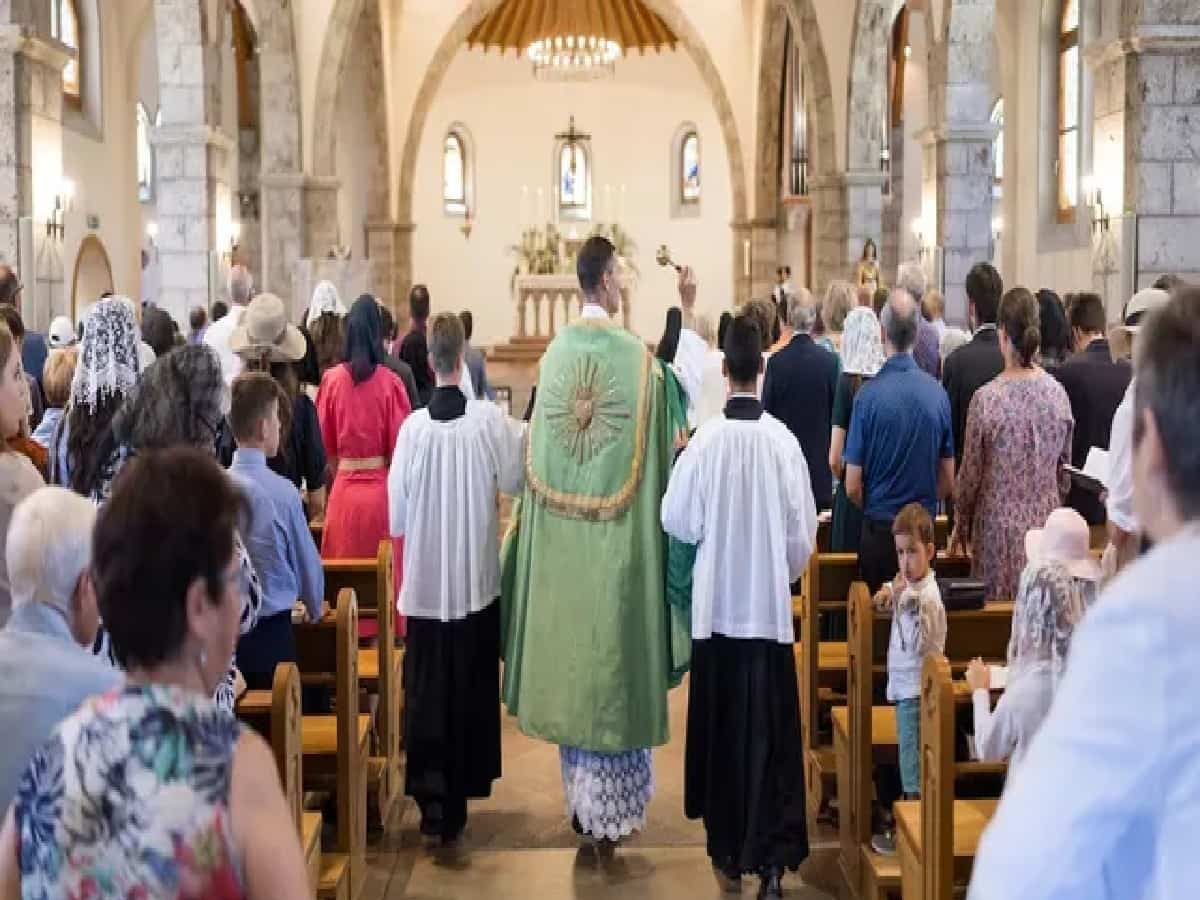
Italy Church Report: 57 Priests Jailed for Child Sex Abuse in 20 Years
For the first time, Italy's Catholic leadership has placed concrete, twenty-year archival figures on the public record regarding clerical sexual abuse of minors—revealing that 57 Catholic priests received final prison sentences between 2001 and 2021 out of 378 cases reported to ecclesiastical authorities. Highlighted across European and international news desks on Thursday, November 26, 2026 following its formal presentation in Rome on Wednesday, November 25, the long-awaited study was commissioned by the Italian Bishops' Conference (Conferenza Episcopale Italiana – CEI) and compiled by independent researchers from the University of Bologna and Florence's Innocenti Institute. Drawing from diocesan and Vatican doctrinal archives covering the two-decade period from 2001 to 2021, the report documents 880 separate incidents of abuse involving 356 alleged clergy perpetrators and 385 victims. Of those 356 suspected offenders, 123 were referred to the Italian judicial system, resulting in 57 final criminal convictions and prison sentences, while 218 priests underwent internal canonical disciplinary action, with roughly 70 percent found guilty. Addressing the findings candidly, Cardinal Matteo Maria Zuppi, Archbishop of Bologna and head of the Italian Bishops' Conference, declared that the crimes expose "an evil that has run through the Church: we must call it by its name and acknowledge its atrocity". Even as CEI agreed to establish a permanent observatory to monitor abuse data, both the report's authors and Italian survivor advocacy groups—most notably Rete l'Abuso, founded by survivor Francesco Zanardi—cautioned that because the audit examined only existing Church records rather than wider historical decades, the true scale of clerical abuse across Rome, Bologna, Florence, Milan, and smaller Italian dioceses is likely substantially higher.
Italy Catholic Church Abuse Report (2001–2021): Key Figures & Findings
To bring together the exact case, victim, judicial, and disciplinary numbers published by the Italian Bishops' Conference, the demographic and institutional breakdown of accused clerics and survivors, and the responses from Cardinal Matteo Maria Zuppi and survivor-rights advocates, the tables below organize all verified findings:
Statistical Breakdown of the 2001–2021 Italian Bishops' Conference Study
| Metric / Category | Verified Figure | Context & Investigative Significance |
| Audit Period & Research Bodies | 2001 to 2021 (20 years); compiled by independent analysts from the University of Bologna and Florence's Innocenti Institute for CEI. | Marks Italy's first systematic, nationwide archival audit of clerical child sexual abuse complaints reported to Church offices. |
| Total Cases & Separate Incidents | 378 reported cases encompassing 880 distinct incidents of abuse. | Shows many complaints involved repeated patterns of misconduct rather than isolated single episodes. |
| Alleged Abusers & Victims | 356 alleged clergy abusers and 385 victims documented in Church archives. | Around 70% of reported victims were male, with boys aged 14 to 17 identified as the most frequently targeted group. |
| Italian Judicial Referrals & Prison Sentences | 123 alleged offenders brought before Italian civil/criminal courts (yielding 166 judicial decisions), of whom 57 received final convictions and prison sentences. | Underscores a significant gap between total complaints logged internally by dioceses and cases prosecuted to final conviction in state courts. |
| Internal Church Disciplinary Action | 218 priests subjected to canonical disciplinary proceedings, with approximately 70% found guilty; among all 356 accused, 87 were defrocked or temporarily suspended, 39 retired, and 67 had died. | Highlights how canonical penalties and retirements or deaths preceded or substituted for criminal prosecution in many files. |
Institutional Leadership vs. Survivor-Group Reactions in Italy
| Stakeholder | Position & Key Statement | Core Demand or Next Step |
| Cardinal Matteo Maria Zuppi (Head of Italian Bishops' Conference – CEI) | Acknowledged the gravity of the findings, stating: "These crimes reveal an evil that has run through the Church: we must call it by its name and acknowledge its atrocity". | Endorsed creating a permanent observatory to continuously collect, study, and monitor abuse data across Italian dioceses. |
| Report Researchers (University of Bologna & Innocenti Institute) | Explicitly cautioned that because the dataset relies strictly on Church archives, the figures do not capture unreported cases and cannot serve as a complete estimate of real prevalence. | Recommended stronger standardized record-keeping, independent oversight, and long-term data tracking. |
| Rete l'Abuso (Italian Survivors' Network led by Francesco Zanardi) | Criticized the 2001–2021 pilot study as clearly insufficient compared to broader national inquiries in France, Germany, and Spain. | Demanded structural legal reforms and mandatory reporting obligations in Italian law so every allegation is automatically referred to civil prosecutors. |
Why Italy's Report Differs From Wider European Inquiries
Observers across Rome, Vatican City, Paris, Berlin, New Delhi, and global legal circles noted that unlike independent commissions in France or Spain—which examined abuse stretching back to the 1940s and 1950s and estimated hundreds of thousands of victims—Italy's audit focused specifically on 2001 to 2021 so that living survivors, active clergy, and serving bishops could be held directly accountable. Even within that narrower 20-year window, finding that roughly 80 percent of cases involved repeat/multiple offenders has intensified pressure on both ecclesiastical authorities and the Italian Parliament.
What Reforms and Follow-Up Steps Are Expected Next
With the Italian Bishops' Conference committing to launch a permanent abuse-monitoring observatory while survivor advocates push lawmakers in Rome for compulsory civil reporting statutes, attention across Italy and the global Catholic community now turns to whether diocesan archives will open further and how swiftly binding child-protection safeguards are enforced.




