







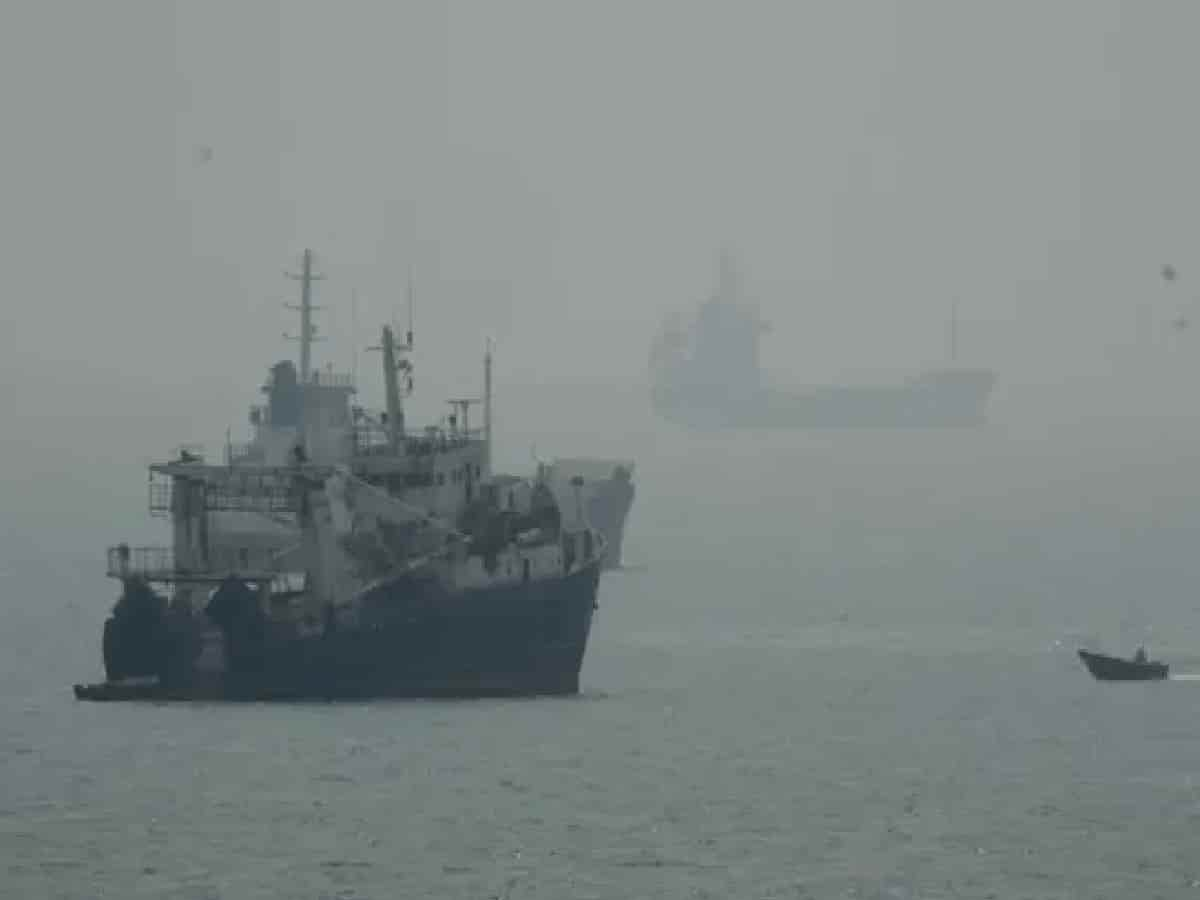
Iran Claims 3 Tankers Struck in Hormuz as Gulf Tensions Flare
Maritime security across the Persian Gulf was destabilized once again after Iran’s Islamic Revolutionary Guard Corps (IRGC) claimed responsibility for setting three commercial oil tankers ablaze in the strategic Strait of Hormuz. The elite military force asserted that the commercial vessels were targeted after navigating through unauthorized transit lanes without obtaining operational clearance from Iranian port controllers. The incident marks an acute escalation along one of the planet's most sensitive energy arteries, threatening to disrupt international petroleum distribution networks even as regional capitals engage in diplomatic efforts to avert broader regional conflict.
The announcement was accompanied by corroborating statements from international maritime monitoring bodies and commercial fleet managers operating in the region. The United Kingdom Maritime Trade Operations (UKMTO) reported that an unidentified maritime attack struck a tanker transiting off the coast of Oman near the Musandam Peninsula, prompting emergency alerts across regional shipping lanes. Shortly after, the United Arab Emirates state-owned energy enterprise, Abu Dhabi National Oil Company (ADNOC), confirmed that one of its commercial vessels sustained structural damage following a targeted strike carried out within the UAE's sovereign territorial waters in the Arabian Gulf. While it remains subject to independent verification whether the UAE-linked vessel was among the specific ships referenced in Tehran's statements, the attacks highlight the immediate physical hazards facing merchant crews operating in Gulf waterways.
Tehran Accuses Tankers of Violating Prescribed Navigational Corridors
The IRGC issued a detailed statement through Iranian state television outlining the sequence of explosions across the waterway. According to the military dispatch, two oil tankers transiting the Strait of Hormuz along non-designated navigational paths suffered catastrophic onboard explosions, forcing them to halt dead in the water as flames tore through their superstructure. Iranian commanders asserted that both vessels were brought to an immediate standstill and left burning in open waters after bypassing established reporting protocols enforced along the Iranian coastal perimeter.
Military authorities in Tehran followed up with a secondary advisory disclosing that a third vessel, identified as a crude supertanker, was crippled on Tuesday afternoon after detonating a submerged naval mine in the eastern sector of the strait. The Revolutionary Guards stated that the supertanker suffered extensive hull breeches while attempting a covert passage along an unauthorized route. Iranian state media refrained from publicizing the names, national flags, or commercial ownership details of the targeted vessels, but warned that foreign shipping companies attempting to bypass local transit regulations would face comparable military interdiction.
Retaliatory Blockades and the Dispute Over Underwater Mines
The strikes in the waterway represent a sharp tactical exchange within an escalating economic confrontation. Since hostilities expanded across the Middle East earlier this year, Iran has asserted unilateral regulatory oversight across the Strait of Hormuz, dictating that international merchant shipping must utilize specific maritime corridors vetted and managed by Iranian coastal tracking stations. Ships deviating from these directives have faced direct boardings, missile strikes, or sea-mine deployments by Revolutionary Guard naval units.
In direct response to Tehran’s transit restrictions, the United States armed forces instituted a naval blockade targeting Iranian commercial ports and deployed naval escort detachments to shield commercial tankers transiting the choke point. The ongoing militarization has intensified disputes over the presence of underwater ordnance. While the Iranian military has repeatedly claimed that non-compliant tankers are exploding due to defensive minefields planted along the sea floor, the United States military recently asserted that naval countermeasure units had successfully swept and cleared operational mines from primary navigation channels. The IRGC pointedly rejected those claims on Tuesday, alleging that an attacked tanker had been sailing under direct United States military escort when it experienced an explosion while attempting to navigate an illegal lane.
Global Energy Lifeline Placed Under Severe Strain
The Strait of Hormuz serves as the central economic conduit for international energy security, facilitating the transit of approximately one-fifth of the world’s petroleum consumption and significant volumes of liquefied natural gas. The narrow navigational channel, which separates the Iranian coastline from Oman and the United Arab Emirates, connects major Middle Eastern crude producers with primary consumer markets across Asia, Europe, and North America. The recurrence of attacks on merchant shipping has led commercial maritime transport insurers to sharply elevate war-risk premiums, increasing operational freight overhead for international shipping lines.
The confrontation creates logistical hurdles for United States Central Command (CENTCOM), which oversees American military operations throughout the regional theater. CENTCOM reported last month that its naval task forces had protected the safe maritime passage of roughly 1.5 billion barrels of petroleum originating from allied Gulf states since the summer months. However, as the IRGC deploys low-profile naval mines, unmanned attack drones, and coastal anti-ship batteries, maintaining uninterrupted transit through the waterway has become increasingly complex, with satellite surveillance documenting periodic oil slicks along coastal approaches.
Diplomatic Cross-Currents and the Outlook for Maritime Security
The escalation in the Strait of Hormuz creates a sharp contrast with diplomatic discussions taking place across regional capitals. Regional leaders in Saudi Arabia, Qatar, the UAE, Kuwait, and Bahrain have urged international partners to avoid military escalations that could destabilize Gulf economic corridors and compromise critical coastal infrastructure. While diplomatic envoys continue to pursue de-escalation mechanisms, the maritime domain remains a volatile pressure point where tactical skirmishes can trigger broader conflicts.
Maritime risk intelligence organizations, including the Joint Maritime Information Centre, maintain high threat classifications across the Persian Gulf, the Gulf of Oman, and the Strait of Hormuz. Commercial shipping operators have been advised to exercise extreme caution, verify real-time navigational advisories issued by UKMTO and regional port directors, and ensure rigorous radio reporting when transiting near the Musandam Peninsula. With three tankers damaged in a single day and naval patrols on elevated alert, the safety of the world's most critical energy transit artery remains precariously balanced.




