







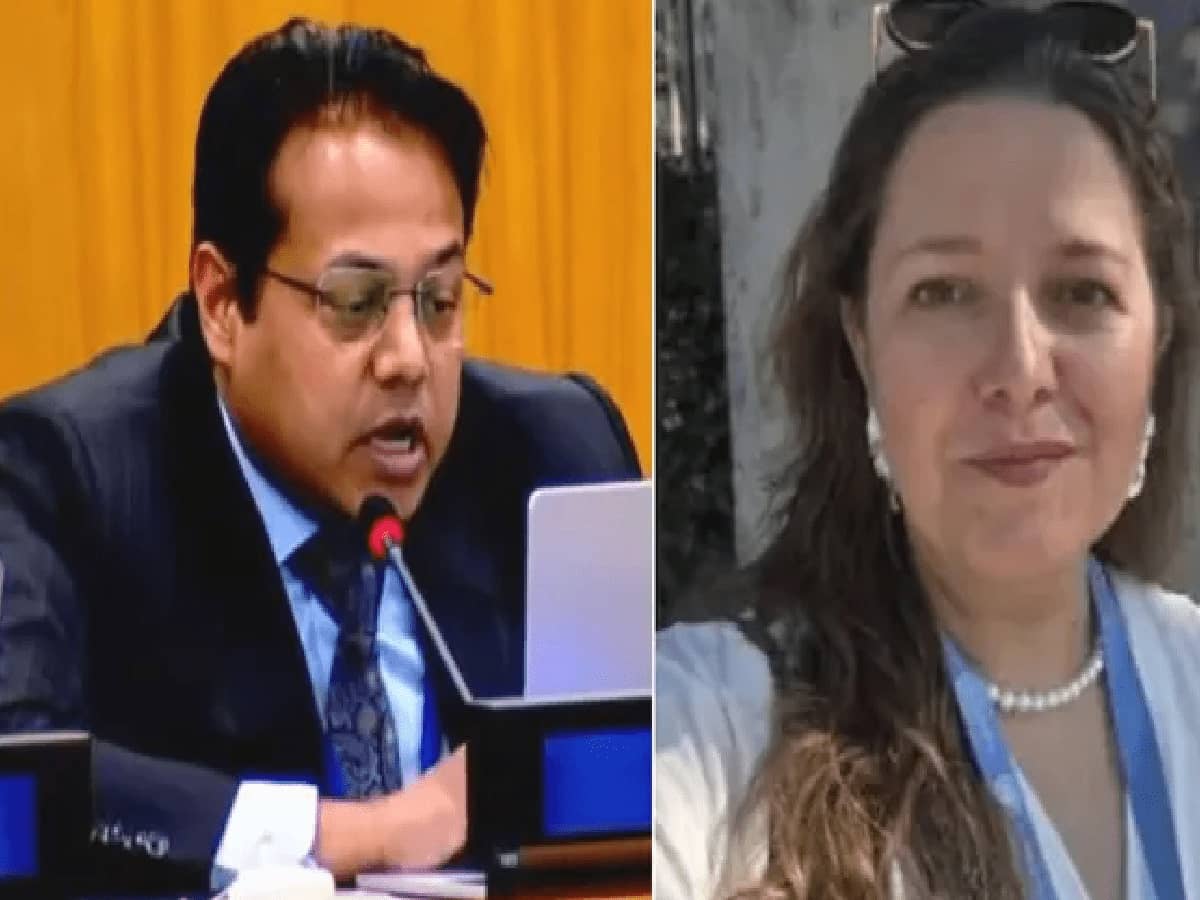
India Slams UN Rapporteur Gina Romero Over Baseless Claims on Youth Rights
In a fierce diplomatic showdown at the United Nations headquarters in New York, India launched a scathing counter-offensive against UN Special Rapporteur Gina Romero, outright rejecting her contentious assertions that Indian youth face official retaliation or social stigma when advocating for mental health awareness or gender justice. Delivering a sharp rebuttal during the 81st session of the Third Committee of the United Nations General Assembly (UNGA), Indian First Secretary Anuj Swarup dismissed the assessment as arbitrary, evidence-free hearsay derived from anonymous footnotes. Addressing the global gathering, Swarup warned that treating vague anecdotes from unidentified individuals as authoritative international findings severely damages the institutional credibility of the United Nations, while reaffirming that India’s constitutional safeguards guarantee democratic freedoms across the world’s largest youth population.
Constitutional Guarantees Under Article 19: India Rebuts Romero's Sweeping Claims
Reaffirming the structural resilience of India's vibrant participatory democracy, the Indian mission emphasized the country's institutional bedrock:
-
Inviolable Constitutional Freedoms: First Secretary Anuj Swarup stated that the fundamental rights to peaceful assembly, association, and freedom of speech and expression are explicitly guaranteed to every Indian citizen under Article 19 of the Constitution of India.
-
Independent Institutional Protections: The diplomat reminded the committee that civic liberties in India are actively safeguarded by an independent judiciary, a fiercely vigilant free press, and an empowered National Human Rights Commission (NHRC).
-
Timing of the Report: The controversial findings were tabled at a juncture when youth-led political mobilizations have been staging public demonstrations in New Delhi questioning electoral revisions overseen by Chief Election Commissioner Gyanesh Kumar, proving that public dissent is openly exercised rather than suppressed.
'Credibility Lost': Diplomat Calls Out Anonymous Footnotes and Hearsay
India strongly questioned the methodology utilized by Special Rapporteur Gina Romero, highlighting the absence of verifiable evidentiary standards:
-
Reliance on Unidentified Accounts: Calling out the report's lack of rigor, Swarup noted that Romero’s sweeping conclusions regarding retaliation were anchored entirely to vague claims from a handful of anonymous individuals cited in a single footnote.
-
Erosion of United Nations Standing: Declaring that such superficial evaluations undermine international trust, Swarup stated: "This arbitrary approach to reporting is the main reason why the credibility of the United Nations and its institutions has been eroded. It is merely hearsay masquerading as a UN report, and my delegation completely rejects it."
-
Injustice to 1.4 Billion People: The diplomat stressed that an official mandated to report on fundamental freedoms does gross injustice to their position by formulating sweeping generalizations about a nation of 1.4 billion people without primary fact-checking, urging the rapporteur to bring impartiality and seriousness back to UN procedures.
Thriving Civic Space: Ministers Engage Satirical Parties and Student Dialogues
To demonstrate the real-world openness of India's political arena, the diplomat contrasted the report's claims with recent government engagements:
-
Engagement with Satirical Movements: Pointing directly to youth-led movements, Swarup highlighted that the Cockroach Janata Party (CJP)—a satirical political movement launched by young citizens—was able to hold street marches to the capital and subsequently engage in direct consultative talks with senior Union ministers.
-
The Test of an Oppressive State: Posing a direct rhetorical question to the assembly, Swarup asked: "In which oppressive country can such a satirical party of youth question the government, march to the capital, and then sit down and talk with senior leaders of the country?"
-
Citing UN High Commissioner Volker Türk: Recalling recent statements by UN High Commissioner for Human Rights Volker Türk at the Human Rights Council, Swarup reiterated that constructive dialogue with youth leaders remains the most effective policy, noting that Indian authorities have consistently maintained open communication channels during student protests regarding competitive examination reforms.
-
Mobilizing Millions in Nation-Building: Highlighting structured avenues of empowerment, the delegation pointed to initiatives like the Developing India Youth Leadership Dialogue, which engaged more than 5 million young citizens to directly shape policy goals and national development priorities.




