







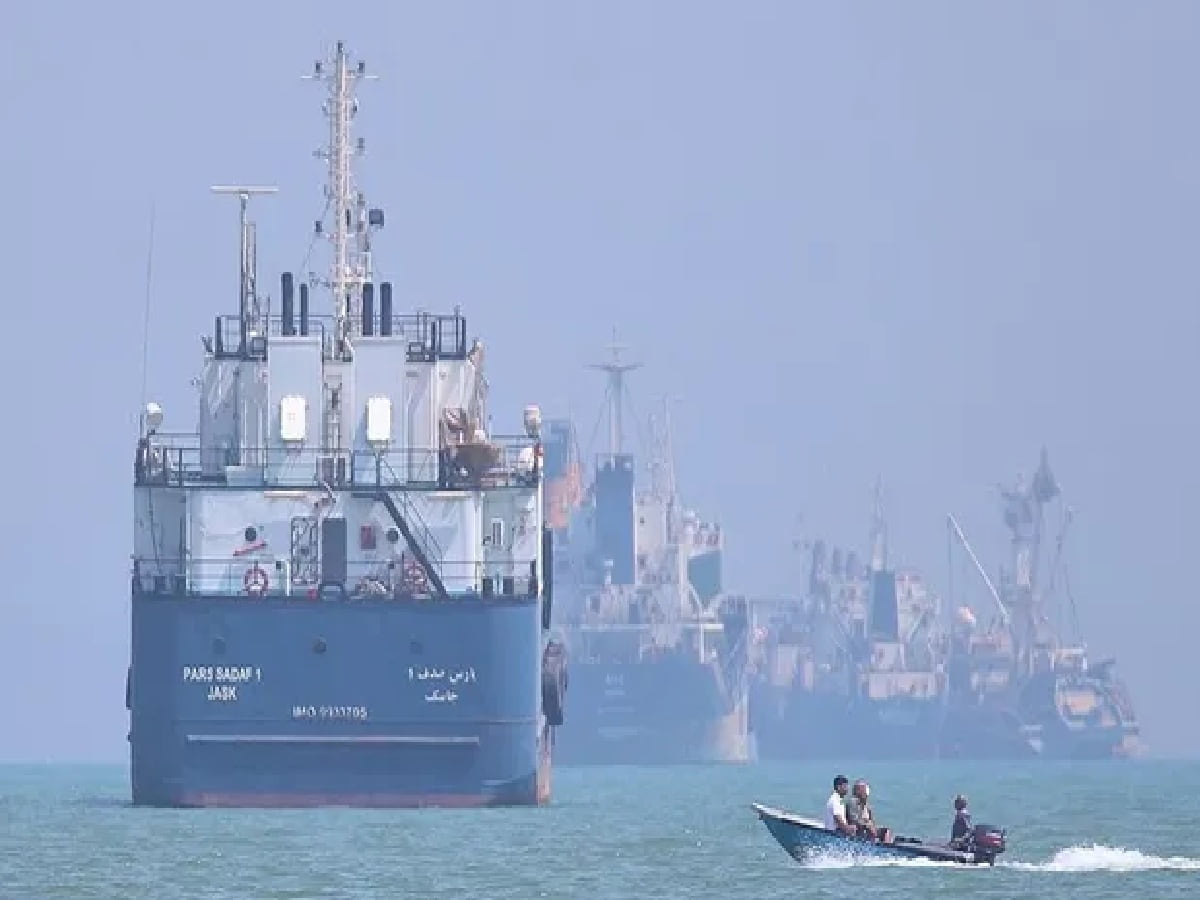
Hormuz Tensions Rise as Iran Claims US F-16 Retreat, Kuwait Summons Envoy
Military and diplomatic friction across the Persian Gulf escalated sharply on Friday after Iran's Islamic Revolutionary Guard Corps (IRGC) claimed its air defense units fired warning shots that forced a U.S. F-16 fighter jet to retreat near Hengam Island in the Strait of Hormuz. On the same day, Kuwait's Foreign Ministry summoned Iranian Ambassador Mohammad Totonchi to lodge a formal diplomatic protest over a deadly drone strike that killed two Italian nationals in the Gulf state.
IRGC Claims Air Defense Warning Forced US F-16 Away From Hormuz
According to a statement published on the IRGC's official outlet Sepah News and carried by Iranian state broadcaster IRIB, the U.S. F-16 Fighting Falcon approached Iranian airspace southeast of Hengam Island while escorting and providing air cover for vessels that Tehran accused of violating its maritime regulations. The IRGC stated that its Aerospace Force deployed modern air defense systems to fire warning shots, prompting the American pilot to execute a sharp maneuver and withdraw from the area.
Following the encounter, IRGC Aerospace Force Commander Seyed Majid Mousavi issued a warning on social media platform X, asserting that Washington must remain prepared for responses across both aerial and maritime fronts. Mousavi declared that no naval blockade would deter Iran's defensive resolve and warned of severe repercussions for vessels or forces disregarding Iranian traffic rules in the Strait of Hormuz.
Tehran Asserts Strategic Control Over the Strait of Hormuz
In parallel with the aerial standoff, senior Iranian lawmakers and military commanders emphasized Tehran's operational grip over the vital oil-shipping chokepoint. Esmail Kowsari, a member of the Iranian Parliament's National Security and Foreign Policy Committee, claimed that Iranian forces hold full control over the Strait of Hormuz, citing decades of military preparation dating back to 1987 to prevent foreign adversaries from dominating the waterway. Kowsari added that advancements in Iran's ballistic missile and drone arsenals have altered U.S. military calculations across the region.
Meanwhile, Iranian authorities issued additional security claims across the southern theater, including reports that a tanker struck a sea mine in Hormuz, that police forces downed an unidentified drone in southeastern Iran, and statements from Navy Commander Shahram Irani claiming the recapture of two oil tankers—though independent verification and operational specifics were not provided.
Kuwait Summons Iranian Ambassador Over Fatal Drone Attack
Diplomatic tensions widened simultaneously in Kuwait City, where Deputy Foreign Minister Hamad Suleiman Al-Mashaan summoned Iranian Ambassador Mohammad Totonchi on Friday to deliver an official protest note. Kuwait's Foreign Ministry condemned what it described as continued Iranian aggression following Thursday's drone strike on a vital facility that killed two Italian technicians and wounded two others, including a Kuwaiti and a Pakistani national, while causing extensive material damage.
-
Kuwait's diplomatic stance: The protest note characterized the strike as a breach of Kuwaiti sovereignty, international law, and the United Nations Charter, emphasizing that Kuwait reserves its inherent right to self-defense under Article 51 to protect everyone on its territory.
-
Iran's denial and probe offer: Iranian Foreign Minister Seyed Abbas Araghchi rejected accusations of Tehran's involvement, describing the incident as part of a pre-scripted confrontation and offering joint cooperation with Kuwaiti and Italian authorities to investigate the strike.
Wider Impact on Gulf Security and Global Energy Routes
The convergence of military warnings near Hengam Island and diplomatic fallout in Kuwait underscores the fragile security environment surrounding the Strait of Hormuz—a narrow maritime corridor through which roughly a fifth of the world's seaborne petroleum passes, including crucial crude and liquefied natural gas shipments bound for India and major Asian economies. With naval patrols, air defense alerts, and drone incidents unfolding simultaneously across the Gulf, regional governments and international shipping operators face heightened risks of miscalculation along one of the world's most critical energy arteries.




