







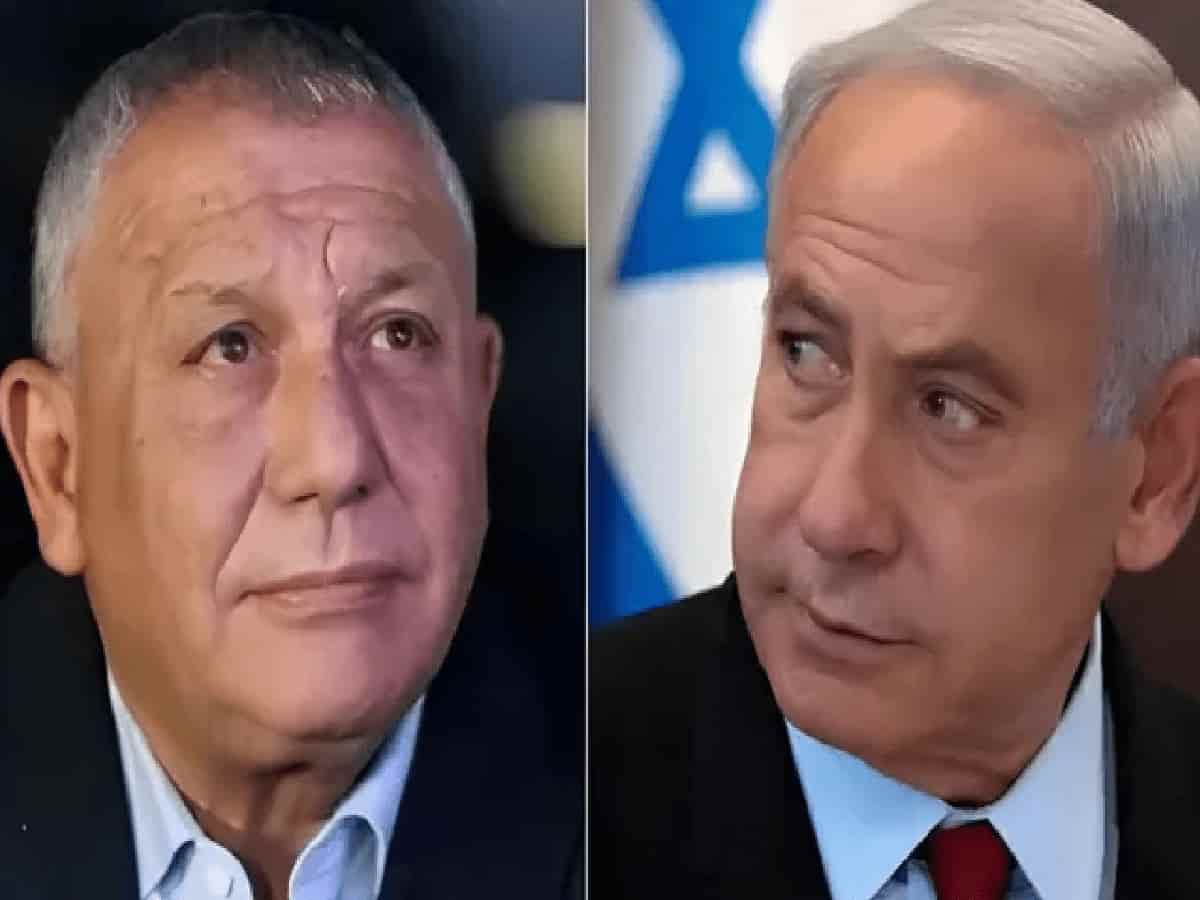
Eisenkot Halts Likud Talks, Calls Netanyahu Unfit to Lead
Efforts to form a stable governing coalition in Israel plunged into fresh turmoil on Wednesday after Gadi Eisenkot’s Yashar party announced the immediate cancellation of scheduled alliance talks with Prime Minister Benjamin Netanyahu’s Likud faction. The abrupt breakdown occurred only hours before negotiation teams were slated to meet in Jerusalem, following a deeply polarizing address delivered by Netanyahu during the ceremonial swearing-in of the 26th Knesset. Eisenkot, a former military chief of staff who holds the official mandate to assemble the next administration, issued a scathing public rebuke of the veteran leader, asserting that the prime minister's rhetoric had conclusively demonstrated that he is unfit to remain at the helm of the country for even a single minute longer.
The sudden collapse of dialogue marks a dramatic turning point in the post-election maneuverings that have gripped the Knesset since voters delivered a fractured parliamentary verdict. Only a day earlier, Netanyahu had publicly appealed to opposition factions to put aside ideological grievances and establish an expansive emergency unity administration, framing cross-party cohesion as an urgent strategic necessity to counter persistent regional threats and the Iranian nuclear dossier. However, the prime minister’s subsequent parliamentary remarks—which combined appeals for solidarity with sharp verbal attacks on the opposition’s outreach toward Arab-majority factions—backfired, alienating the very figures whose cooperation would be essential for any shared governance pact.
Swearing-In Speech Triggers Fiery Clash Between Former Generals
The diplomatic rift reached a breaking point during Tuesday's solemn opening session of the new parliamentary term, an occasion traditionally reserved for national reconciliation and institutional decorum. Addressing lawmakers from the Knesset podium, Netanyahu reiterated his call for an emergency government but pivoted sharply into an aggressive critique of rival leaders who are considering a coalition backed from the outside or inside by Arab factions. Challenging Jewish opposition figures directly, Netanyahu questioned whether they were prepared to base Israel’s executive stability on political entities that he accused of harboring fundamental hostility toward the Jewish state. He followed the speech with pointed statements on social media, describing potential cooperation with factions such as Ra'am and Hadash-Ta'al as an unacceptable gamble with national security.
Reacting with visible fury to the address, Eisenkot took to social media platform X to condemn the prime minister's statements, describing the speech as a delusional, divisive, hate-filled, and shameful performance. Eisenkot accused Netanyahu of weaponizing a solemn state occasion for narrow partisan preservation, asserting that the address served as proof that the incumbent leader prioritizes personal survival over genuine national unity. Declaring that Netanyahu’s continued tenure divides citizens and endangers defense preparedness, Eisenkot announced that he had instructed his negotiating team to pull out of the planned bilateral discussions with Likud, insisting that the priority must be assembling a broad-based emergency government that excludes the outgoing premier.
The Mechanics of Yashar's Decision to Walk Away from Talks
In an official statement released to the media, the Yashar party outlined the sequence of events that led to the termination of the negotiation track. The party noted that Eisenkot’s team had previously extended an invitation to all parliamentary factions to engage in sincere dialogue grounded in four core governance principles: establishing strict security deterrence, rebuilding national consensus, advancing state institutional integrity, and implementing structural economic reforms. The scheduled Wednesday conference with Likud envoys was meant to serve as an exploratory meeting to examine whether common policy ground existed between the two largest blocs in the legislature.
However, Yashar’s leadership concluded that Netanyahu’s confrontational stance during the inauguration ceremony negated the foundational premises required for honest negotiations. The party asserted that engaging in talks under current conditions would only normalize rhetoric that undermines democratic institutions and deepens communal polarization across Israeli society. By walking away from the negotiating table, Eisenkot has drawn a firm boundary, signaling that while he remains open to broad-based emergency partnerships, he will not accommodate maneuvers designed to pit parliamentary factions against one another during sensitive coalition bargaining.
Eisenkot's Arithmetic: Assembling 67 Seats to Oust the Longest-Serving Premier
The collapse of the Likud negotiation track places renewed focus on Eisenkot’s efforts to construct a viable parliamentary majority before his statutory mandate expires. Following extensive post-election consultations, President Isaac Herzog formally tasked the former chief of staff with leading the government-building process, granting him an initial window of up to six weeks to secure the confidence of the 120-member legislature. The recent national elections produced a divided parliament in which no single party captured an outright 61-seat majority: Netanyahu’s Likud emerged as the single largest individual party with 53 seats, while Eisenkot’s Yashar bloc secured 48 mandates.
To bridge the mathematical gap, Eisenkot has been orchestrating an expansive tent that commands nominal support from 67 lawmakers across the ideological spectrum, spanning centrist, center-left, right-wing opposition, and Arab-majority parties. To cement this disparate alliance, Eisenkot issued a direct appeal to key opposition leaders—including Yesh Atid chairman Yair Lapid, The Democrats leader Yair Golan, Yisrael Beytenu chief Avigdor Lieberman, and former prime minister Naftali Bennett—urging them to shoulder historical responsibility, set aside personal differences, and establish an alternative administration. The strategy, however, remains delicate, as balancing conservative right-wing elements like Lieberman alongside Arab lawmakers presents complex legislative compromises on domestic and security policy.
High-Stakes Timeline and What Lies Ahead for Israeli Politics
The coming weeks represent a decisive chapter for Israel’s domestic and geopolitical trajectory. If Eisenkot successfully navigates the ideological divides among his 67 prospective backers and presents a sworn cabinet before the Knesset, the development will officially conclude Benjamin Netanyahu’s era as the country’s longest-serving prime minister. Such an administration would likely focus its early agenda on domestic institutional rehabilitation, regional security stabilization, and socioeconomic recovery following months of intense conflict and political friction.




