







China Bars Bloomberg Reporter From Trump-Xi-Putin Meet Over Nvidia Query
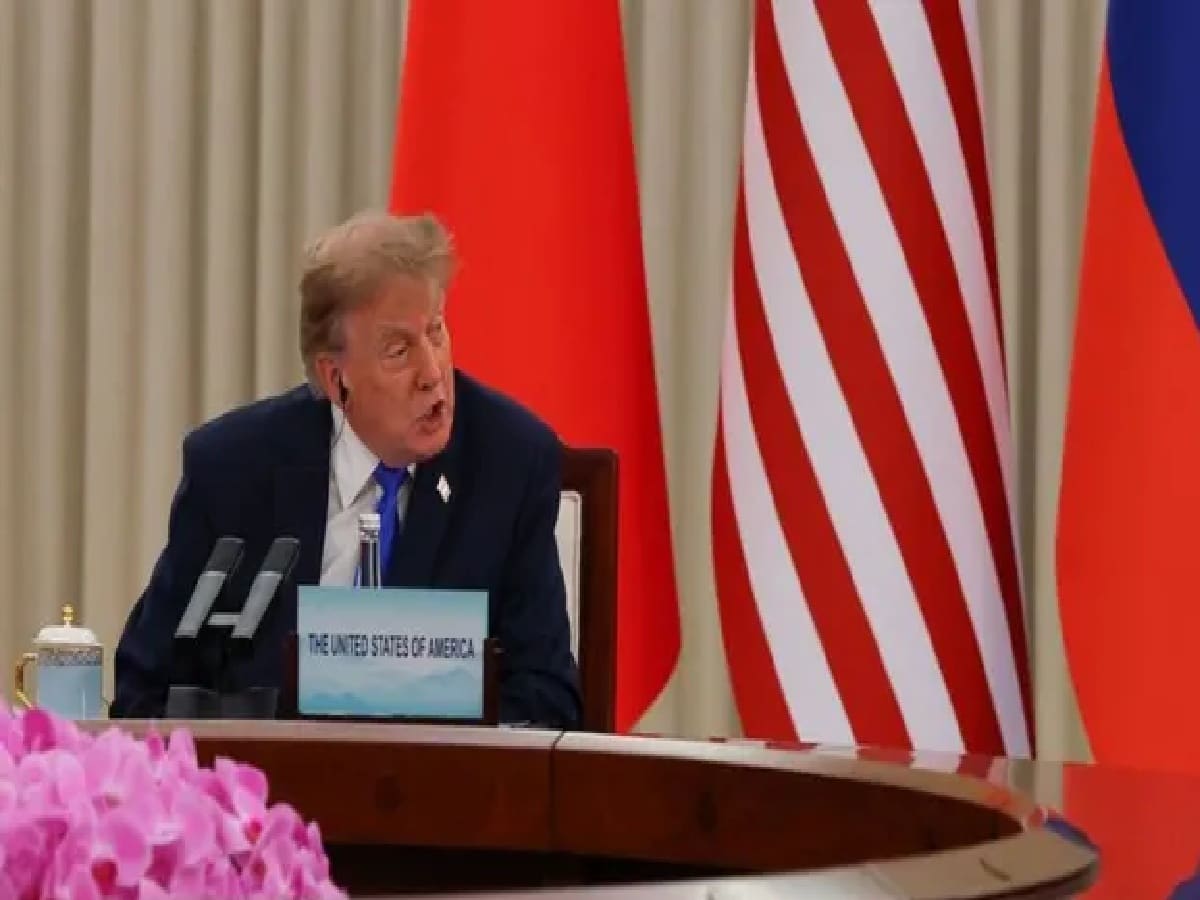
Diplomatic protocol clashed sharply with Western press norms at the Asia-Pacific Economic Cooperation (APEC) summit in Shenzhen, China, on Thursday, November 19, 2026, after Chinese authorities barred Bloomberg TV chief political correspondent Annmarie Hordern from covering an unprecedented trilateral meeting among US President Donald Trump, Chinese President Xi Jinping, and Russian President Vladimir Putin. The exclusion followed an earlier bilateral session between Trump and Xi at Kylin Villa, during which Hordern called out a pointed question to the US president—asking, "President Trump, has Jensen Huang been disloyal to the United States?"—a reference to the November 12 resignation of Nvidia's longtime CEO Jensen Huang amid controversy over a personal relationship with a woman alleged to have links to Chinese intelligence. Although Donald Trump did not answer the shouted query, Chinese officials swiftly retaliated by blocking Hordern from entering the subsequent three-way summit room—refusing to relent even after a White House official confirmed the US administration pressed for her inclusion. At the same time, Chinese minders silenced another reporter who attempted to ask questions during the bilateral photo spray and relayed an explicit warning to the traveling US press corps that yelling questions at official leadership events is viewed as "extremely rude" and would result in immediate removal from the room. While dozens of Chinese and international journalists were admitted for the brief opening remarks of the historic three-leader talks—which produced a joint statement affirming that a nuclear war cannot be won alongside discussions on trade, artificial intelligence guardrails, and the conflicts in Ukraine and Iran—the press access row drew swift reaction from the White House Correspondents' Association (WHCA). For media observers, geopolitical analysts, and readers across Unnao, Lucknow, Kanpur, Bengaluru, Mumbai, New Delhi, Washington, and Shenzhen, the incident highlights the stark contrast between routine Washington press practices and Beijing's tightly choreographed summit management.
Shenzhen APEC Press Row (Nov 19, 2026): Timeline, Claims & Summit Context
To bring together the sequence of events around Annmarie Hordern's question, the Jensen Huang backdrop, the White House and WHCA reactions, and the trilateral summit agenda, the table below summarizes the key facts:
| Event / Dimension | Verified Details (November 19–20, 2026) | Diplomatic & Media Significance |
| The Triggering Question | During the bilateral Trump–Xi session at the APEC summit in Shenzhen on November 19, 2026, Bloomberg correspondent Annmarie Hordern shouted: "President Trump, has Jensen Huang been disloyal to the United States?" | Touched on a sensitive US-China national-security and technology controversy involving former Nvidia CEO Jensen Huang, who resigned on November 12 (while Nvidia said its independent probe found no compromise of secrets or security, and China's Foreign Ministry rejected intelligence allegations). |
| Exclusion From Trump–Xi–Putin Talks | Chinese officials blocked Hordern from entering the subsequent Trump–Xi–Putin trilateral meeting at Kylin Villa, rejecting White House efforts to have her admitted. | Marked a rare public standoff over credentialed US pool access during a flagship three-power summit. |
| Beijing's Warning to Journalists | Chinese officials also cut off another journalist during the bilateral session and warned the US media pool that "yelling questions is considered extremely rude" and reporters doing so "will be pulled from the room". | Reflects strict Chinese protocol against unscripted questioning during leader photo sprays, contrasting with standard White House press pool practice. |
| White House & WHCA Response | An anonymous White House official confirmed the administration pushed for Hordern's admission; WHCA President Jacqui Heinrich praised the White House's advocacy for press access; Trump himself remarked it was "too bad the media couldn't see some of it". | Underscored institutional friction over media transparency even as US and Chinese leaders sought constructive summit optics. |
| Trilateral Summit Outcomes | First-ever three-way summit between Donald Trump, Xi Jinping, and Vladimir Putin covered nuclear risks, AI guardrails, trade, and the Ukraine and Iran conflicts, yielding a joint peace declaration affirming nuclear war must never be fought. | Placed major geopolitical agreements alongside tight host-nation controls over how global media covered the event. |
Why a Routine White House Press Habit Triggered Retaliation in Shenzhen
In Washington and at international summits hosted in democratic capitals, credentialed pool reporters routinely call out unscripted questions at the end of brief bilateral photo opportunities—leaving it to leaders to either answer or ignore them. In Shenzhen, however, Annmarie Hordern's shouted question about Jensen Huang—coming just days after the former Nvidia chief stepped down following reports of an affair with a woman suspected of Chinese intelligence ties—crossed Beijing's strict red line against spontaneous questioning in front of President Xi Jinping. Chinese security and protocol officials not only silenced a second journalist who tried to speak during the bilateral session, but also delivered a blunt warning through pool channels that shouting questions is considered deeply disrespectful and would lead to immediate expulsion.
White House Advocacy and the Contrast With Historic Three-Power Talks
Despite intervention from the White House press team seeking to restore Hordern's access ahead of the historic three-way session between Donald Trump, Xi Jinping, and Vladimir Putin, Chinese hosts stood firm on her exclusion—prompting White House Correspondents' Association President Jacqui Heinrich to commend the administration's effort to defend press access. Inside Kylin Villa, the three leaders opened their unprecedented trilateral meeting—which Trump described as "really making history"—before media were escorted out following brief remarks, eventually issuing a joint statement against nuclear war while stopping short of breakthroughs on Ukraine or Iran. Yet outside the closed doors, Hordern's exclusion became one of the defining storylines of the Shenzhen gathering, illustrating how even high-level summitry cannot bridge fundamental divides over press freedom and public accountability.




