desk
desk Share
Share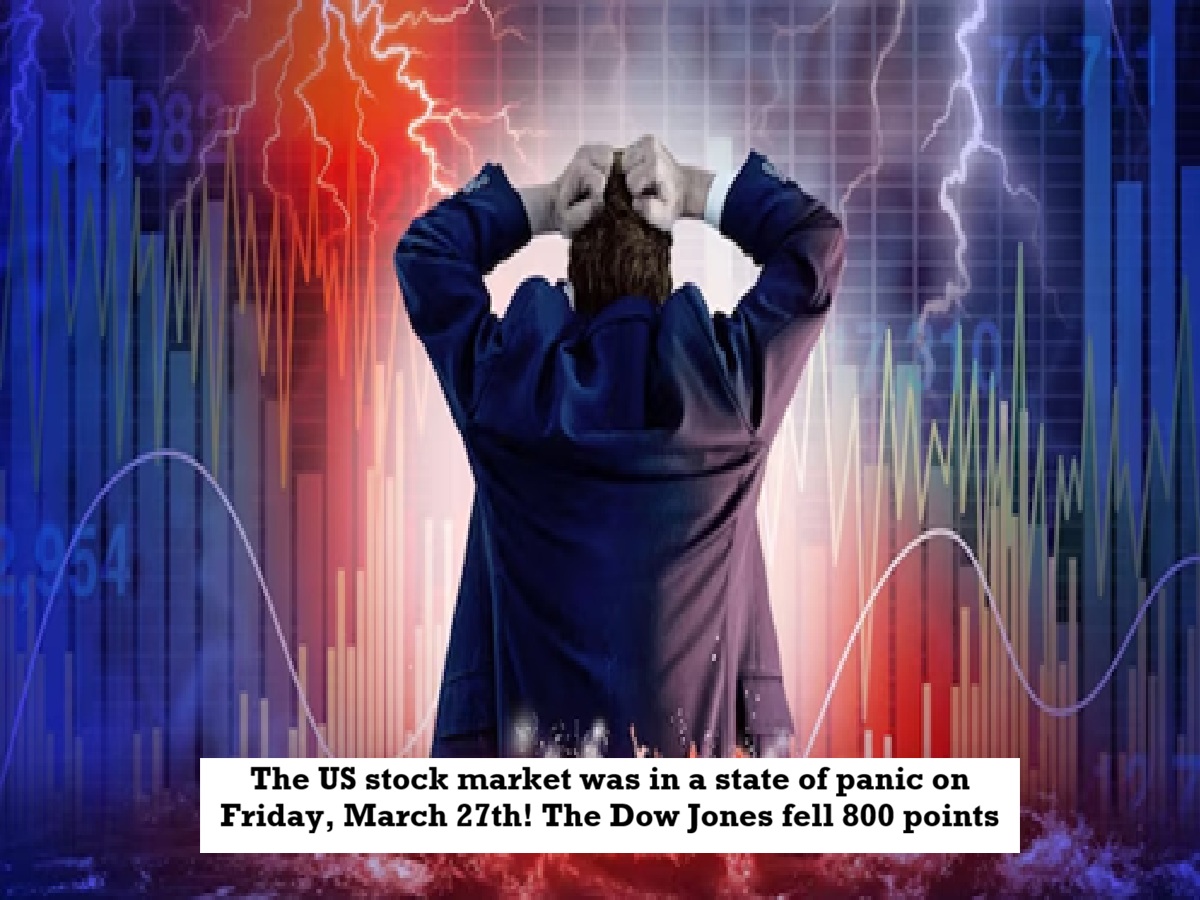
News Topical, Digital Desk : Friday morning, March 27th, began as normal. The trading floor was bustling, but there was no sign of panic. Investors were hoping the market would gradually recover. But as news began to trickle in, the mood shifted. The first news was that the situation in the Middle East was worsening. Tensions had risen in the Strait of Hormuz. Ships were being stopped, and there were reports of attacks. This is the route through which a large part of the world's oil supplies flow.
This is where the fear started.
Oil on fire… and panic in the market, crude oil prices jumped in no time
Brent crude $112.57 per barrel
WTI crude $99.64 per barrel
This was the highest level since July 2022.
Now only one thing was on the mind of investors –
expensive oil = inflation will increase = profits of companies will decrease, and then the selling started.
Decline figures which create fear
Dow Jones fell 793 points and closed at 45,166
S&P 500 fell 1.67% to a 7-month low
Nasdaq fell 2.15% to 20,948
Dow Jones is now about 10% below its high – that is, it has come into the correction zone. Nasdaq has already fallen 13%. S&P 500 is also down about 9%. This was not just a one-day decline. S&P 500 has been falling for 5 consecutive weeks.
A statement followed… but it didn't reassure.
Meanwhile, US President Donald Trump issued a statement. He extended the deadline for an attack on Iran to April 6th and said negotiations were ongoing. But this failed to reassure the market.
Why?
Because news came from the other side: Iran is not in a mood for talks. On top of that, another piece of news:
the US is considering sending 10,000 more troops. Now, investors began to see clearly that this tension wouldn't end soon.
The real reason for the fear: uncertainty.
What's driving the market down?
"Uncertainty." Investors are now unable to understand whether
the war will end or escalate?
Where will oil prices go?
How much will inflation rise?
Therefore, they are withdrawing money rather than taking risks.
What will happen next? (The most important question)
If the war stops ,
the Strait of Hormuz opens,
and oil becomes cheaper, only then can the stock market recover.
If the situation worsens:
oil becomes more expensive,
inflation increases,
interest rates rise
Currently, the market is in a phase of "fear and uncertainty." Every news can shake the market. Short-term volatility will be very high. The
March 27th drop is an alarm. The market is now driven by news, not fundamentals. Until peace is achieved in the Middle East, this story will not end... and perhaps this decline is not yet complete.
--Advertisement--