desk
desk Share
Share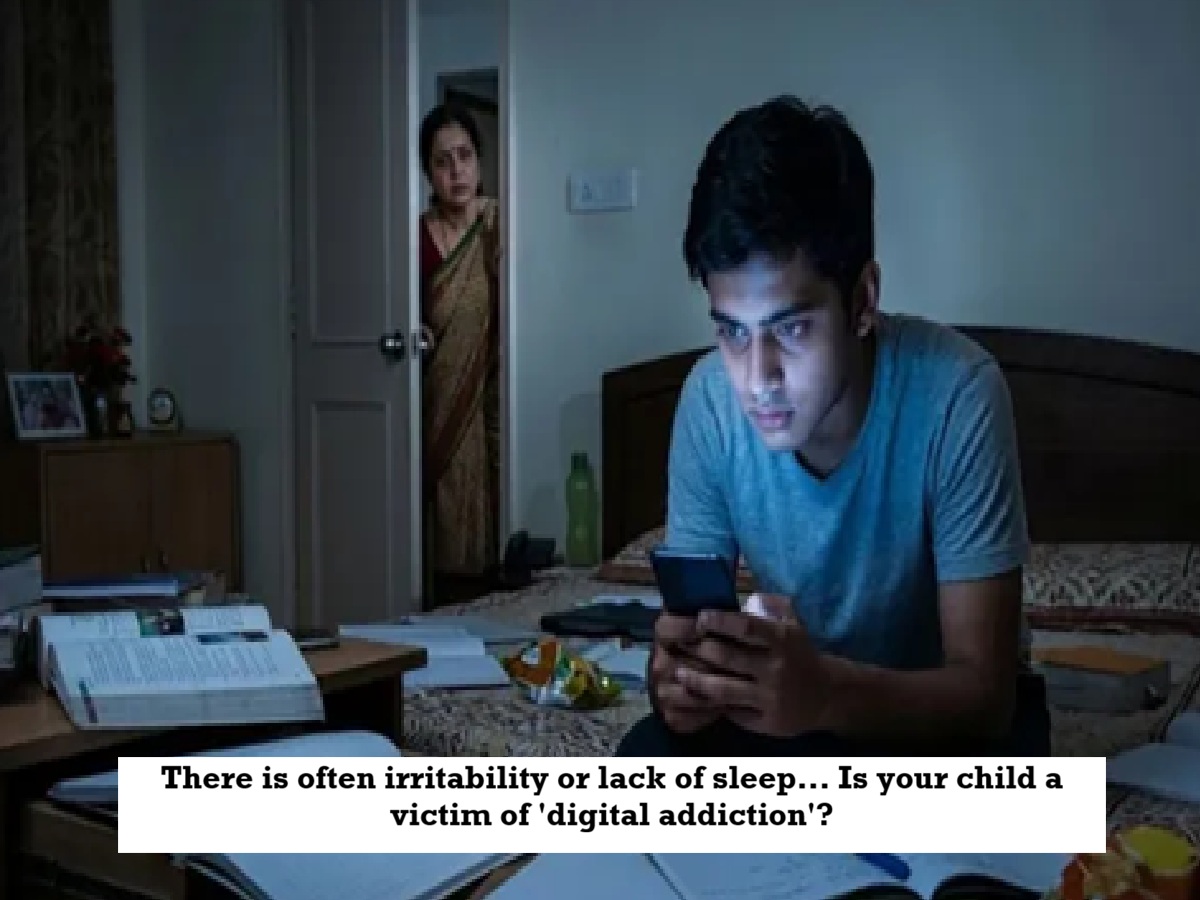
News Topical, Digital Desk : The increasing use of smartphones, the internet, and online gaming is now emerging as a serious public health challenge in India, known as "digital addiction." According to experts at the All India Institute of Medical Sciences (AIIMS), excessive screen time is contributing to irritability, restlessness, sleep deprivation, and a host of mental health issues in both children and adults.
A recent analysis of patients visiting the Behavioral Addiction Clinic of AIIMS has found that cases of dependence on digital devices are increasing rapidly to an alarming level. The Economic Survey has revealed that digital connections in the country have increased almost four times (97 crore) from 25 crore in the last decade (2014 to 2024). More than 85 percent of the households in the country have at least one smartphone. Addiction to internet media and online gaming is most visible among teenagers and youth between 15 to 24 years of age.
What is digital addiction?
According to Dr. Yatan Pal Singh Balhara, Chief Psychiatrist of AIIMS Behavioral Addiction Clinic, when the use of mobile, internet media or gaming gets out of control of the person and starts affecting studies, work, family life and sleep, then it is a sign of digital addiction . According to Dr. Balhara, in recent years, many such cases have come to light in which teenagers and youth remain engaged in gaming or social media day and night. This disrupts their sleep cycle, increases fatigue and anger and irritability are common. If this situation continues for a long time, then problems like depression, anxiety and isolation can also increase.
Digital usage has increased rapidly in the last ten years
This problem is becoming more serious due to the rapid increase in digital usage in the country. According to the Economic Survey 2025-26, internet connections in India are expected to increase from around 250 million in 2014 to approximately 970 million in 2024, and currently their number is estimated to exceed one billion. More than 85 percent of households in the country have at least one smartphone. The survey warns that excessive digital use can lead to decreased concentration in studies and work, sleep deprivation , stress, and increased mental health problems.
Sleep is disturbed due to the secretion of the hormone melatonin.
According to AIIMS experts, the blue light of the screen affects the secretion of melatonin hormone in the body, which delays falling asleep at night and deteriorates the sleep quality. Apart from this, eye irritation, neck-back pain, obesity and heart-related risks also increase. Dr. Yatan Pal Singh Balhara advised that to avoid this, promoting offline activities and consulting an expert if needed can be effective measures. He warned that if digital habits are not controlled in time, then in future it will take the form of a major mental health crisis.
Read More: Do you also consume artificial sweeteners? Study says the future of future generations is at risk.
--Advertisement--