The Sacred Red: Why Applying ‘Alta’ is Much More Than a Beauty Ritual for Indian Women
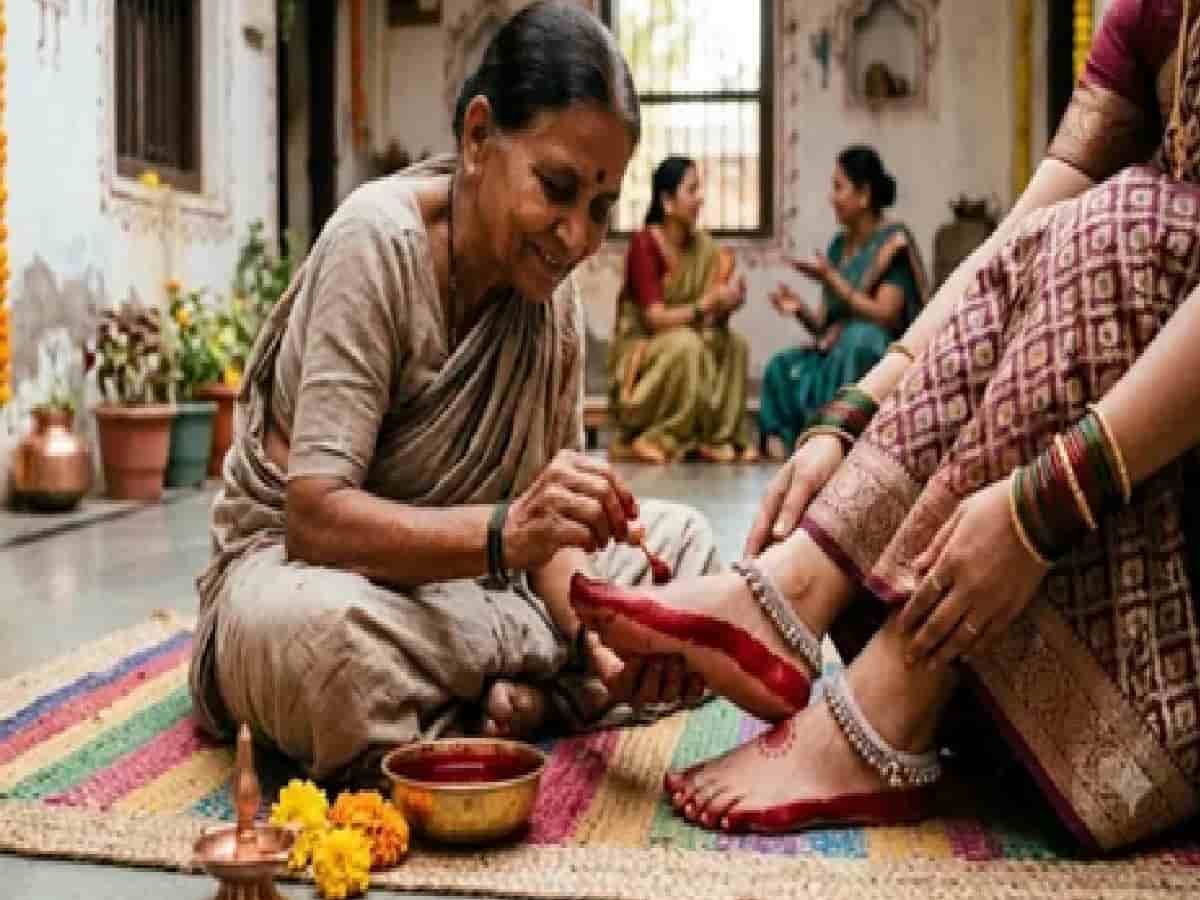
In the intricate tapestry of Indian culture, the ‘Solah Shringar’ (sixteen adornments) stands as a profound celebration of femininity, tradition, and spirituality. Among these, the application of ‘Alta’—a vibrant, deep-red pigment—to the feet remains one of the most cherished and auspicious customs. Far from being a mere aesthetic choice, the ritual of adorning one's feet with Alta (often referred to as 'Mahavar' or 'Mehendi' in regions like Awadh) is steeped in deep religious significance and ancient wisdom, bridging the gap between beauty, divinity, and physical well-being.
Goddess Lakshmi’s Blessing and the Symbolism of Prosperity
In Sanatan Dharma, the color red is revered as the ultimate symbol of vitality, energy, and auspiciousness. Alta is believed to be a physical manifestation of Goddess Lakshmi herself. There is a deeply rooted belief that when a newlywed bride crosses the threshold of her new home with her feet adorned in the deep-red hue of Alta, she brings with her the blessings of peace, prosperity, and joy. It is viewed as an invocation for a harmonious married life, acting as a divine shield that guards the domestic sphere. This sacred practice is not limited to brides; it is observed during festivals, religious ceremonies, and even for young girls, symbolizing a continuous stream of good fortune.
Health Benefits and the Cooling Science of Tradition
Beyond the realm of spirituality, the tradition of applying Alta carries significant health-related insights passed down through generations. Ancient practitioners recognized that the application of such pigments to the feet provides a cooling effect, which can be particularly soothing to the skin. Furthermore, the act of applying these intricate designs is often associated with stress relief; it acts as a calming ritual that grounds the individual and promotes mental tranquility. In an era where modern medicine often looks to nature, this traditional practice highlights how Indian culture has long integrated wellness into everyday beauty routines.
A Cultural Identity Rooted in History
The significance of Alta varies across the Indian landscape, becoming a hallmark of regional identity. In the Awadh region of Uttar Pradesh, for instance, a woman's traditional makeup is considered fundamentally incomplete without the rich red adornment on her feet. While some states emphasize applying these designs to the hands, the focus on the feet in Awadh symbolizes the foundational role of women in the home. The vivid, long-lasting color serves as a visual testament to cultural continuity, ensuring that while the bride transitions into a new phase of life, she remains deeply anchored to the traditions and blessings of her heritage.