







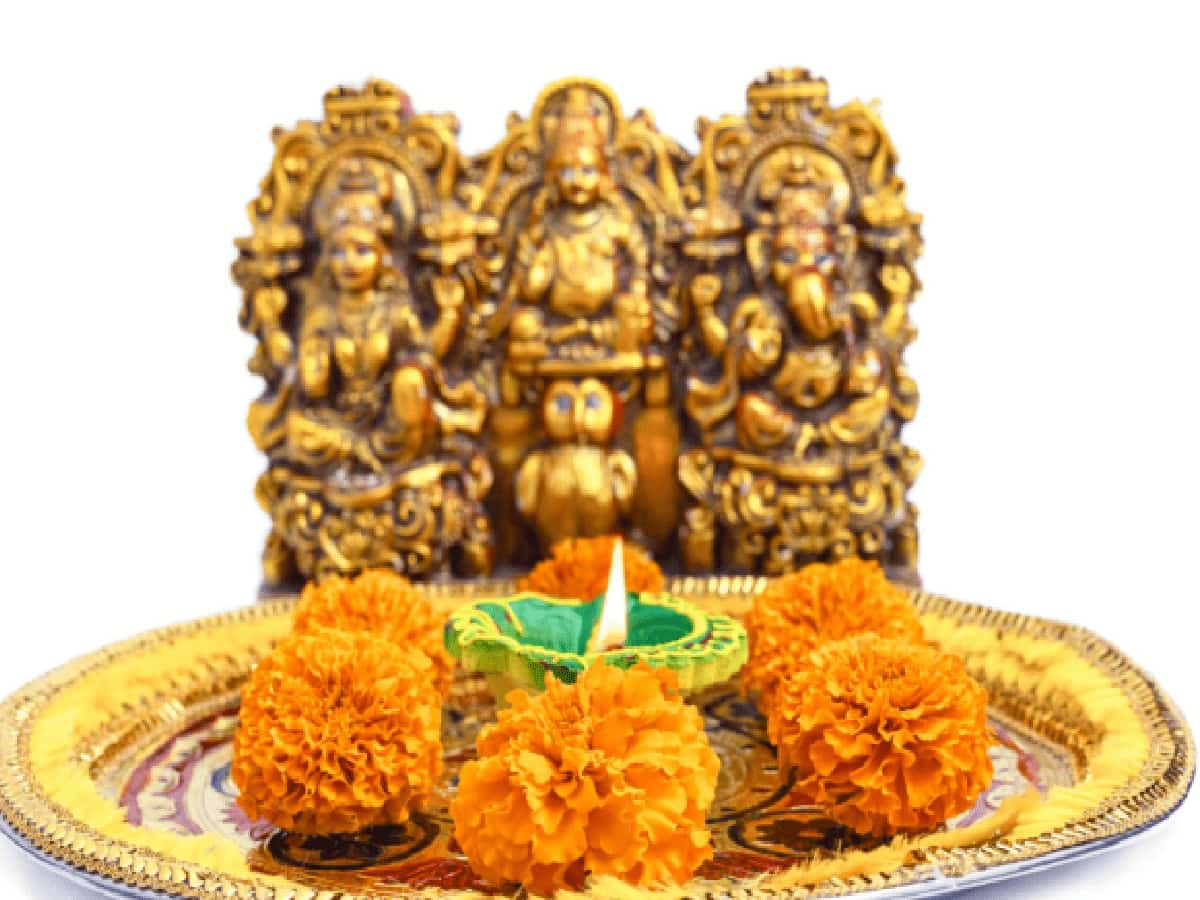
Lakshmi Ganesh Aarti on Diwali: Rituals and Prayers for Prosperity
As millions of earthen lamps and twinkling lights illuminate homes across the country, families are observing Diwali with deep spiritual reverence. According to the traditional Vedic Panchang, the sacred night of Diwali marks the grand cosmic occasion to welcome Lord Ganesha—the harbinger of intellect and remover of obstacles—alongside Goddess Mahalakshmi, the embodiment of auspicious fortune, and Lord Kuber, the divine treasurer of wealth. While the ritual preparation, placement of the kalash, and recitation of traditional mantras form the core of the puja vidhi, ancient scriptures establish that no religious worship is considered complete without the concluding Aarti. Reciting the devotional hymns of Lakshmi-Ganesh and Kuber Dev, accompanied by the ringing of brass bells and the warmth of a sacred camphor flame, cleanses the household of negative energies, repairs unintentional procedural lapses during worship, and fills living spaces with lasting peace and financial stability.
The Sacred Ritual: How to Perform Lakshmi-Ganesh Aarti Correctly
Performing the Aarti on Diwali night is an ancient spiritual science designed to concentrate the mind and awaken divine vibrations within the home. To conduct the ritual properly, devotees begin by preparing a dedicated brass, copper, or silver Aarti thali. The plate is sanctified by placing a pure cow-ghee lamp, whole white camphor (kapoor), fragrant marigold or lotus blossoms, unbroken rice grains (akshat), and chandan.
The primary rule of the ceremony is observing the divine hierarchy: Lord Ganesha must always be honored first with the Aarti, followed by Goddess Mahalakshmi, and concluded with Lord Kuber. The thali is rotated clockwise in gentle circular motions in front of the deities, moving from the feet toward the heart, while chanting the verses with devotion. Household bells and conches are sounded to purify the ambient space. Once the hymns conclude, the family performs circumambulation (pradakshina), takes the warmth of the sanctified flame onto their eyes and forehead, and distributes the naivedya prasad among loved ones.
Aarti of Goddess Mahalakshmi: Lyrics and Spiritual Meaning
The singing of the beloved Mahalakshmi Aarti evokes the boundless benevolence of the divine mother who sustains life across all realms:
Om Jai Lakshmi Mata, Maiya Jai Lakshmi Mata |
Tumko Nishidin Sevat, Har Vishnu Vidhata || Om Jai Lakshmi Mata... ||
Uma Rama Brahmani, Tum Hi Jag Mata |
Surya Chandrama Dhyavat, Narad Rishi Gata || Om Jai Lakshmi Mata... ||
Durga Roop Niranjani, Sukh Sampatti Data |
Jo Koi Tumko Dhyavat, Riddhi Siddhi Pata || Om Jai Lakshmi Mata... ||
Tum Patal Nivasini, Tum Hi Shubh Data |
Karma Prabhav Prakashini, Bhava Nidhi Ki Trata || Om Jai Lakshmi Mata... ||
Jis Ghar Mein Tum Rahti, Sab Sadguna Aata |
Sab Sambhav Ho Jata, Man Nahi Ghabrata || Om Jai Lakshmi Mata... ||
Tum Bin Yagya Na Hote, Vastra Na Koi Pata |
Khan Pan Ka Vaibhav, Sab Tumse Aata || Om Jai Lakshmi Mata... ||
Shubh Gun Mandir Sundar, Kshirodadhi Jata |
Ratna Chaturdash Tum Bin, Koi Nahi Pata || Om Jai Lakshmi Mata... ||
Mahalakshmi Ji Ki Aarti, Jo Koi Nar Gata |
Ur Anand Samata, Pap Shaman Ho Jata || Om Jai Lakshmi Mata... ||
This timeless hymn reminds worshippers that wealth without spiritual virtues is fleeting. By describing Goddess Lakshmi as the eternal source of nourishing food, dignity, and inner composure, the prayer requests that prosperity come accompanied by peace of mind, righteous action (dharma), and ethical living.
Aarti of Lord Shri Ganesha: Removing Obstacles and Bestowing Wisdom
Before seeking material affluence, one must seek wisdom and the removal of hindrances by invoking the elephant-headed Lord Ganesha:
Jai Ganesh, Jai Ganesh, Jai Ganesh Deva |
Mata Jaki Parvati, Pita Mahadeva ||
Ek Dant Dayavant, Char Bhuja Dhari |
Mathe Sindoor Sohe, Muse Ki Savari ||
Paan Chadhe, Phool Chadhe, Aur Chadhe Meva |
Ladduan Ka Bhog Lage, Sant Kare Seva ||
Andhan Ko Aankh Det, Kodhin Ko Kaya |
Banjhan Ko Putra Det, Nirdhan Ko Maya ||
'Soor' Shyam Sharan Aaye, Safal Kije Seva |
Mata Jaki Parvati, Pita Mahadeva ||
Deenan Ki Laaj Rakho, Shambhu Sutkari |
Kamana Ko Purna Karo, Jaoon Balihari ||
In Hindu thought, worshiping Lord Ganesha alongside Goddess Lakshmi ensures that whatever fortune enters the household is guided by intellect and discernment, preventing wealth from descending into greed or arrogance.
Aarti of Lord Kuber: Sustaining Financial Well-Being
As the divine guardian of the cosmic treasury, Lord Kuber’s blessings are invoked to secure the wealth granted by Goddess Lakshmi:
Om Jai Yaksha Kuber Hare, Swami Jai Yaksha Kuber Hare |
Sharan Pade Bhagtan Ke, Bhandaar Kuber Bhare || Om Jai Yaksha Kuber Hare... ||
Shiv Bhakton Mein Agraganya, Kuber Bada Gunvan |
Danav Manav Sabhi Mein, Yuddh Kiya Balwan || Om Jai Yaksha Kuber Hare... ||
Swarna Sinhasan Par Viraje, Chhatra Chamar Dhule |
Yogini Mangal Gaven, Jai Jai Kar Kare || Om Jai Yaksha Kuber Hare... ||
Gada Trishul Viraje, Shastra Aneka Dhare |
Dukh Bhay Sankat Tare, Dhan Ki Vrishti Kare || Om Jai Yaksha Kuber Hare... ||
Bhaant-Bhaant Ke Vyanjan, Bhog Lage Hari Ko |
Urad Chana Sang Mohan, Pujan Se Sukh Ho || Om Jai Yaksha Kuber Hare... ||
Yaksha Kuber Ki Aarti, Jo Koi Nar Gave |
Kahat Prempal Swami, Manvanchhit Phal Pave || Om Jai Yaksha Kuber Hare... ||
Chanting the Kuber Aarti during the final moments of the Diwali ceremony is traditionally associated with long-term financial security, debt reduction, and the protection of business ventures in the upcoming new year.
The Essence of Diwali: Bringing Light and Joy into Every Corner
The celebration of Diwali transcends external displays of firecrackers and sweets. It stands as an inward journey from ignorance to enlightenment, captured in the ancient Upanishadic prayer Tamaso Ma Jyotirgamaya. By reciting the sacred Aartis of Lord Ganesha, Goddess Mahalakshmi, and Kuber Dev with genuine devotion, families reaffirm the enduring spiritual values of generosity, humility, and inner purity, welcoming lasting prosperity into their lives and homes.




