







Hadjod Benefits: The Ancient Vine That Helps Mend Broken Bones
In an era where modern pharmacology frequently looks back to classical botanical wisdom for therapeutic answers, a humble climbing succulent widely found growing along village hedges, dry forest thickets, and abandoned rocky grounds across India is attracting substantial global interest. Known classically in Sanskrit as Asthisamharaka—literally translating to "that which prevents the destruction of bones"—and popularly called Hadjod in Hindi, this indigenous medicinal vine (Cissus quadrangularis) has served as a cornerstone of traditional bone-setting and musculoskeletal rehabilitation for millennia. While it is often dismissed as a wild, unruly weed in Indian rural landscapes, international wellness brands and overseas nutraceutical markets are packaging processed extracts of this perennial plant at premium price points, with modest 70-gram packs retailing between ₹1,500 and ₹2,000 across North American and European health outlets. Highlighting its practical properties in a recent educational video, Ayurvedic practitioner Dr. Robin Sharma (@dr.sharmarobin) shared clinical insights into how this segmented climber accelerates fracture healing, strengthens skeletal density, and requires meticulous culinary preparation before safe human consumption.
The Global Surge: An Overlooked Weed Worth Thousands Abroad
The stark contrast between domestic neglect and international appreciation is one of the most intriguing aspects of Hadjod’s commercial trajectory. In many semi-arid regions of central and southern India, the hardy vine climbs over compound fences, stone boundaries, and roadside shrubs without requiring intentional cultivation, chemical fertilizers, or substantial irrigation. Local communities have historically utilized its fresh stems in folk remedies, yet commercial awareness among urban domestic households has remained subdued.
Conversely, wellness distributors across foreign markets market standardized formulations of Cissus quadrangularis as an elite restorative tonic for athletes, weightlifters, and aging populations combating osteopenia:
-
High International Retail Valuation: As noted by Dr. Robin Sharma, dried powders, concentrated capsules, and standardized extracts of Hadjod command significant price tags abroad, often fetching between ₹1,500 and ₹2,000 for a small 70-gram container.
-
Nutraceutical Recognition: Global sports nutritionists incorporate Hadjod into joint health regimens due to its unique phytosterols, ketosteroids, and natural anabolic-like compounds that aid connective tissue repair and collagen regeneration without androgenic side effects.
-
Sustained Scientific Scrutiny: Contemporary biochemical studies increasingly validate ancient Ayurvedic claims, showing that active constituents in the plant stimulate osteoblastogenesis—the biological process by which osteoblast cells synthesize and mineralize new bone matrix.
Botanical Identification: Spotting the Unique Four-Sided Vine
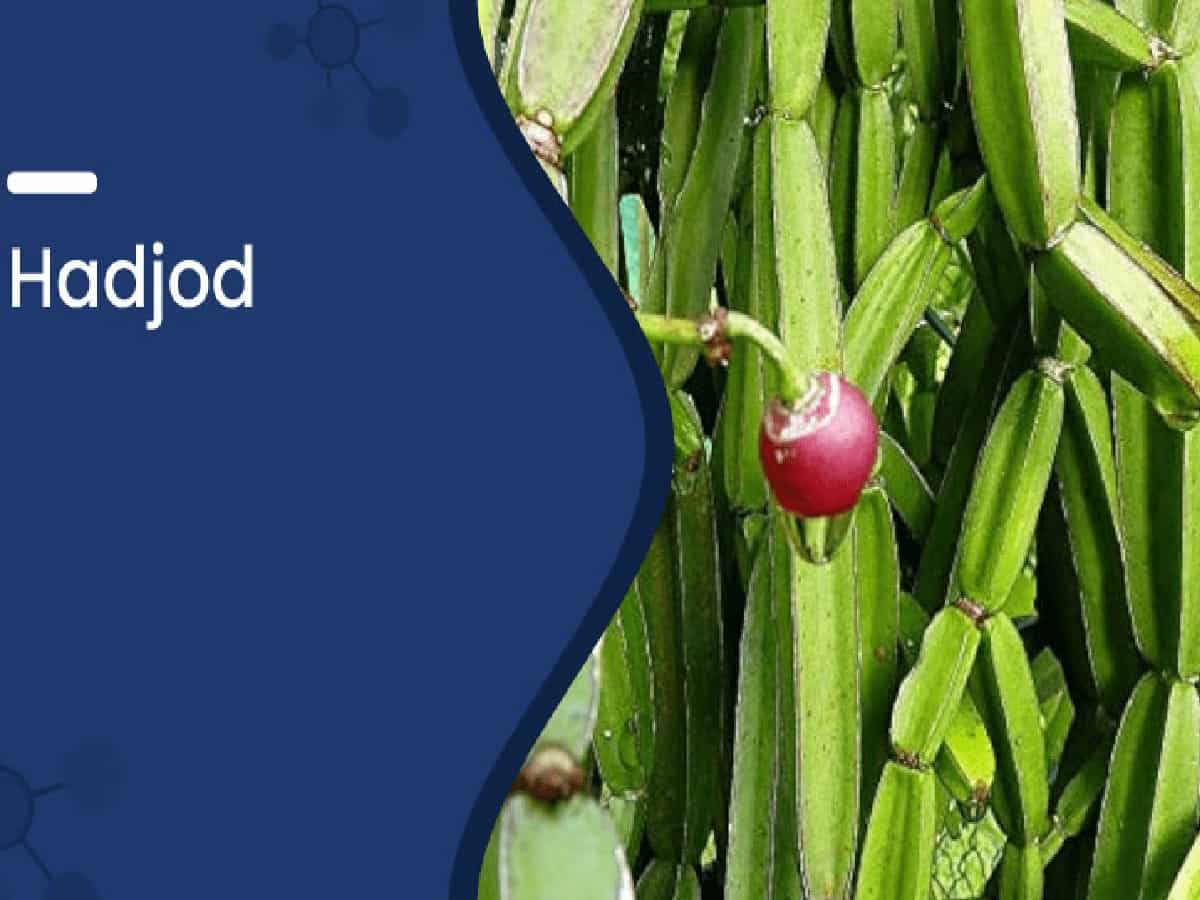
Hadjod possesses a distinct botanical morphology that makes it easy to differentiate from other common climbing vines and garden flora. It belongs to the Vitaceae (grape) family, yet its physical structure mimics that of a desert succulent.
Key botanical identifiers include:
-
Quadrangular Fleshy Stems: Unlike standard circular or flat vines, Hadjod features thick, fleshy, distinctly four-angled (square-shaped) stems with winged margins running along its entire length.
-
Segmented Knotted Joints: The vine is divided into prominent joint-like nodes and internodes spaced several inches apart, visually resembling a chain of linked bone segments—a classical example of the botanical "Doctrine of Signatures," where a plant's physical appearance mirrors the organ system it therapeutically supports.
-
Tendrils and Tiny Leaves: Slender curling tendrils emerge from the nodes opposite small, simple, three-lobed leaves that typically shed during dry winter periods, leaving the green photosynthetic stems bare and robust.
Therapeutic Mechanism: How Hadjod Assists Bone Fracture Recovery
In classical Ayurvedic texts like the Charaka Samhita and Bhavaprakasha, Hadjod is praised for possessing Sandhaniya (tissue-joining) and Ropana (healing) virtues. Traditional bone-setters across indigenous healing traditions in Kerala, Tamil Nadu, and Rajasthan have long relied on it to facilitate rapid callus formation around broken limbs.
Modern orthobiological evaluations suggest several overlapping mechanisms behind this traditional use:
-
Accelerated Callus Formation: Clinical trials indicate that bioactive compounds in Hadjod promote the early proliferation of mesenchymal cells and stimulate osteoblasts, shortening the overall fracture bridging timeframe by several days.
-
Enhanced Mineral Uptake: The plant is naturally rich in bioavailable calcium, phosphorus, beta-sitosterol, and vitamin C, facilitating the metabolic deposition of minerals into the regenerating bone matrix.
-
Tendon and Ligament Repair: In addition to structural bone, Hadjod enhances the tensile strength of healing tendons, soft tissues, and surrounding ligaments, making it useful during sprain recovery and joint dislocations.
However, medical professionals and Ayurvedic experts emphasize that Hadjod must function as a complementary restorative agent rather than a substitute for emergency orthopedic care. Dr. Sharma cautions that if an individual suffers a traumatic skeletal fracture, seeking professional hospital intervention—including diagnostic X-rays, precise anatomical reduction, and rigid plaster casting—is non-negotiable. Hadjod can aid the internal healing process, but mechanical alignment must be overseen by a qualified orthopedic surgeon.
Culinary Caution: Why Hadjod Must Never Be Eaten Raw
Despite its therapeutic potency, consuming Hadjod requires strict adherence to traditional preparation protocols. Under no circumstances should the freshly cut stem be eaten raw.
The plant's raw cellular sap contains dense clusters of sharp, needle-like calcium oxalate crystals (raphides). Biting into an unprocessed raw stem causes intense stinging, throat irritation, swelling of the oral mucosa, and acute itching that can cause severe respiratory and digestive discomfort.
Traditional processing methods neutralize these sharp oxalate needles:
-
Peeling and De-Veining: Experienced practitioners wear gloves or coat their hands with mustard oil to prevent skin itching while handling fresh stems. The tough fibrous corners and outer skin of tender green stems are gently scraped away.
-
Sautéing in Cow Ghee: The chopped stem segments must be thoroughly fried or sautéed in pure cow desi ghee. The fat-soluble heat treatment completely breaks down the oxalate crystals, rendering the herb safe and soothing for the digestive tract.
-
Traditional Chutney Preparation: The roasted stem is typically blended with tamarind, grated coconut, roasted lentils, green chilies, and salt to form a medicinal chutney. The natural tartaric acid in tamarind or lemon juice acts as an additional chemical neutralizer against any residual oxalates.
Essential Safety Guidelines: Who Should Exercise Caution
While Hadjod is a valuable natural therapeutic when prepared correctly, certain clinical contraindications must be respected. Because the herb alters systemic mineral metabolism and possesses potent bioactive compounds, specific groups require medical supervision:
-
Kidney Stone Patients: Because of its inherent calcium oxalate content, individuals with a clinical history of calcium-oxalate renal calculi (kidney stones) or impaired renal filtration must avoid self-prescribing Hadjod.
-
Pregnancy and Lactation: Expectant and breastfeeding mothers should avoid medicinal doses of Hadjod due to insufficient safety data regarding its influence on uterine tone and infant physiology.
-
Diabetic and Surgical Patients: Hadjod can mildly lower blood glucose levels and influence blood coagulation profiles. Patients scheduled for surgical procedures or those on heavy anti-diabetic medication should consult their primary physician prior to regular supplementation.
Embracing Ancient Botanical Science Responsibly
The global appreciation of Hadjod serves as an important reminder of the clinical value embedded in India's traditional medicinal heritage. What has often been overlooked along rural pathways represents a sophisticated, bioactive botanical capable of fortifying bone integrity, enhancing skeletal longevity, and supporting post-injury rehabilitation. When approached with anatomical common sense, proper culinary detoxification, and qualified healthcare guidance, Hadjod bridges ancient folk tradition with contemporary functional wellness, proving that some of the most effective remedies for physical strength remain rooted right in our native soil.




