







Ayodhya Deepotsav at 10: How CM Yogi Built a Global Festival
As the sun dipped beneath the horizon along the sacred banks of the Saryu on the eve of Diwali, millions of earthen lamps flickered into life across 56 interconnected ghats at Ram Ki Paidi, transforming the holy city of Ayodhya into an expanse of golden light. The milestone tenth edition of Deepotsav, organized under the leadership of Uttar Pradesh Chief Minister Yogi Adityanath, marked the culmination of a decade-long journey that has elevated a localized cultural tradition into an internationally recognized festival of light and shared human heritage. In the presence of Vice President of India C. P. Radhakrishnan, Governor Anandiben Patel, revered spiritual leaders, and international dignitaries, the holy city bore witness to a grand synthesis of timeless spirituality, cutting-edge modern storytelling, and deep-rooted public participation (Jan Bhagidari). Over the past ten years, Deepotsav has become a symbol of India's cultural confidence, demonstrating how rooted civilizational traditions can converse with contemporary global audiences while revitalizing regional craftsmanship, grassroots livelihoods, and international tourism.
A Decade of Expansion: From 1.7 Lakh Lamps to a Global Spectacle
When the inaugural Deepotsav was launched in 2017 shortly after Chief Minister Yogi Adityanath assumed office, approximately 1.71 lakh earthen lamps were illuminated along the riverbanks. At the time, the initiative sought to restore Ayodhya’s historic grandeur and recreate the joyous atmosphere of Treta Yuga, when the citizens of Ayodhya lit lamps to welcome Lord Shri Ram, Mata Sita, and Lakshman following their fourteen-year forest exile.
Over the ensuing decade, the celebration expanded in scale, setting successive Guinness World Records:
-
Evolution of Scale: From 1.7 lakh diyas in 2017 to over 26 lakh in 2025, the 2026 milestone tenth edition witnessed over 30 lakh earthen lamps glowing along Ram Ki Paidi alone, contributing to a citywide total exceeding 70 lakh lamps.
-
Mass Public Volunteering: Tens of thousands of student volunteers from Dr. Ram Manohar Lohia Avadh University, local degree colleges, voluntary organizations, and civil society groups worked for days laying out geometric formations across the riverfront, exemplifying participatory civic devotion.
-
Technological Innovation: Complementing the traditional clay lamps, over 2,100 indigenous aerial drones coordinated in the night sky to depict pivotal episodes from the Ramayana alongside holographic projections and musical firework displays.
Addressing the gathering at Ram Katha Park, Vice President C. P. Radhakrishnan observed that Ayodhya stands as a shining testament to Prime Minister Narendra Modi’s doctrine of "Vikas Bhi, Virasat Bhi" (Development alongside Heritage). The Vice President emphasized that the glow of millions of lamps in Ayodhya symbolizes the ongoing socio-economic and spiritual transformation taking place in the lives of crores of Indian citizens.
Ceremonial Devotion: Pulling the Ram Rath and the Symbolic Rajyabhishek
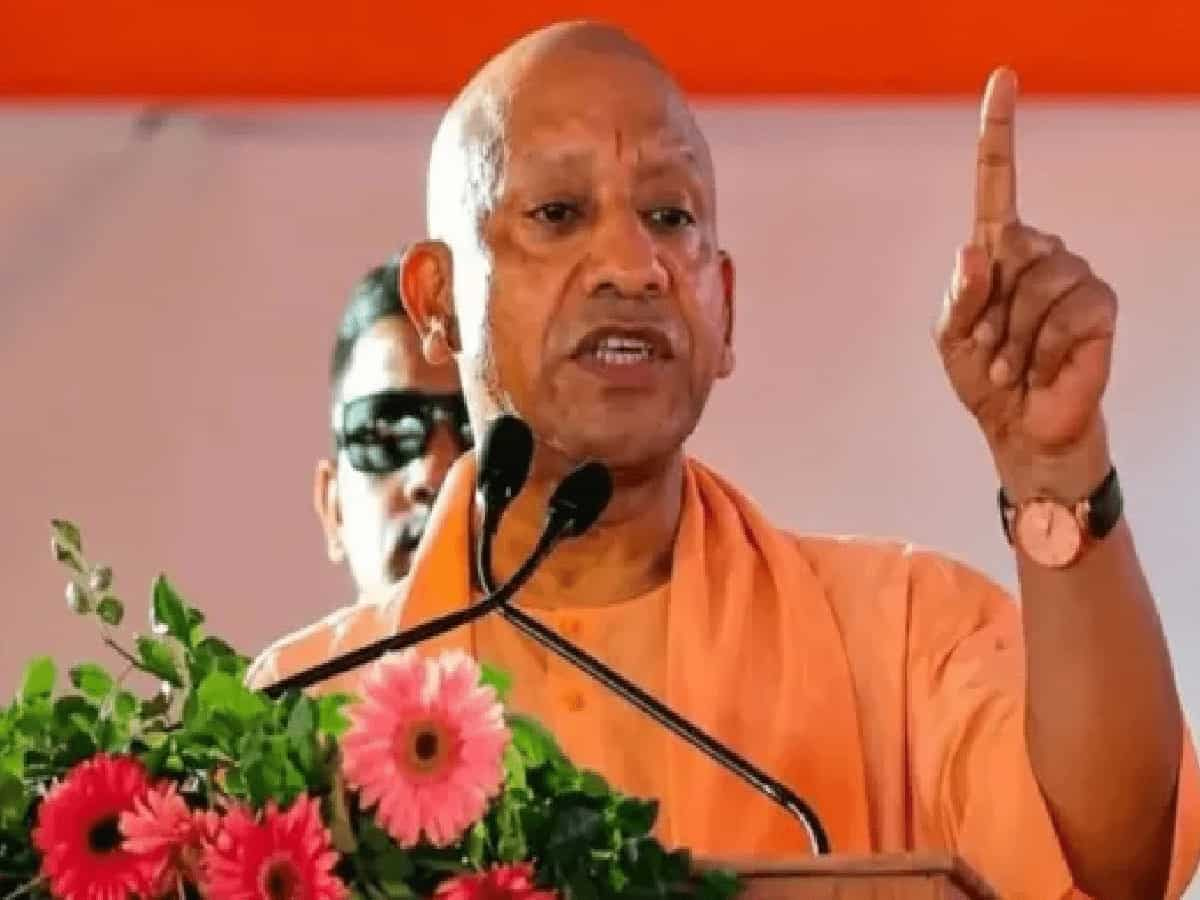
The spiritual centerpiece of the tenth Deepotsav unfolded with the arrival of the ceremonial tableau depicting Lord Ram, Mata Sita, and Lakshman at Ram Katha Park. Reaffirming his hands-on commitment to Ayodhya's traditions, Chief Minister Yogi Adityanath received the tableau, placed a ceremonial garland on the deities, and pulled the sacred Ram Rath amidst the sounding of conches, Vedic chanting, and chants of "Jai Shri Ram".
In the presence of Vice President Radhakrishnan and Governor Patel, the Chief Minister performed the Rajyabhishek—the symbolic coronation of Lord Ram—applying the sacred tilak and performing the ceremonial aarti. The ritual brought the ancient narrative alive for younger generations, presenting historical memories not as static mythology, but as living, dynamic experiences. Following the coronation, the dignitaries proceeded to Naya Ghat, participating in the grand Saryu Aarti alongside hundreds of Vedic priests whose rhythmic brass lamps reflected off the flowing waters.
Confluence of World Rama Stories: International and National Troupes
A defining hallmark of the festival’s tenth edition was its role as a global cultural crossroads. International Ramlila troupes from countries including Sri Lanka, Laos, and South Africa traveled to Ramnagari to present their indigenous adaptations of the epic.
These performances highlighted the universal moral and ethical resonance of the Ramayana across diverse geographical and linguistic borders:
-
Diverse Cultural Expressions: While costumes, music, and stagecraft varied from the masked, graceful movements of Southeast Asian dancers to the dramatic expressions of South African ensembles, the core ethos of righteousness, duty, and truth remained consistent.
-
Fostering Cultural Diplomacy: By providing a shared platform for international troupes to perform before thousands of pilgrims, Ayodhya served as a hub for cultural dialogue, reinforcing India’s historic civilizational ties across the Global South.
-
Pan-Indian Folk Traditions: Alongside international artists, regional folk performers from Assam, Jammu and Kashmir, Kerala, Uttarakhand, and West Bengal showcased traditional dance forms, offering visitors a comprehensive experience of India's classical and folk diversity.
Honoring Local Heritage: 151-Year-Old Sahabganj Ramlila Takes Center Stage
While international performances garnered global attention, the tenth Deepotsav made a deliberate effort to preserve and elevate hyper-local traditions. For the first time in Deepotsav history, the historic Sahabganj Ramlila—celebrating its 151st continuous year of performance—was accorded an official platform on the main stage.
According to Ashutosh Dwivedi, advisor to the Ayodhya International Ramayana and Vedic Research Institute, and Manoj Jaiswal, district president of the Central Ramlila Committee, the Sahabganj troupe represents the oldest continuous Ramlila institution in the temple town. Giving these generational grassroots artists a state-level showcase validates the dedication of local families who preserved the performance arts through oral traditions for over a century and a half.
In keeping with tradition, Chief Minister Yogi Adityanath also paid personal visits to senior saints, mahants, and dharmacharyas from various akharas and ashrams across Ayodhya, presenting them with festive gifts, shawls, and sweets. The monastic community praised the Chief Minister's dedication to protecting Sanatan heritage, noting that his sustained efforts over the past decade have placed Ayodhya at the center of the global spiritual map.
Global Travelers Experience the Spirit of Ramnagari
The international resonance of Deepotsav was evident among the thousands of foreign tourists and spiritual seekers who gathered at the ghats. Visitors like Paul and Shelby, who traveled from Chicago in the United States, joined local residents in lighting lamps at Ram Ki Paidi and participating in the evening Saryu Aarti. For international travelers hailing from countries including Russia and Argentina, the festival offered an immersive journey into India's community hospitality, devotional music, and cultural heritage.
This influx of cultural tourism has delivered tangible economic benefits to the local economy. From traditional potters (kumhars) who molded millions of earthen lamps to women’s self-help groups, boatmen, local homestay operators, transport providers, and culinary artisans, the expansion of Deepotsav has translated spiritual pride into sustainable livelihoods for thousands of families across Eastern Uttar Pradesh.
A Decade of Cultural Resurgence Lighting the Future
As the glowing flames of over thirty lakh lamps reflected across the Saryu into the midnight sky, the tenth Deepotsav demonstrated that economic development and civilizational identity can advance hand in hand. What began in 2017 as a heartfelt effort to revive the sacred heritage of Ayodhya has evolved into an international festival of light, art, and unity.




