







Ayodhya Protests Will Bury SP-Congress Politics: CM Yogi
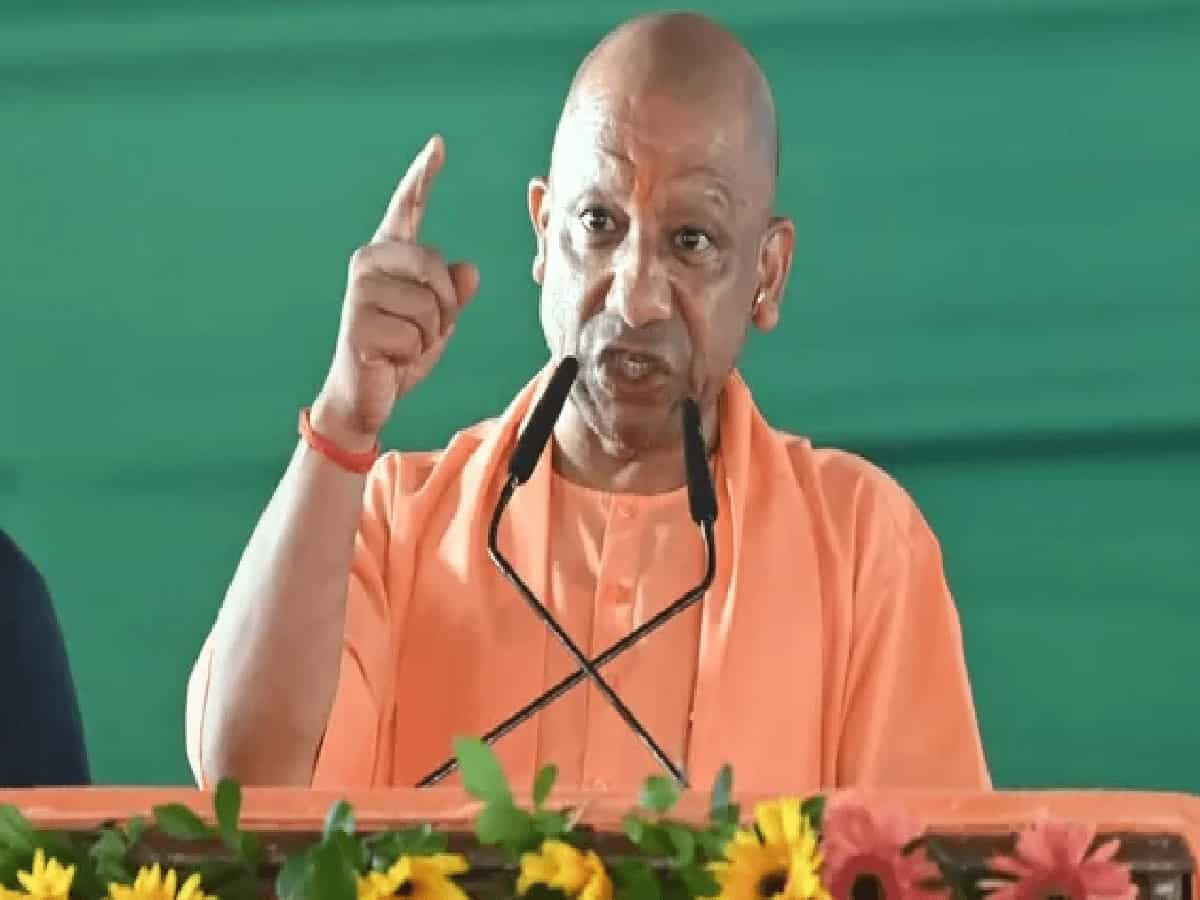
Launching a scathing political offensive against the Samajwadi Party and the Congress on the auspicious occasion of Diwali, Uttar Pradesh Chief Minister Yogi Adityanath asserted that the opposition’s persistent hostility toward the sacred land of Ayodhya and the grand Ram Temple will eventually bury their electoral relevance permanently. Addressing a massive gathering during his traditional annual Diwali celebrations with the forest-dwelling Vantangiya community in the Jungle Tinkonia Number Three settlement, the Chief Minister accused rival political outfits of running an orchestrated campaign to derail and malign the cultural and infrastructural resurgence of Ayodhya. Emphasizing that political factions that once drove Uttar Pradesh into an acute identity crisis are now struggling for their own survival, Adityanath contrasted the Bharatiya Janata Party’s governance model of viewing the state’s 25 crore citizens as one unified family against what he characterized as the narrow, dynasty-centered politics of the Nehru-Gandhi and Saifai households.
The Attack on Opposition Politics: 'Propaganda Against Ram Temple Will Backfire'
Speaking from the rural heartland of Gorakhpur on Sunday afternoon, Chief Minister Adityanath took direct aim at the opposition's political posturing surrounding the temple town of Ayodhya. He noted that after failing to halt the historic construction of the Bhavya Ram Mandir and unable to curb the unprecedented influx of devotees, opposition parties have resorted to deliberate misinformation campaigns aimed at undermining Ayodhya’s achievements.
The Chief Minister asserted that the opposition harbors a profound fear of Uttar Pradesh’s developmental and cultural transformation:
-
The Reality of Past Regimes: Recalling the state’s political landscape prior to 2017, Adityanath reminded the audience that chanting the sacred phrase "Jai Shri Ram" was once penalized in Ayodhya, peaceful devotees faced police lathi charges and gunfire, and political leaders openly questioned the historical existence of Lord Ram.
-
The Failure of Obstructionist Politics: Highlighting the rhetoric of previous administrations who claimed that "not even a bird could flutter its wings" in Ayodhya, the Chief Minister remarked that those very forces now find themselves politically sidelined by the surge of Ram devotion and modern infrastructure.
-
Electoral Repercussions: Adityanath declared that those running coordinated smear campaigns against Ayodhya’s rapid modernization will soon discover that their negative politics will be buried permanently by the public mandate, as people recognize the intent behind their obstructionism.
25 Crore Citizens as One Family Versus Dynastic Entrenchment
Sharpening his critique on dynastic leadership, the Chief Minister drew a sharp line between the ideological foundation of the ruling National Democratic Alliance (NDA) and the Samajwadi Party’s PDA (Pichhda, Dalit, Alpsankhyak) alliance. Without directly naming individual leaders, Adityanath observed that for one political outfit, public service begins and ends with the Nehru-Gandhi dynasty, while for another, political priority remains strictly confined to the family interests of Saifai.
In contrast, Adityanath emphasized that for the double-engine BJP government, the entire 25-crore population of Uttar Pradesh forms an indivisible family. State administration, he affirmed, operates without discrimination based on caste, creed, religion, geographical location, or financial standing. Affirming that marginalized groups—including Nishads, Dalits, Rajbhars, and Chauhans—stand at the center of affirmative governance, the Chief Minister noted that while opposition platforms function with a mindset that reflexively says "No" to public empowerment, the current administration answers every demand for social justice and development with an affirmative "Yes". He remarked that expecting political entities preoccupied with personal dynasties to safeguard the welfare of the underprivileged is an illusion, as the foundational purpose of governance is to extend progress to the very last citizen standing in society’s margins.
A Decade of Continuity: Transforming Vantangiya Forest Settlements
The setting of the Chief Minister’s address underscored his deep historical bond with the marginalized Vantangiya forest communities. Brought into the region during the British colonial period for tree plantation drives, Vantangiya families lived in complete administrative neglect for over seven decades, deprived of fundamental citizen rights, voter identification, and revenue village status.
Adityanath began celebrating Diwali with these forest dwellers in 2009 during his tenure as a Member of Parliament from Gorakhpur, defying bureaucratic resistance to establish schools and basic amenities. Marking his tenth consecutive Diwali as Chief Minister among the Vantangiya families of Jungle Tinkonia, Adityanath engaged in direct, emotional interaction with the residents. When he asked whether their settlements possessed paved interlocking roads, dedicated electrical power lines, piped drinking water, pucca homes, ration cards, and Ayushman Bharat health insurance cards prior to 2017, the crowd responded with a resounding "No". When he asked whether those essential amenities are fully operational today, the assembly raised their hands in affirmative jubilation. Recalling how children were once forced to study under the dim glow of kerosene lamps amidst the fear of eviction, the Chief Minister noted that permanent brick homes, primary schools, and solar-powered infrastructure have permanently illuminated these forest hamlets.
Development Acceleration Across Eastern Uttar Pradesh
The festive occasion was also marked by a major infrastructural boost for the rural belt of Gorakhpur. The Chief Minister dedicated and laid the foundation stones for 52 development projects valued at approximately ₹82.41 crore, encompassing road connectivity, rural public facilities, and eco-tourism initiatives.
Key developmental works initiated during the visit include:
-
Interlocking Road Connectivity: Foundation laid for a dedicated interlocking concrete road connecting Rajahi Chauraha to Pipraich Road through Jungle Tinkonia Number Three, being constructed at a cost of ₹3.65 crore to ensure unhindered transit for forest residents.
-
Kusumhi Forest Eco-Tourism Park: Development of a modern eco-park within the Kusumhi forest reserve with an investment of ₹4.85 crore, designed with Swiss cottages and nature trails to bolster local employment through sustainable tourism.
-
Vaishwik Nagar Bazaar in Pipraich: Sanction of ₹1.92 crore for establishing a planned municipal marketplace to support micro-traders, farmers, and self-help groups.
Addressing the broader youth demographic, the Chief Minister also issued a stern warning against the illegal narcotics trade and gambling syndicates, pledging that authorities will relentlessly crack down on drug peddlers who destroy families, while guaranteeing robust state support for educational and employment avenues for hardworking youth.
The Political Horizon: Ideological Battle Lines Sharpen Ahead of Polls
Adityanath’s speech in Gorakhpur serves as a defining political statement that frames the ongoing ideological contest between the ruling BJP and the Samajwadi Party-Congress combine. By linking the cultural revival of Ayodhya, the building of the Ram Mandir, and the socio-economic empowerment of remote communities like the Vantangiyas into a coherent narrative of inclusive nationalism, the Chief Minister seeks to counter the opposition's caste-centric mobilization strategies. As Uttar Pradesh continues its extensive infrastructure expansion across highway, airport, and industrial corridors, the ruling administration's proactive outreach to the most marginalized sections provides the BJP with a formidable narrative of delivery-oriented politics heading into future electoral contests.




