







Govardhan Puja: Why Giriraj Mountain Is Made From Cow Dung
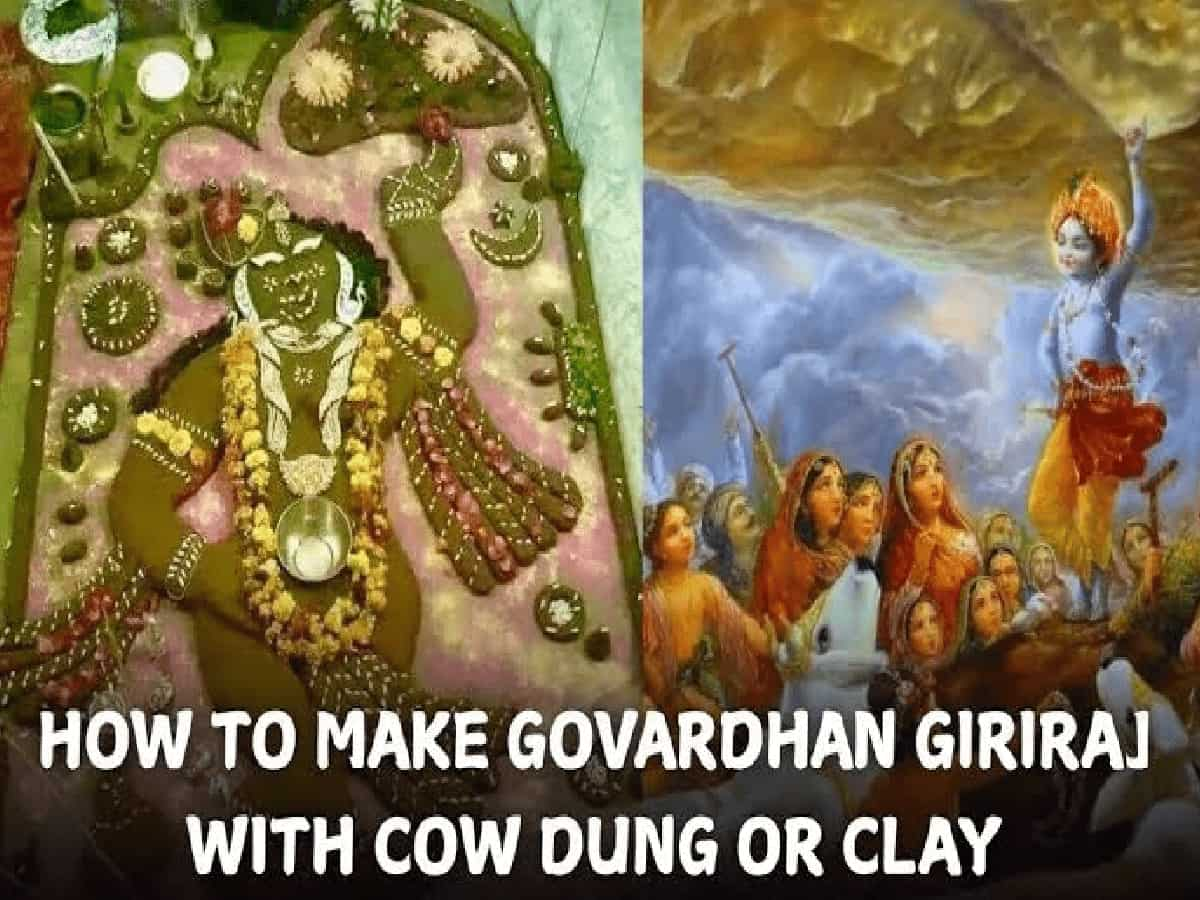
As festive lights continue to sparkle across courtyards following the celebrations of Diwali, households across the country prepare to observe one of the most culturally grounded and nature-centric observances of the Sanatan calendar: Govardhan Puja. Observed annually on the Pratipada Tithi of the Shukla Paksha in the holy month of Kartik, this sacred festival—celebrated on Tuesday, November 10, 2026—commemorates the legendary moment when Lord Krishna lifted the majestic Mount Govardhan on his little finger to shield the villagers, flora, and cattle herds of Braj from the torrential downpours unleashed by an angered Lord Indra. While the festival is widely renowned for the preparation of 'Annakut'—a culinary feast consisting of 56 elaborate dishes (Chhappan Bhog) offered to the deity—its most iconic visual and ritual element remains the domestic tradition of sculpting an expansive, recumbent figure of Mount Giriraj and Lord Krishna entirely out of fresh, sacred cow dung. For modern observers, this tactile ritual often raises curiosity; yet, behind this centuries-old custom lies a profound synthesis of spiritual devotion, rural pastoral ecology, sanitary science, and Vedic reverence for maternal bovine energy.
The Mythological Root: Krishna’s Rebuke of Indra and the Sanctity of Cows
To understand why cow dung (Gomaya) serves as the primary medium for crafting the sacred mountain on this holy day, one must examine the transformative shift in worship that Lord Krishna instituted in the pastoral land of Vrindavan. According to the Shrimad Bhagavata Purana and the Vishnu Purana, the residents of Braj were accustomed to performing grand ceremonial sacrifices to propitiate Indra, the god of rain and thunder, in hopes of receiving favorable monsoons for their pastures. The young Krishna questioned this ritualistic appeasement, reminding his father Nanda Baba and the elder cowherds that their genuine benefactors were not celestial deities demanding prideful offerings, but the natural ecosystem right before their eyes: the lush grasslands of Mount Govardhan that grazed their cattle, the forests that brought rain, and the holy cows that nourished human society with nectar-like milk.
Krishna convinced the inhabitants of Braj to redirect their offerings directly to Govardhan Hill and the cattle herds. Incensed by this act of defiance, Indra marshaled catastrophic storms, thunderbolts, and unrelenting deluges to submerge Vrindavan. In response, the young deity lifted Mount Giriraj on the tip of the little finger of his left hand for seven continuous days and nights, providing shelter beneath the celestial umbrella to every single cow, calf, and human being in the valley. In the aftermath of Indra's defeat, the celestial cow Surabhi descended from heaven to bathe Krishna in sacred milk, conferring upon him the eternal title of Govinda—the protector and lord of the cows. Because the life of Lord Krishna and the survival of Braj were inextricably linked to the cow, utilizing cow dung to fashion the physical embodiment of Mount Govardhan serves as a direct acknowledgement of this divine bond.
The Sacred Chemistry of Gomaya: Vedic Purity and Environmental Balance
In Vedic philosophy, the cow is revered as Kamadhenu or Gau Mata, the living embodiment of all celestial energies. Classical texts state that while ordinary waste matter is considered ritually impure, the dung and urine of the indigenous Indian cow (Desi Gau) are exceptionally sacred, possessing inherent purification virtues. The Skanda Purana explicitly notes that Goddess Lakshmi resides permanently in cow dung (Gomaye Vasate Lakshmi). Therefore, using Gomaya to sculpt the mountain during Kartik month is considered an auspicious act that invites both spiritual purity and worldly prosperity into the domestic realm.
Beyond spiritual beliefs, ancient Indian rural communities recognized the practical hygiene benefits of cow dung. In traditional agrarian households, cow dung was widely utilized as a natural cleansing agent, surface sanitizer, and organic insect repellent:
-
Natural Cleansing Properties: Applying cow dung pastes to residential courtyards and verandas neutralized airborne microbes and minimized unwanted pests without synthetic chemicals.
-
Domestic Thermal Comfort: The unique fibrous makeup of cow dung functioned as a natural thermal insulator, keeping village homes cool in humid summers and retaining gentle warmth during chilly winter evenings.
-
Sustainable Fuel Source: Sun-dried cow dung cakes (upla or kanda) provided clean-burning, aromatic fuel for cooking traditional hearth meals, and formed the essential basis of domestic fire sacrifices (havan).
By shaping the representation of Mount Giriraj out of cow dung on Govardhan Puja, ancient rishis and rural forebears ensured that homes underwent thorough seasonal sanitation right after the monsoon transition, cleansing the living environment of residual dampness and seasonal impurities while invoking the divine presence of Lord Krishna.
Sculpting Mount Giriraj: Traditional Vidhi and Household Iconography
On the morning of Govardhan Puja, the women and elders of the household clean the central open courtyard, veranda, or entrance threshold, sprinkling sacred Ganga water to purify the grounds. Using clean, fresh cow dung, family members collaborate to craft a large, recumbent human-like representation of Mount Govardhan across the floor.
The artisan tradition follows meticulous, symbolic steps:
-
Shaping the Divine Form: The base of the mountain is formed with a prominent torso, limbs, and a serene face symbolizing Giriraj Maharaj as an extension of Lord Krishna himself.
-
Accompanying Pastoral Figures: Beside the central mountain figure, smaller shapes representing cows, suckling calves, cowherds (Gopas), butter churns, trees, and small grazing animals are sculpted from the dung, recreating the scenic landscape of ancient Braj.
-
Adornment with Sacred Pigments: The eyes and facial features of the deity are marked using cotton, cowrie shells, or silver foil. The body is anointed with vibrant vermilion (roli), raw turmeric, sandalwood paste, and sacred unbroken rice grains (akshat).
-
Floral and Milk Offerings: Fresh seasonal marigold flowers, sugarcane stalks, and sprigs of green grass are arranged around the sculpted hill. A small earthen hollow is shaped onto the navel area of the figure, into which raw cow milk, curd, honey, and holy water are gently poured during the ceremonial prayer.
Throughout the day, a ghee lamp is kept illuminated near the sculpture. In the evening, the family gathers to perform circumambulation (Parikrama) around the cow-dung hill, walking clockwise seven times while singing devotional hymns, sounding traditional brass bells, and offering puffed rice and sweets.
What to Do with the Sacred Mountain After the Puja: Eco-Friendly Renewal
A remarkable aspect of the Govardhan Puja tradition is its alignment with zero-waste ecological cycles. Unlike modern synthetic idols that leave behind non-biodegradable debris, the cow dung used to craft Mount Giriraj is treated with respect and repurposed for agricultural and household benefit.
Once the formal puja concludes, traditional protocol prescribes practical and sacred uses for the sanctified dung:
-
The Entrance Guardian Diya: On the evening of the puja, portions of the sacred dung are formed into a small protective mound near the main threshold of the residence. A clay lamp filled with mustard oil is lit on top of this miniature peak, acting as a spiritual barrier that wards off negative energy and protects the household from misfortune.
-
Sun-Drying for Sacred Havans: The remaining bulk of the sculpted mountain and peripheral animal figures is gathered carefully and pressed into flat, sun-dried cakes. These sanctified cakes are preserved in dry storage throughout the winter and used as fuel for auspicious yajnas, festive havans, and seasonal Agnihotra rituals. The smoke released from burning cow dung combined with camphor and pure ghee is believed to purify the household air and dispel airborne bacteria.
-
Organic Garden Fertilizer: In urban and suburban homes with gardens, the sanctified cow dung can be mixed into soil or compost beds. Rich in organic matter, nitrogen, and beneficial soil microbes, it serves as high-potency organic manure, enriching flowering plants, Tulsi planters, and household vegetable gardens.
The Living Legacy of Annakut: Honoring Nature's Eternal Balance
At its core, Govardhan Puja serves as an annual reminder of humanity's interdependence with nature, the environment, and domestic animals. By asking humanity to bow not before distant celestial hierarchies, but before an accessible earthen mountain sculpted from the humble by-products of grazing cattle, Lord Krishna democratized spiritual worship and placed ecological balance at the heart of Sanatan culture.
As families gather on this Kartik Shukla Pratipada to offer 56 dishes to the cow-dung sculpture of Giriraj Maharaj, the festival continues to bridge ancient scripture with sustainable rural wisdom. Through this tactile, humble medium of cow dung, devotees celebrate humility, invoke divine protection, and reaffirm their duty to care for the environment and all living creatures that sustain life on Earth.




