







Chhath Puja 2026: Brass or Bamboo Soop, What Scriptures Say
Following the festive glow of Diwali and Dhanteras, millions of households across India are preparing for one of Hinduism’s most rigorous, eco-conscious, and deeply revered festivals: Chhath Mahaparva. Celebrated with immense devotion across Bihar, Jharkhand, eastern Uttar Pradesh—including Varanasi, Prayagraj, Gorakhpur, and Lucknow—as well as metropolitan hubs like New Delhi and Mumbai, the four-day festival honors Surya Dev, the Sun God, and Chhathi Maiya. In 2026, the sacred observance begins with Nahay Khay on Friday, November 13, and concludes with Usha Arghya on Monday, November 16. Amid the bustling pre-festival markets, however, a noticeable cultural shift is sparking conversation among devotees and religious scholars alike. Traditionally, fasting women (vratis) arrange offerings inside handwoven bamboo baskets known locally as soop and daura. Today, gleaming versions crafted from brass and stainless steel are increasingly replacing bamboo in urban households. While metal baskets offer undeniable durability, religious scholars emphasize that Hindu scriptures draw a clear distinction between brass, steel, and bamboo when it comes to sacred rituals.
Chhath Mahaparva 2026 Calendar: Key Dates From Nahay Khay to Usha Arghya
For devotees planning their spiritual preparations and travel to riverbanks or community ghats, the four-day Chhath Puja 2026 schedule unfolds across mid-November. The festival commences on Friday, November 13, 2026, with Nahay Khay, during which fasting devotees take a purifying bath and consume a simple, sattvic meal of bottle gourd (lauki) and rice cooked with rock salt. On Saturday, November 14, 2026, devotees observe Kharna, maintaining a strict day-long fast without water until sunset, when they offer kheer made of jaggery and rice along with chapatis to the deity before beginning a 36-hour waterless fast (nirjala vrat).
The third and most visually iconic day, Sandhya Arghya (Evening Arghya), takes place on Sunday, November 15, 2026, as families gather at riverbanks and ponds to offer prayers to the setting sun. The Mahaparva culminates at dawn on Monday, November 16, 2026, with Usha Arghya (Morning Arghya), where devotees offer prayers to the rising sun before breaking their fast during Parana and sharing consecrated prasad.
Understanding the Sacred Role of Bamboo Soop and Daura
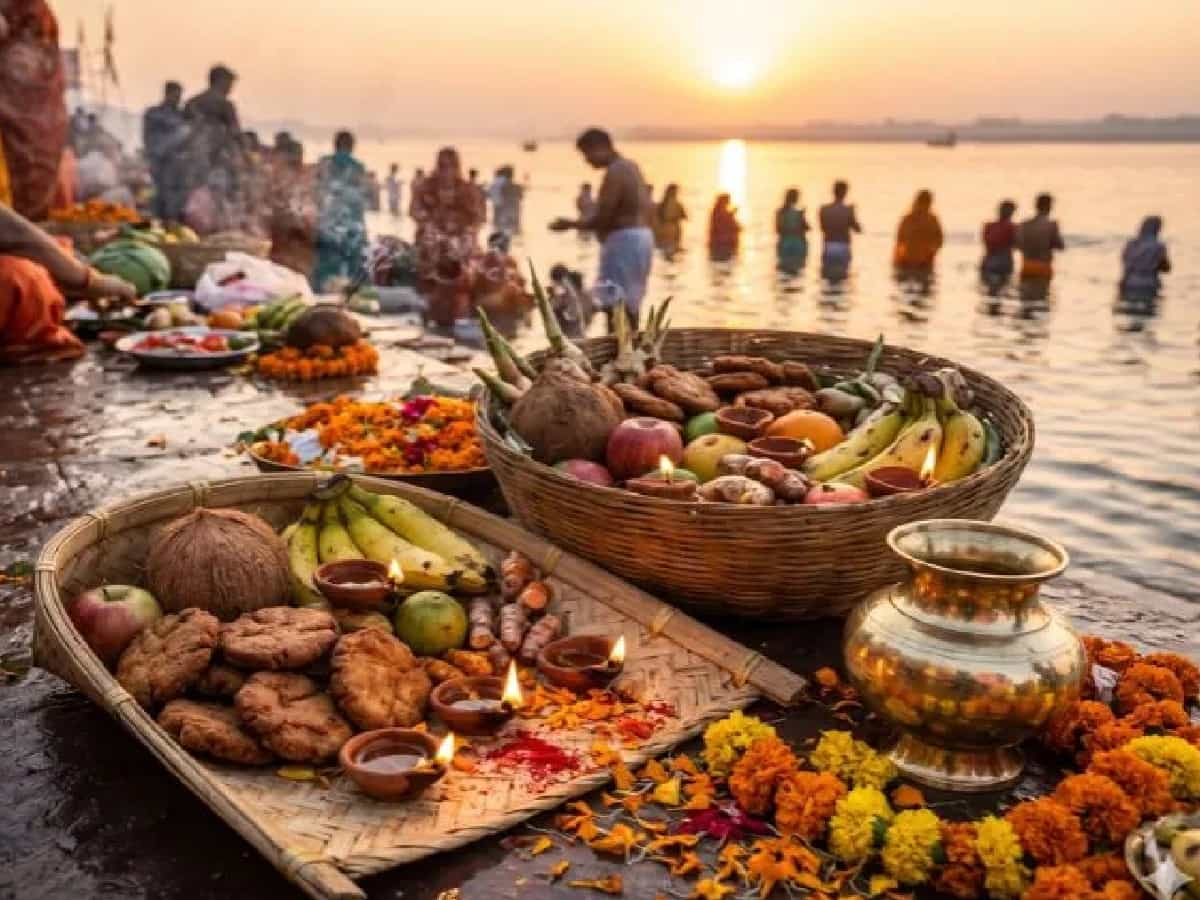
To appreciate why the choice of vessel matters so deeply in Chhath Puja, it helps to understand the distinct roles played by the soop and the daura—also referred to as dala in many regions. The soop is a wide, flat winnowing tray woven meticulously from thin strips of natural bamboo. Inside the soop, the fasting devotee carefully arranges sacred offerings including crispy traditional thekua, seasonal fruits, whole coconuts, raw ginger with leaves, fresh turmeric roots, radishes, and sugarcane stalks.
The daura or dala, by contrast, is a large, deep, round basket woven from sturdy bamboo strips that holds all the soop trays and puja essentials together. As a cherished mark of humility and devotion, a male member of the household typically carries the heavy daura balanced upon his head, walking barefoot from the home to the riverbank ghat. In rural Bihar and Purvanchal, bamboo is woven into the fabric of everyday agrarian life—used for winnowing grain, storing harvests, and crafting household mats. Because Chhath Puja is fundamentally a festival of gratitude toward nature’s life-sustaining elements—sunlight, clean water, and the earth’s harvest—offering fruits of the soil inside a biodegradable basket grown directly from the earth reflects complete ecological harmony. Furthermore, in Indian cultural symbolism, bamboo represents resilience, continuous growth, and family lineage (vansha), making its presence in Chhath rituals deeply auspicious.
Why Are Brass and Steel Baskets Replacing Bamboo in Markets?
As millions of families from Bihar and eastern Uttar Pradesh have settled in cities across India and abroad, practical urban realities have gradually influenced festival shopping habits. Traditional bamboo soop and daura baskets are organic, untreated items that absorb moisture at riverbanks and are customarily purchased fresh each year before Chhath Puja. In major cities, sourcing authentic, well-crafted bamboo baskets at the last minute can sometimes prove inconvenient or expensive.
Seeking long-term practicality, many households have turned toward brass (peetal) and stainless steel replicas of the traditional soop and daura. Once purchased, a metal basket can be washed, polished, stored safely after the festival, and reused year after year without cracking or losing shape. Local utensil markets in Patna, Varanasi, Lucknow, and Delhi report brisk demand for heavy-gauge brass soops ahead of November 13, driven largely by nuclear families looking for reusable alternatives.
Brass vs. Steel in Chhath Puja: What Do Hindu Scriptures Say
When evaluating this modern trend through the lens of Vedic tradition and Dharma Shastras, religious scholars draw a sharp boundary between brass and stainless steel. According to scriptural principles governing Hindu worship, natural metals—specifically gold, silver, copper, and brass (a traditional sacred alloy of copper and zinc)—are considered pure (shuddh) and spiritually conductive for ritual offerings. Consequently, using a thoroughly cleansed brass soop or daura during Chhath Puja is regarded as religiously acceptable when traditional bamboo options are unavailable or difficult to maintain.
Stainless steel, however, is strongly discouraged by priests and scriptural experts for core Chhath rituals. Unlike ancient sacred metals, steel is a modern factory-manufactured alloy whose primary structural base is iron (loha). In Vedic astrology and traditional Hindu ritual texts, iron is associated with the planets Saturn (Shani) and Rahu, and iron-based vessels are customarily excluded from sacred offerings dedicated to Surya Dev, the Solar Deity. Scholars advise devotees to avoid steel soops and dauras entirely when preparing Arghya offerings for the Sun God and Chhathi Maiya.
The Golden Rule for Devotees Using a Brass Soop or Daura
Even for families who opt for the durability of a brass daura or soop, traditional priests emphasize one essential rule: never eliminate bamboo completely from Chhath Puja. Scriptural guidance and ancestral custom recommend that if a devotee uses brass vessels to carry or hold puja items, they must still keep at least one authentic bamboo soop to perform the actual Arghya offering to Surya Dev.
Maintaining at least one bamboo soop preserves the unbroken spiritual link to nature worship, honors the symbolism of family prosperity, and provides vital economic livelihood to traditional bamboo-weaving artisan communities who depend on Chhath Puja each year. By pairing thoughtful convenience with timeless scriptural respect, devotees can celebrate Chhath Mahaparva 2026 with both purity of ritual and devotion of heart.




