







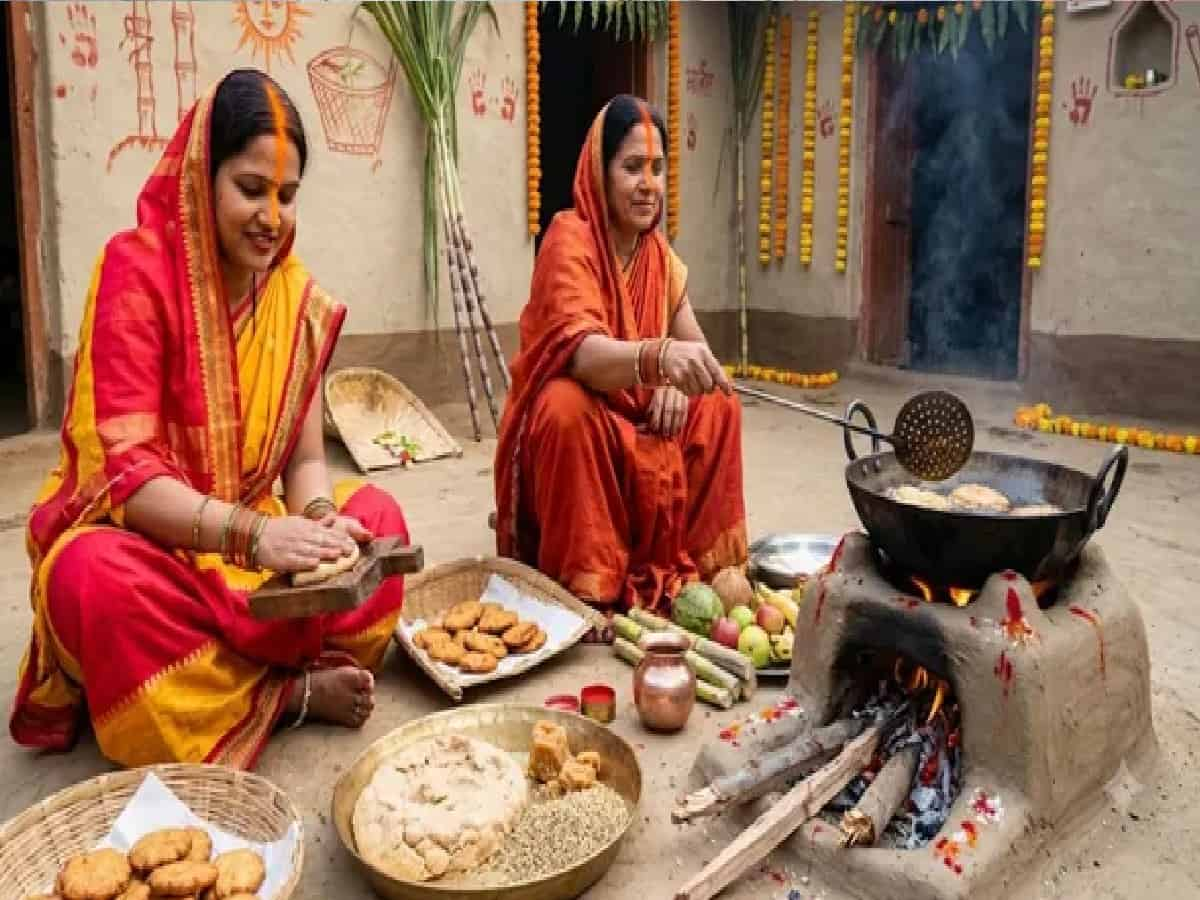
Chhath Puja 2026: Why Prasad Is Always Cooked on a New Clay Stove
Across India’s cultural and spiritual heartland—from the ancient riverbank ghats of Patna, Gaya, and Bhagalpur in Bihar to Varanasi, Prayagraj, Gorakhpur, and Lucknow in Uttar Pradesh, as well as bustling community centers in New Delhi and Mumbai—devotees are immersed in final preparations for Chhath Puja 2026. Revered as one of Hinduism’s most disciplined and deeply cherished festivals of folk faith, the four-day Mahaparva is dedicated to Surya Dev, the Sun God, and Chhathi Maiya, the divine protector of children and family well-being. Beginning on Friday, November 13, 2026, with Nahay Khay and concluding at dawn on Monday, November 16, with Usha Arghya, the festival involves an arduous 36-hour waterless fast (nirjala vrat) observed with unmatched devotion. Yet among the many sacred customs that distinguish Chhath Puja from every other Hindu observance, one household tradition stands out for its strict spiritual discipline: the mandatory preparation of all festival offerings (prasad) on a brand-new earthen stove (mitti ka chulha). Even in modern urban apartments equipped with sleek modular kitchens, families go out of their way to source a freshly molded clay hearth—a practice rooted in profound principles of ritual purity, elemental harmony, and ancestral reverence.
The Core Secret: Why Everyday Kitchen Stoves Are Avoided in Chhath
In traditional Hindu worship, few festivals enforce standards of cleanliness (shuchita) and spiritual purity (pavitrata) as uncompromisingly as Chhath Puja. Unlike temple ceremonies mediated by priests, Chhath is performed directly by devotees standing in natural bodies of water before the visible solar deity. Because the offerings—most notably golden-brown thekua and jaggery-sweetened Kharna kheer—are presented straight to Surya Dev and Chhathi Maiya, every vessel, ingredient, and heat source used in their preparation must remain completely untouched by worldly contamination.
Religious scholars explain that the primary reason families avoid cooking Chhath prasad on their regular household gas stoves is to prevent any contact with culinary impurities or leftovers (jutha). Throughout the year, everyday kitchen burners are used to prepare regular family meals that routinely include tamasic ingredients such as onions and garlic, alongside rich spices or foods that have been tasted before serving. According to scriptural belief, once a stove has been used for daily household cooking involving onions, garlic, or leftover food particles, it loses the pristine sanctity required for preparing Chhathi Maiya’s sacred bhog. Constructing or purchasing an unused clay stove—paired with brand-new brass, bronze, or earthen utensils—ensures that the sacred food originates from a completely pure, unblemished source.
Earth, Fire, and Mango Wood: Elemental Harmony in Chhath Puja
Beyond avoiding kitchen impurities, the insistence on a new clay stove reflects the ecological soul of Chhath Puja. At its philosophical core, Chhath is an expression of gratitude toward nature’s five primordial elements (Pancha Mahabhutas)—Earth (Prithvi), Fire (Agni), Water (Jala), Air (Vayu), and Ether (Akasha). Handcrafted by local potters and artisans from clean, sacred soil, the earthen chulha directly anchors the cooking process to Mother Earth. Using natural clay rather than synthetic metal or electric appliances honors the belief that offerings harvested from the soil should be cooked upon the earth itself.
Equally significant is the fuel burned inside the new clay hearth. Traditional guidelines strictly prescribe using dry mango wood (aam ki lakdi) rather than coal, kerosene, or chemical firestarters. In Vedic yajnas and sacred fire rituals, mango wood is revered as an exceptionally pure, sattvic fuel whose smoke purifies the surrounding atmosphere rather than polluting it. As the mango wood burns steadily inside the fresh clay stove, it imparts an unmistakable earthy aroma to the thekua and kheer, turning the kitchen or courtyard into a sacred sanctuary filled with devotion.
Chhath Puja 2026 Calendar: Key Dates When the Sacred Hearth Is Lit
For devotees coordinating their household rituals and ghat visits, the Vedic Panchang establishes a clear four-day timeline for Chhath Mahaparva 2026. The festival opens on Friday, November 13, 2026, with Nahay Khay, when fasting devotees (vratis) take a ceremonial bath, cleanse the home, and prepare a simple, sattvic meal of bottle gourd (lauki), chana dal, and rice seasoned strictly with rock salt (sendha namak) on the newly sanctified clay stove.
On Saturday, November 14, 2026, devotees observe Kharna, fasting from sunrise until sunset without drinking a drop of water. At dusk, the new clay stove is lit to prepare traditional rasiao-kheer (made with rice, milk, and sugarcane jaggery) along with plain wheat chapatis, which are offered first to Chhathi Maiya before the vrati partakes of the prasad and initiates the 36-hour waterless fast. Throughout Sunday, November 15, 2026 (Sandhya Arghya), women gather around the clay hearth early in the morning to fry crisp thekua in pure cow ghee before carrying the offerings in bamboo baskets to offer evening prayers to the setting sun. The festival reaches its joyful culmination at sunrise on Monday, November 16, 2026, with Usha Arghya and Parana.
Four Essential Rules to Follow While Preparing Chhathi Maiya's Prasad
To ensure that the sanctity of the new clay stove is preserved from start to finish, elders and religious authorities emphasize four indispensable rules while preparing Chhath offerings. First, absolute cleanliness of the cooking environment is non-negotiable; the courtyard, rooftop, or room where the clay stove is placed must be thoroughly swept, washed, and purified—often with a traditional coating of clean clay or cow dung and sprinkled Ganga water—with strict care taken that no dust, footwear, or household clutter enters the area.
Second, personal purity of the devotee must be maintained at every step. Anyone preparing or assisting with the prasad must bathe beforehand, wear freshly washed, clean garments, and refrain from tasting or smelling the food while cooking, as Chhathi Maiya’s offerings are traditionally prepared while fasting. Third, devotees must rely exclusively on a brand-new earthen stove, new utensils, and sacred mango wood, avoiding any reused kitchenware or ordinary fuel. Finally, scriptures place equal weight on inner mental purity—urging everyone present around the hearth to remain calm, refrain from anger, arguments, or harsh words, and harbor only compassionate, positive thoughts toward others while preparing the divine bhog. Through this harmonious discipline of outer cleanliness and inner serenity, the humble clay stove becomes the sacred center of faith during Chhath Puja.




