







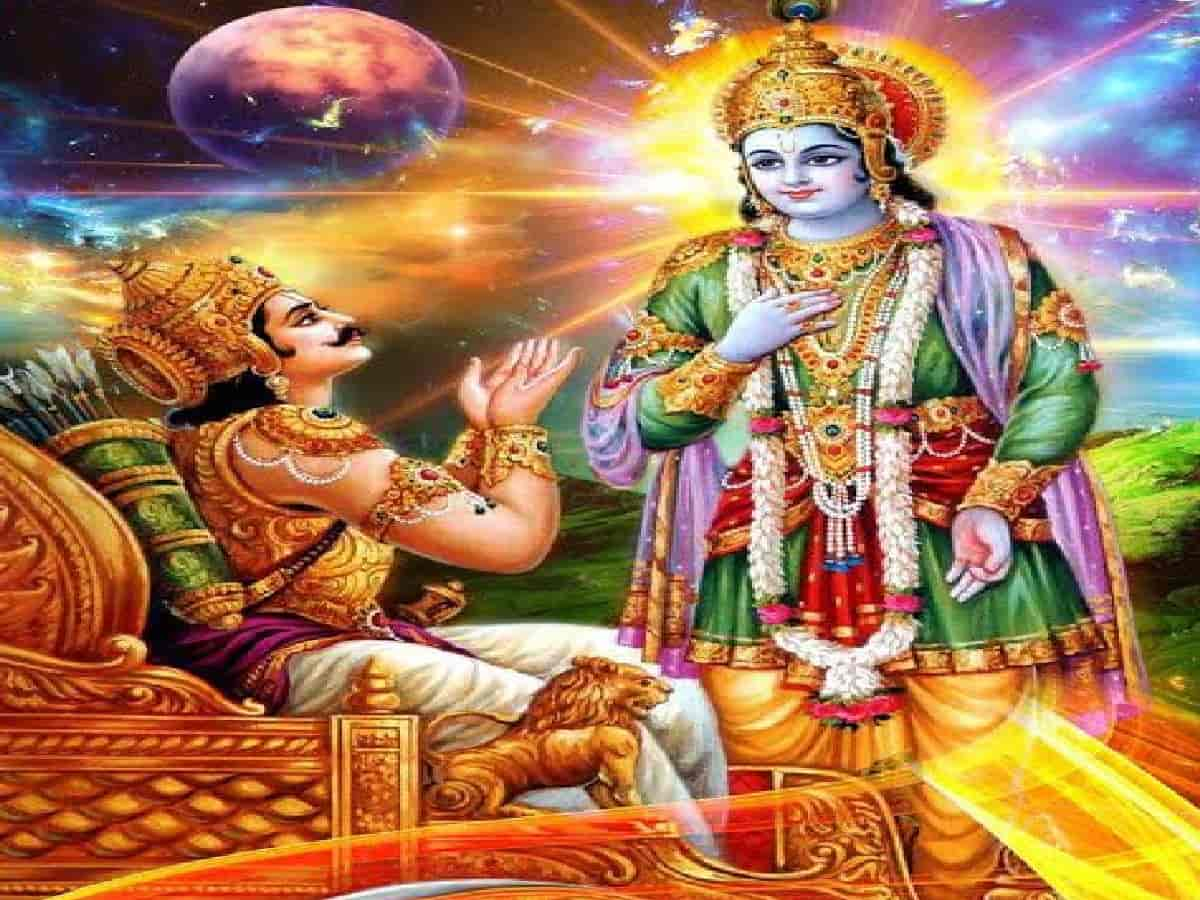
Afraid of Losing Loved Ones, Lord Krishna's Gita Message in SRK's Song
Grief and the quiet dread of losing those we love most are among the deepest anxieties of human existence, yet timeless wisdom from the Bhagavad Gita—unexpectedly preserved inside a celebrated Bollywood soundtrack—continues to offer profound emotional solace to millions. In Shah Rukh Khan's 2011 science-fiction film Ra.One, the hauntingly soulful track "Bhare Naina" (composed by Vishal–Shekhar and sung by Nandini Srikar) carries a sacred Sanskrit couplet spoken directly by Lord Shri Krishna to a heartbroken Arjuna on the battlefield of Kurukshetra: Chapter 2, Verse 23 (Sankhya Yoga) of the Shrimad Bhagavad Gita. Placed at a pivotal emotional juncture in the film when a family confronts sudden bereavement, the verse—"Nainam chhindanti shastrani nainam dahati pavakah, na chainam kledayantyapo na shoshayati marutah"—reminds listeners that while the physical body is fragile and temporary, the Atman (soul) is eternal, indestructible, and untouched by any worldly force. On Friday, November 20, 2026, as families across India observe sacred Kartik rituals and reflect on spiritual resilience, revisit how this ancient scriptural verse embedded inside mainstream cinema bridges everyday human sorrow with the highest philosophical truth of Sanatana Dharma. For spiritual seekers, cinema lovers, and families across Unnao, Lucknow, Kanpur, Mathura, Vrindavan, Varanasi, Ayodhya, Mumbai, and New Delhi, understanding Lord Krishna's message in "Bhare Naina" transforms a poignant film song into an enduring source of inner strength.
Bhagavad Gita Chapter 2, Verse 23 in 'Bhare Naina' (Ra.One): Complete Breakdown
To bring together the exact Sanskrit shloka featured in "Bhare Naina", its word-by-word philosophical meaning, and its spiritual relevance when coping with fear or loss, the table below summarizes the core teachings:
| Aspect / Element | Verified Details & Scriptural Reference | Spiritual & Emotional Meaning for Listeners |
| Film & Song Reference | "Bhare Naina" from Shah Rukh Khan's film Ra.One (composed by Vishal–Shekhar; vocals by Nandini Srikar). | Uses authentic Vedic Sanskrit chanting to anchor a modern story of grief, remembrance, and enduring love. |
| Scriptural Source | Shrimad Bhagavad Gita, Chapter 2 (Sankhya Yoga), Verse 23. | Spoken by Lord Shri Krishna to console Arjuna when overwhelmed by the fear of losing elders, teachers, and kinsmen. |
| Sanskrit Shloka |
"Nainam chhindanti shastrani nainam dahati pavakah, Na chainam kledayantyapo na shoshayati marutah." |
Explains that weapons cannot pierce the soul, fire cannot burn it, water cannot wet it, and wind cannot dry it. |
| Core Philosophical Truth | Distinction between the perishable Sharira (physical body) and the eternal, changeless Atman (soul). | Frees the mind from paralyzing fear of death and separation, inspiring courage, clarity, and righteous action (karma). |
Word-by-Word Meaning of 'Nainam Chhindanti Shastrani' in Ra.One
When listeners hear the solemn Sanskrit chant rising beneath the melody of "Bhare Naina", every phrase carries precise metaphysical clarity from the Bhagavad Gita:
-
Nainam chhindanti shastrani: No weapon (shastra) can ever cut, pierce, or sever the soul.
-
Nainam dahati pavakah: No fire (pavaka) can burn or consume the soul.
-
Na chainam kledayantyapo: No water (apah) can drench, dissolve, or corrode the soul.
-
Na shoshayati marutah: No wind (maruta) can wither or dry away the soul.
Through these four elemental truths—earthly steel, fire, water, and air—Lord Krishna illustrates that the essence of every living being transcends all material destruction. Just as a person discards worn-out garments to put on new ones (described in the immediately preceding verse, Gita 2.22), the soul merely transitions across physical forms without ever being born or ever dying.
Why Lord Krishna Taught This Truth to Arjuna—and What It Means Today
The psychological setting of Bhagavad Gita Chapter 2 mirrors the exact emotional paralysis people experience today whenever illness, separation, or tragedy threatens a loved one. Standing between two armies at Kurukshetra, the mighty warrior Arjuna dropped his bow, trembling at the thought of losing his beloved grandsire Bhishma, guru Dronacharya, and relatives. Recognizing that grief springs from mistaking the temporary physical body for our true eternal identity, Lord Shri Krishna gently separated body from soul—teaching that true love honors the immortal spirit rather than succumbing to despair. Listening to "Bhare Naina" with this awareness turns a poignant Bollywood ballad into a quiet meditation: it reminds us to cherish every moment with our loved ones, perform our duties (dharma and karma) fearlessly, and take comfort in the Gita's assurance that love and consciousness endure beyond physical farewells.




