







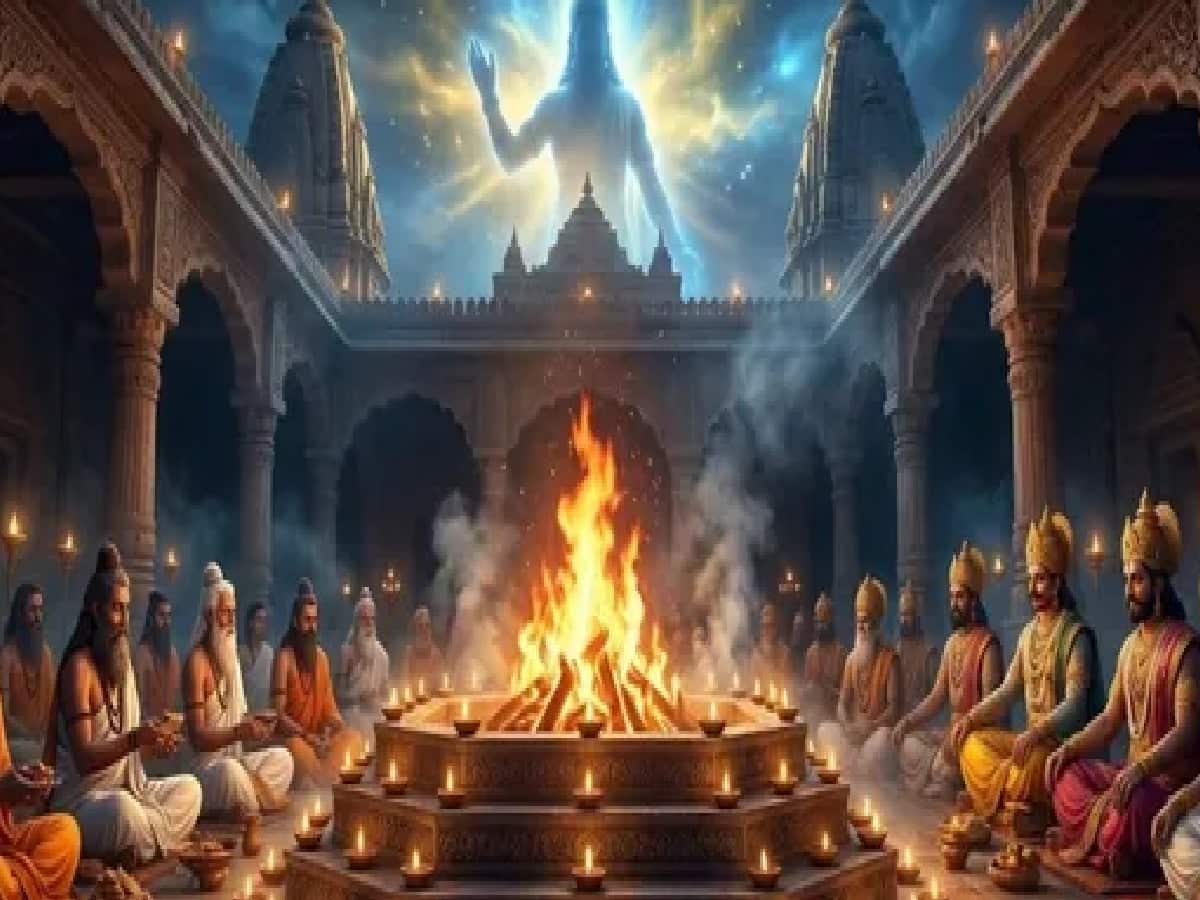
Why Do Humans Blink, The Fascinating Ramayana Story of King Nimi
Every human being blinks roughly fifteen to twenty times a minute without ever giving the reflex a second thought, yet ancient Indian scriptures trace this everyday biological motion to a dramatic spiritual clash recorded in the Uttara Kanda of Maharishi Valmiki's Ramayana. According to sacred Puranic and epic lore, the Sanskrit word for the blink of an eye—Nimesh (which also serves as one of the foundational units of time in Vedic astronomy)—originated with King Nimi, an illustrious monarch of the Ikshvaku dynasty and the founding sovereign of the ancient Videha kingdom of Mithila. Revered for his righteousness, administrative wisdom, and unwavering devotion to public welfare, King Nimi resolved to perform a monumental five-thousand-day yajna (sacred fire sacrifice) dedicated to cosmic harmony and the prosperity of his subjects. Naturally, the king approached his hereditary royal preceptor, Maharishi Vashishtha, requesting him to preside as the chief priest (Brahma / Hotri) of the ceremony. What unfolded next—a collision between sacred ritual deadlines and a sage's prior vow to Devraj Indra—culminated in a mutual curse that stripped both the king and the sage of their physical bodies, before a compassionate boon from the celestial deities placed King Nimi's subtle presence forever inside the eyelids of all living creatures. For spiritual readers, mythology enthusiasts, Sanskrit scholars, and families across Unnao, Lucknow, Kanpur, Ayodhya, Varanasi, Patna, Darbhanga, Janakpur, and New Delhi, the legend of King Nimi offers a profound lesson on dharma, detachment from physical form, and the origin of the royal lineage that later gave the world King Janaka and Mata Sita.
King Nimi, Sage Vashishtha & The Origin of 'Nimesh': Key Scriptural Facts
To bring together the primary characters, narrative milestones, and etymological connections preserved in Valmiki's Ramayana and the Vishnu Purana, the table below summarizes the sacred legend:
| Dimension / Element | Scriptural & Mythological Details | Cultural & Spiritual Significance |
| Primary Scriptural Source | Uttara Kanda of Valmiki's Ramayana (corroborated in the Vishnu Purana and Srimad Bhagavatam). | Connects royal genealogy of the Ikshvaku and Videha (Mithila) dynasties with everyday human experience. |
| Protagonist & Lineage | King Nimi, son of Ikshvaku and first ruler of Mithila; ancestor of King Mithi (Janaka) and Goddess Sita. | Established Mithila's enduring reputation as a center of philosophical detachment (Videha literally means "bodiless" or transcendent). |
| The Yajna & Mutual Curse | Nimi organized a 5,000-day yajna; because Sage Vashishtha was occupied with Indra's sacrifice, Nimi commenced on the auspicious muhurat with Maharishi Gautama, triggering a mutual curse of bodilessness (Videha). | Illustrates how anger between even the noblest figures leads to worldly loss, while highlighting adherence to sacred ritual timing. |
| Divine Boon & Word 'Nimesh' | Refusing physical rebirth after the yajna concluded, King Nimi asked the gods to let him dwell in the eyelids of all living beings—giving rise to the word Nimesh (the blink of an eye). | Symbolizes that every blink is a subtle reminder of transcendence beyond the perishable body. |
How a 5,000-Day Yajna Sparked a Curse Between King Nimi and Vashishtha
When King Nimi invited Maharishi Vashishtha to officiate his grand five-thousand-day sacrifice, the revered sage explained that he had already accepted an invitation from Devraj Indra, the king of the gods, to conduct a major yajna in heaven. Vashishtha asked Nimi to postpone his ceremony until he returned from Indra's court. Recognizing that planetary alignments (shubh muhurat) and the temporary nature of human life do not wait indefinitely, King Nimi quietly returned to his capital and inaugurated the yajna on the appointed auspicious date under the guidance of Maharishi Gautama and other accomplished rishis. Upon returning to Earth and discovering that the royal sacrifice had already begun without him, Maharishi Vashishtha felt deeply slighted. Finding King Nimi resting at the time, the infuriated sage pronounced a grave curse declaring that the king would lose his physical body (Videha). Awakened to the news and equally aggrieved that he had been cursed without fault while upholding dharma, King Nimi pronounced an identical curse in return—causing both the monarch and the sage to shed their mortal frames, with Vashishtha later taking rebirth through Mitra and Varuna.
The Gods' Boon, Birth of King Janaka's Dynasty, and the Mystery of 'Nimesh'
Despite losing his physical form, King Nimi's subtle spirit remained preserved through the power of sacred mantras until the five-thousand-day yajna reached completion. Pleased by the devotion of the officiating sages, the celestial deities appeared and offered to restore King Nimi to a physical body. Yet Nimi—having tasted freedom from bodily attachment—humbly declined reincarnation, praying instead for permission to reside invisibly in the eyelids of all living beings. Granting his wish, the gods ordained that every time a creature opens and closes its eyes, that gentle flicker would carry King Nimi's name—Nimesh—and because his body remained Videha (bodiless), the sages churned his preserved form using sacred rituals to bring forth Mithi, the first Janaka, founding the celebrated Videha dynasty of Mithila in which Mata Sita later appeared.




