







Who Was Ravana's Monkey Friend, How Bali Carried Him Across Four Seas
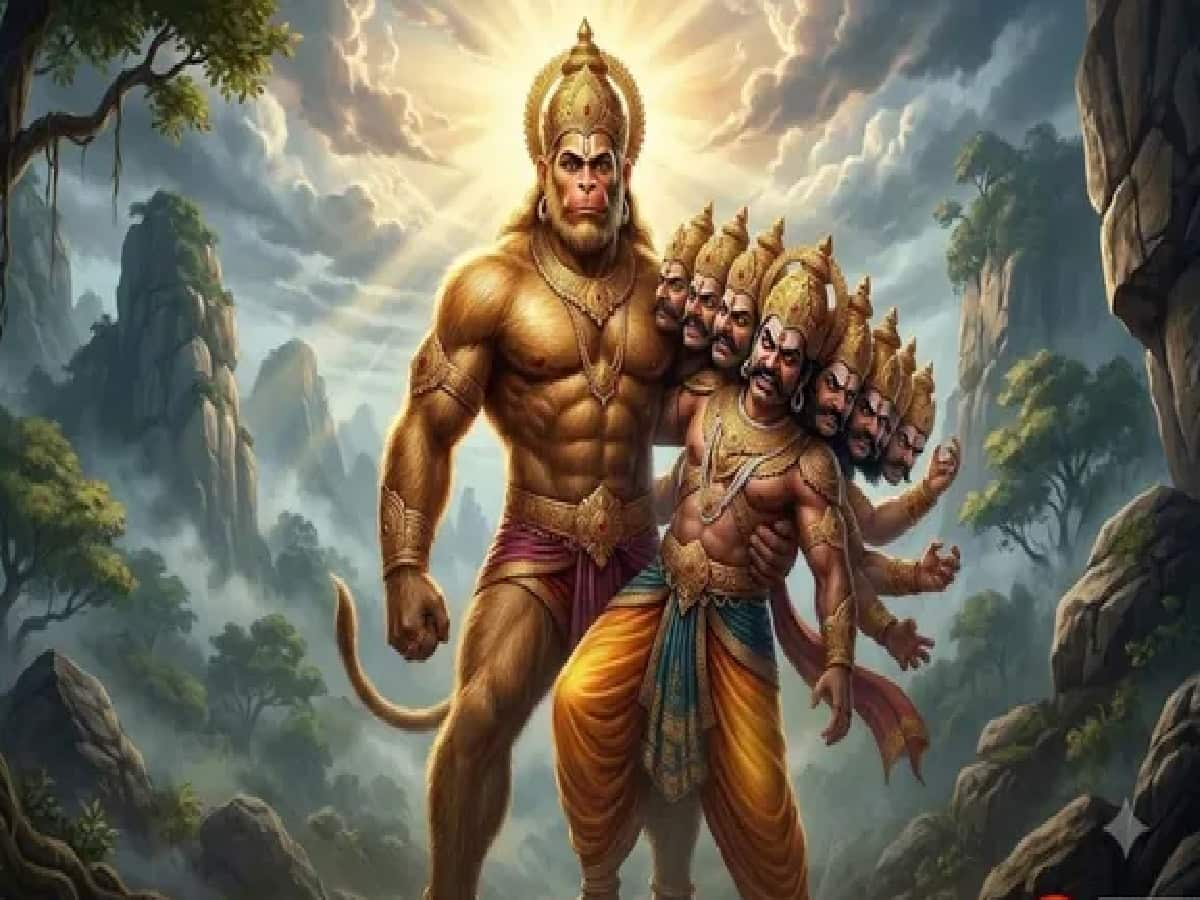
Long before Lord Shri Rama marched toward Lanka to rescue Mata Sita, the ten-headed demon king Ravana—intoxicated by celestial boons and military victories across the three worlds—believed no warrior alive could match his strength. Yet preserved in Chapter (Sarga) 34 of the Uttara Kanda of Maharishi Valmiki's Ramayana—narrated by Sage Agastya to Lord Rama—is a remarkable episode that shattered Ravana's pride without a single weapon being drawn. Seeking to subdue Bali (also spelled Vali), the formidable Vanara (monkey) king of Kishkindha and elder brother of Sugriva, Ravana traveled to Bali's realm and attempted to seize him from behind while the monkey monarch was engrossed in his evening twilight prayers (Sandhya Vandana) along the southern seashore. Sensing the stealthy approach immediately, Bali neither interrupted his Vedic mantras nor engaged in a conventional duel: instead, he effortlessly gripped Ravana, pinned the mighty king of Lanka tightly beneath his armpit, and leaped across the skies to complete his twilight rituals at all four great oceans—the southern, western, northern, and eastern seas. Exhausted and utterly humbled upon returning to Kishkindha, Ravana abandoned his arrogance, acknowledged Bali's unmatched prowess, and sealed a solemn pact of eternal friendship and brotherhood with sacred fire (Agni) as their witness. For mythology enthusiasts, Ramayana readers, cultural travelers, and families across Unnao, Lucknow, Kanpur, Ayodhya, Varanasi, Hampi (ancient Kishkindha), Bengaluru, Mumbai, and New Delhi, the story of Bali and Ravana remains one of Indian epic literature's most vivid lessons in humility, discipline, and mutual respect.
Bali (Vali) vs. Ravana in Valmiki's Ramayana (Uttara Kanda, Sarga 34): Complete Breakdown
To bring together the scriptural source, key characters, the sequence of the four-ocean journey, and the philosophical takeaway preserved in Sarga 34 of the Uttara Kanda, the table below summarizes the episode:
| Story Dimension | Verified Scriptural Details (Valmiki Ramayana, Uttara Kanda 34) | Moral & Cultural Significance |
| Scriptural Reference & Narrator | Sarga (Chapter) 34 of the Uttara Kanda in Valmiki's Ramayana, narrated by Sage Agastya to Lord Rama after the Lanka war. | Illustrates the extraordinary strength of Kishkindha's ruler and why Lord Rama's defeat of Bali was a monumental feat. |
| Who Was King Bali (Vali)? | Sovereign of Kishkindha (identified with modern-day Hampi, Karnataka), son of Devraj Indra, and elder brother of Sugriva; blessed with a divine boon granting him half the physical strength of any opponent facing him in direct combat. | Even without invoking his combat boon, Bali's natural speed, devotion, and discipline overwhelmed the conqueror of the three worlds. |
| Ravana's Ambush During Sandhya | Arriving at the southern ocean where Bali was performing twilight worship (Sandhya Vandana), Ravana crept up silently from behind to capture him by surprise while Ravana's ministers watched. | Highlights how arrogance blinded Ravana to warrior ethics—attempting an ambush against a devotee immersed in prayer. |
| The Four-Seas Circumambulation | Without breaking his prayers, Bali clamped Ravana under his arm and soared across the southern, western, northern, and eastern oceans, performing twilight worship at each shore while Ravana's ministers chased helplessly behind. | Demonstrates that true spiritual and physical mastery stays calm under provocation, turning an enemy's attack into effortless discipline. |
| Fire-Witnessed Brotherhood | Released back in Kishkindha, a breathless Ravana praised Bali's unmatched might and proposed an alliance; lighting a sacred fire, both kings embraced and vowed eternal friendship. | Shows how genuine valor transforms bitter rivalry into mutual respect and lasting alliance. |
Why Bali Pinned Ravana Under His Arm Without Stopping His Prayers
In the Ramayana tradition, Bali (Vali)—the Indra-born ruler of Kishkindha—commanded awe across heaven and earth, bolstered by a celestial boon that transferred half of a head-on challenger's strength to him. Yet when Ravana arrived in Kishkindha intent on proving his supremacy, Bali did not even need to fight a pitched battle. Told by Bali's ministers that the king was away performing his evening Sandhya Vandana on the shore of the southern ocean, Ravana resolved to seize him off guard from behind. Bali, however, detected Ravana's footsteps instantly. Determined not to interrupt his sacred twilight offering to the Sun God, Bali clamped the ten-headed monarch firmly under his arm like a bundle and launched into the sky. As Ravana struggled furiously to break free and his accompanying ministers raced across the skies in vain pursuit, Bali calmly visited the southern, western, northern, and eastern seas in turn, completing his Sandhya prayers at every coast before touching back down in Kishkindha.
How Defeat Turned Into Eternal Brotherhood Before Sacred Fire
Only after returning to Kishkindha and concluding his evening rituals did Bali release Ravana from his grip. Shaken, breathless, and deeply chastened by the effortless speed with which Bali had carried him across the four oceans, Ravana realized that his famed strength was no match for Kishkindha's king. Setting aside his wounded ego, Ravana bowed to Bali's prowess and asked for his friendship—declaring that henceforth their kingdoms, treasures, and fortunes would be shared as brothers. Kindling a sacred fire (Agni) as witness, the monkey king and the ruler of Lanka embraced warmly and walked hand in hand into Kishkindha—preserving a remarkable bond that endured for the rest of Bali's life.




