







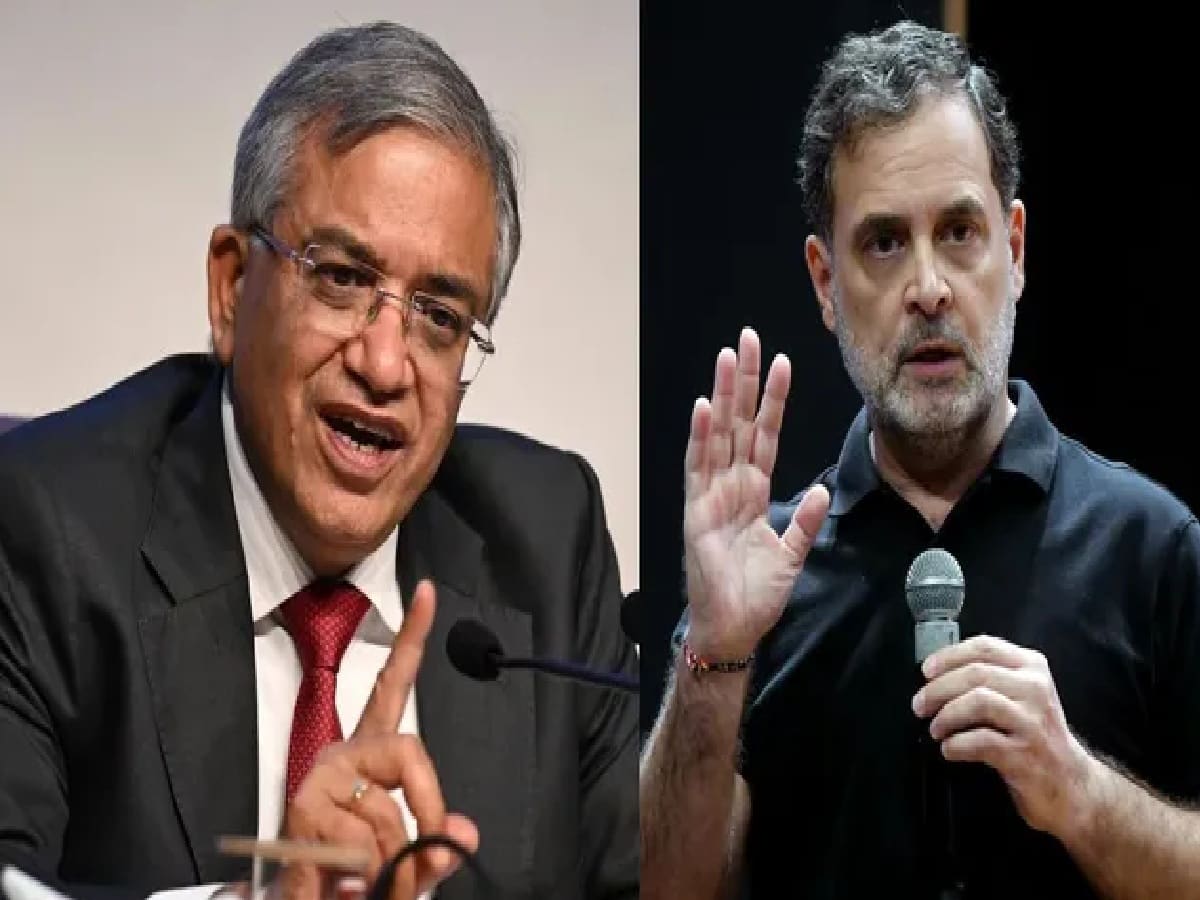
Why CEC Gyanesh Kumar Faces Opposition Fire Over Delimitation Bill
Ahead of Monday's special sitting of Parliament, Leader of the Opposition in the Lok Sabha Rahul Gandhi and senior opposition leaders have launched a sharp political offensive against Chief Election Commissioner (CEC) Gyanesh Kumar, questioning his proposed statutory role in the upcoming Delimitation Commission. Describing the Centre's Delimitation (Second) Bill, 2026 as a "blank cheque" handed to Prime Minister Narendra Modi, Union Home Minister Amit Shah, and CEC Gyanesh Kumar to redraw India's electoral map, the Congress leadership has linked the delimitation debate directly to its earlier confrontation with the Election Commission over the Special Intensive Revision (SIR) of voter rolls.
Rahul Gandhi's Allegations Over the 850-Seat Lok Sabha Map
Addressing reporters in New Delhi on Saturday ahead of the November 30 special session, Rahul Gandhi alleged that the BJP-led government is using the expansion of the Lok Sabha from 543 to 850 seats as an "electoral escape plan" rather than a routine constitutional adjustment.
-
Pre-drawn constituency map claim: Gandhi alleged that Union Home Minister Amit Shah had likely already mapped out the proposed Lok Sabha constituencies, claiming CEC Gyanesh Kumar would simply execute that blueprint.
-
Gerrymandering and AI concerns: Citing earlier delimitation exercises in Assam and Jammu and Kashmir, the Congress leader contended that expanding Parliament to 850 seats creates sweeping opportunities to redraw boundaries—potentially using artificial intelligence tools—to dilute the voting strength of communities opposed to the BJP and weaken opposition prospects.
-
"Blank cheque" warning to allies: Pushing back against suggestions that freezing inter-state seat ratios resolves the issue, Gandhi argued that the core dispute is handing unchecked authority to redraw constituency boundaries across the country.
What the Delimitation (Second) Bill, 2026 Says About the CEC's Role
While the draft text of the Delimitation (Second) Bill, 2026 does not name Gyanesh Kumar personally, its institutional structure places the office of the Chief Election Commissioner at the heart of the three-member boundary-redrawing panel:
| Commission Role / Provision | Structure Under Delimitation (Second) Bill, 2026 | Point of Political Contention |
| Chairperson | A serving or former Supreme Court judge appointed by the Central Government | Opposition alleges executive appointment compromises neutrality |
| Second Member (Ex-Officio) | Chief Election Commissioner or an Election Commissioner nominated by the CEC (Sukhbir Singh Sandhu or Vivek Joshi) | Rahul Gandhi targets CEC Gyanesh Kumar's direct or nominee presence |
| Third Member (Ex-Officio) | State Election Commissioner of the concerned state (or Governor's nominee in Meghalaya & Nagaland) | Opposition questions balance of voting power within the three-member body |
| Associate Members & Secretary | 5 Lok Sabha MPs & 5 MLAs per state (non-voting); EC Secretary serves as ex-officio Secretary | Associate members hold advisory input only without voting rights |
| Legal Finality — Section 11(2) | Final orders carry the force of law and cannot ordinarily be challenged in court | Critics warn judicial immunity makes boundary decisions irreversible |
Rahul Gandhi specifically questioned this three-member composition, arguing that the central government controls the appointment of the chairperson while the CEC either sits on the panel himself or nominates one of the two Election Commissioners—Sukhbir Singh Sandhu or Vivek Joshi—alongside an Election Commission secretary serving as the commission's ex-officio secretary.
Why Section 11(2) and Public Hearing Rules Are Under Scrutiny
Another focal point of debate is Section 11(2) of the proposed legislation, under which the Delimitation Commission's final orders acquire the force of law upon publication and are generally barred from challenge in any court of law. Legal and political observers note that while this clause mirrors past Indian delimitation statutes designed to prevent endless litigation from stalling elections, the bill mandates that the Commission must first publish draft proposals, invite public objections, and hold public hearings in every state before finalizing boundaries.
From the SIR Voter Roll Row to 'Seat Chori': Background of the Clash
The backlash against Gyanesh Kumar did not emerge in isolation. Over the past several months—across New Delhi, Lucknow, Patna, Kolkata, and other political capitals—opposition parties have waged a sustained campaign against the Election Commission over the Special Intensive Revision (SIR) of electoral rolls, alleging selective deletions and bias.
In March 2026, 193 opposition MPs (130 from the Lok Sabha and 63 from the Rajya Sabha) submitted formal notices seeking Gyanesh Kumar's removal, though both the Lok Sabha Speaker and the Rajya Sabha Chairman rejected the notices for lacking sufficient grounds. The BJP, meanwhile, has dismissed Rahul Gandhi's latest allegations as baseless rhetoric from a frustrated opposition—with BJP spokesperson Ravi Shankar Prasad accusing Gandhi of peddling falsehoods to undermine constitutional institutions ahead of Monday's parliamentary showdown.




