







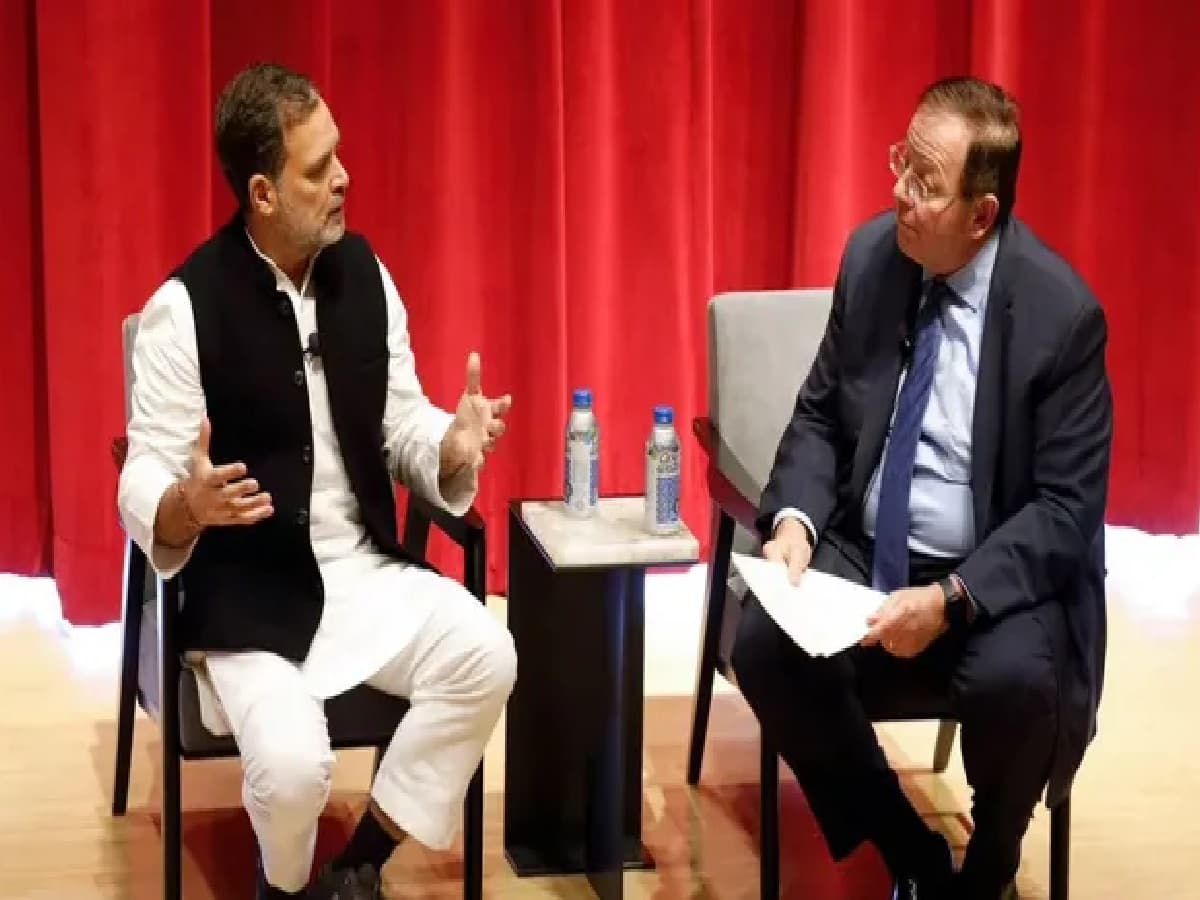
Rahul Gandhi Calls India a 'Side Player' in Chicago; BJP Hits Back
A sharp political debate over India's foreign policy and international standing erupted on Friday, November 20, 2026, after Leader of the Opposition in the Lok Sabha Rahul Gandhi, speaking during an interaction at the University of Chicago in the United States, characterized India as having become a "side player" in global politics while asserting that Pakistan is actively engaged in negotiations with major powers such as the United States and Iran. In his remarks, Rahul Gandhi argued that India historically maintained an independent, strategic approach to international affairs—balancing global partnerships with autonomous judgment suited to its size and influence—and questioned whether personal rapport among leaders can substitute for substantive geopolitics, remarking that Prime Minister Narendra Modi repeatedly emphasizes personal friendship with world leaders even though international diplomacy does not operate on friendship alone. His comments drew an immediate and forceful rebuttal from the Bharatiya Janata Party (BJP) in New Delhi, with national spokespersons CR Kesavan and Pradeep Bhandari accusing the Congress leader of undermining India's global credibility on foreign soil and portraying him as an enthusiastic cheerleader for Pakistan. CR Kesavan contended that India under Prime Minister Narendra Modi has emerged as a respected global consensus-builder whose rising stature the Congress leadership refuses to acknowledge, while Pradeep Bhandari questioned why Rahul Gandhi repeatedly cites Pakistan on international platforms and pointed to India's diplomatic engagement across Russia, Ukraine, and Iran—while also flagging attendance at the Chicago event to allege alignment with anti-India voices. For voters, foreign-policy observers, and readers across Unnao, Lucknow, Kanpur, Varanasi, Ayodhya, Prayagraj, New Delhi, and Mumbai, the exchange highlights widening domestic fault lines over how India's external diplomacy is projected abroad.
Rahul Gandhi's Chicago Remarks vs. BJP's Counter-Response: Key Points
To bring together the statements made by Rahul Gandhi at the University of Chicago alongside the counter-arguments put forward by BJP spokespersons CR Kesavan and Pradeep Bhandari, the table below summarizes the core positions:
| Dimension / Issue | Rahul Gandhi's Stance (University of Chicago) | BJP's Rebuttal (CR Kesavan & Pradeep Bhandari) |
| India's Global Diplomatic Role | Stated that despite India's scale and traditional independent foreign-policy thinking, India has currently become a "side player" excluded from key global negotiations. | Rejected the claim as an attempt to tarnish India's image abroad, asserting that under PM Narendra Modi, India acts as a recognized global consensus-builder with rising international standing. |
| References to Pakistan | Argued that while India is sidelined, Pakistan is actively negotiating with the United States and Iran. | Accused Rahul Gandhi of acting like a "fan" and cheerleader for Pakistan on global platforms and questioned his repeated favorable comparisons involving the neighboring country. |
| Personal Diplomacy vs. Geopolitics | Questioned PM Modi's emphasis on personal camaraderie with foreign leaders, arguing that "geopolitics is not based on friendship" alone. | Highlighted India's substantive diplomatic outreach—including engagement with Russia, Ukraine, and Iran—as evidence of active, interest-driven statecraft rather than mere personal optics. |
| Speaking on Foreign Soil | Framed his critique as an analytical assessment of India's strategic autonomy and international positioning during an academic forum in the US. | Condemned making critical remarks about India's standing overseas and flagged event attendees to accuse the LoP of siding with anti-India narratives. |
Inside Rahul Gandhi's Critique of India's Foreign Policy at Chicago
Addressing students and attendees at the University of Chicago as part of his ongoing US visit—which also included an earlier interaction at Columbia University—Rahul Gandhi contrasted India's historical diplomatic posture with what he described as its present predicament. According to the Congress leader, India traditionally combined international partnerships with an independent reading of global events, giving the country a natural, weighty voice proportional to its size. He argued, however, that India has been pushed to the margins of major international discussions even as Pakistan conducts active talks with Washington and Tehran, adding skeptically that proclaiming personal friendship with global leaders cannot replace hard geopolitical leverage.
BJP's Sharp Rebuttal: Kesavan and Bhandari Question Narrative Abroad
In New Delhi, BJP spokespersons CR Kesavan and Pradeep Bhandari swiftly countered Rahul Gandhi's characterization, arguing that the Leader of the Opposition was misrepresenting India's diplomatic footprint while speaking overseas. CR Kesavan called the remarks inexcusable, accusing Gandhi of acting as a propagandist for Pakistan and ignoring India's role as an international bridge-builder under Prime Minister Narendra Modi. Echoing that criticism, Pradeep Bhandari questioned why Rahul Gandhi repeatedly brings up Pakistan on foreign platforms as though holding it up as a diplomatic benchmark, citing India's active engagement across Russia, Ukraine, and Iran alongside criticism of individuals present at the Chicago event to contend that the Congress leader's statements undermine national interests.




